
A Bowie knife is a large fixed-blade knife built around a clip-point profile, giving you a long belly for slicing and a controlled tip for detail work. Ours are hand-forged in our Fredericton workshop for hunters, campers, bushcrafters, and collectors who want one blade that handles heavy and fine work. A Bowie is a poor choice for pocket carry or fine kitchen work, so match the size to what you actually cut before you buy.
-
Clip Point Bowie Knife 6” D2 Steel | G10 Handle
Prezzo di listino $137.00 USDPrezzo di listinoPrezzo unitario per$175.00 USDPrezzo scontato $137.00 USDIn offerta -
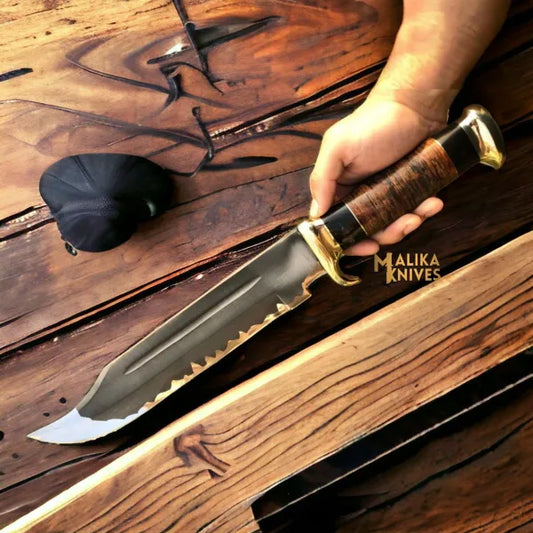
Dundee Style Bowie Knife D2 Steel Acid Etched
Prezzo di listino $122.50 USDPrezzo di listinoPrezzo unitario per$175.00 USDPrezzo scontato $122.50 USDIn offerta -
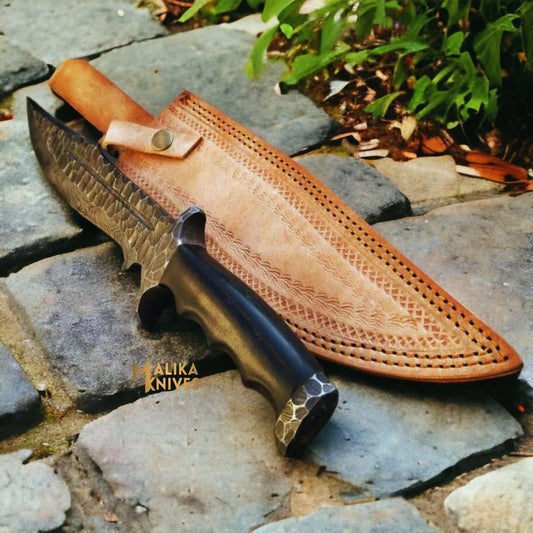
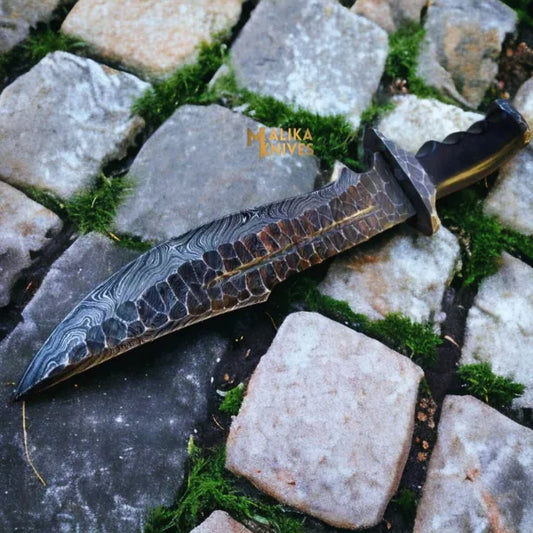
Handforged Damascus Bowie Knife Micarta Handle
Prezzo di listino $114.00 USDPrezzo di listinoPrezzo unitario per$190.00 USDPrezzo scontato $114.00 USDIn offerta -
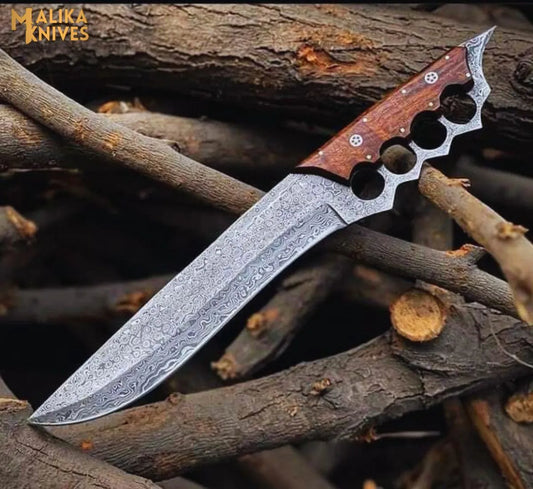
Knuckle Bowie Knife Damascus Steel Rosewood Handle
Prezzo di listino $126.00 USDPrezzo di listinoPrezzo unitario per$210.00 USDPrezzo scontato $126.00 USDIn offerta -

 In offerta
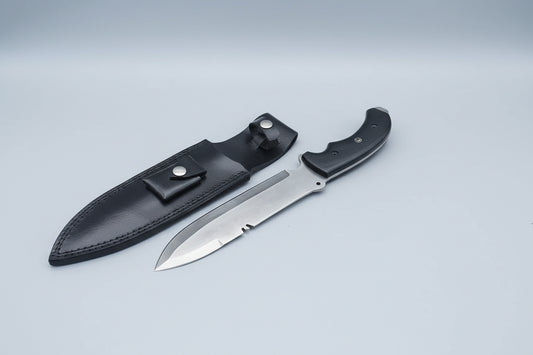
Big Foot Bowie Knife D2 Steel G10 Handle
Prezzo di listino $155.00 USDPrezzo di listinoPrezzo unitario per$210.00 USDPrezzo scontato $155.00 USDIn offerta -

 In offerta
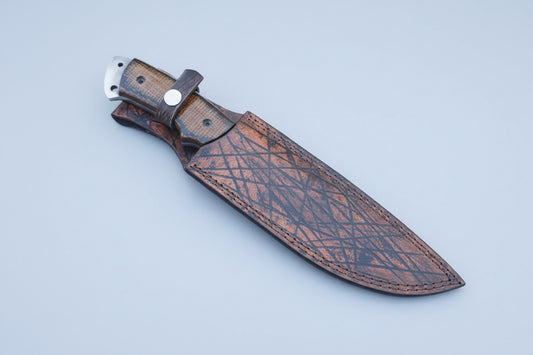
Spear Point Bowie Knife D2 Steel G10 Micarta
Prezzo di listino $155.00 USDPrezzo di listinoPrezzo unitario per$210.00 USDPrezzo scontato $155.00 USDIn offerta -

 In offerta
Hunter Point Bowie Knife D2 Steel G10 Handle
Prezzo di listino $122.50 USDPrezzo di listinoPrezzo unitario per$175.00 USDPrezzo scontato $122.50 USDIn offerta -
Drop Point Bowie Knife D2 Steel G10 Handle
Prezzo di listino $145.00 USDPrezzo di listinoPrezzo unitario per -
D2 Steel Clip Point Bowie Knife with G10 Grip
Prezzo di listino $139.99 USDPrezzo di listinoPrezzo unitario per -

 In offerta
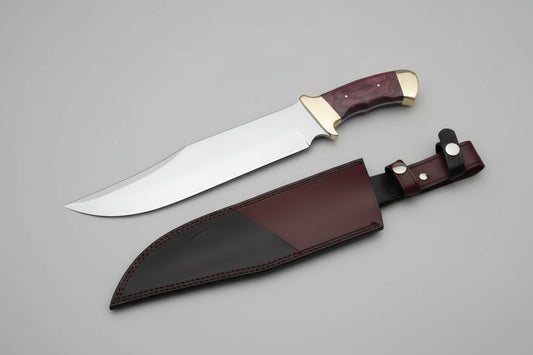
Full Tang Texas Bowie Knife | Red Pakka Wood
Prezzo di listino $130.00 USDPrezzo di listinoPrezzo unitario per$137.00 USDPrezzo scontato $130.00 USDIn offerta -
Double Edge Bowie Knife 15” J2 Steel | Micarta G10
Prezzo di listino $155.00 USDPrezzo di listinoPrezzo unitario per -

 In offerta
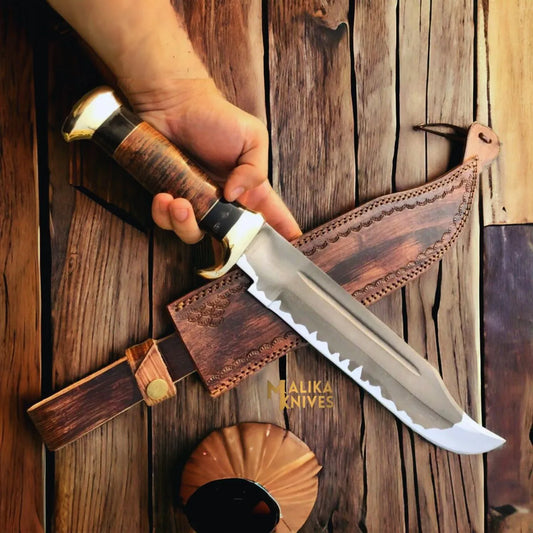
D2 Steel Bowie Knife | Wenge Wood Handle
Prezzo di listino $131.25 USDPrezzo di listinoPrezzo unitario per$175.00 USDPrezzo scontato $131.25 USDIn offerta









- Steels carried: D2 tool steel, hand-forged 1095/15N20 Damascus, VG10/15N20 San Mai Damascus, and copper Damascus
- Blade lengths from roughly 8 inches upward, all full tang
- Handles: walnut, pakka wood, white and black micarta, G10, camel bone, staghorn, and stabilized resin.
- Every knife ships with a fitted leather sheath, and most accept custom engraving.
What is a Bowie knife?
A Bowie knife is a large fixed-blade knife defined by its clip-point profile, where the spine drops away near the front of the blade to form a sharp, controllable tip. The shape dates to the American frontier of the 1820s and 1830s and was designed as a single tool that could do camp work and butchery.
Modern versions keep the geometry and change the steel. Malika Knives are forged from D2 tool steel or from layered Damascus, and every blade is full tang, meaning the steel runs unbroken from tip to butt with the handle scales pinned to either side. Full tang matters on a knife this size because the load during chopping concentrates exactly where a partial tang would end.
How does a Bowie knife compare to other large outdoor blades?
Blade shape decides the job. The table below sets it against the three large fixed blades buyers most often weigh against it.
|
|
Bowie |
Kukri |
Hunting knife |
Bushcraft knife |
|
Blade profile |
Clip point, long belly |
Forward-angled recurve |
Drop point, short belly |
Straight spine, Scandi or flat grind |
|
Typical blade length |
8 to 12 inches |
10 to 13 inches |
3.5 to 5 inches |
4 to 5.5 inches |
|
Best at |
Chopping plus precision tip work in one blade |
Chopping and clearing brush |
Field dressing, skinning, caping |
Carving, feather sticks, batoning |
|
Weak at |
Pocket carry, fine kitchen slicing |
Detail and tip work |
Chopping and heavy camp work |
Chopping, large game breakdown |
|
Carry |
Belt sheath, fixed blade only |
Belt or pack sheath |
Belt sheath, easily packed |
Belt sheath, easily packed |
|
Our price band |
CAD $205 to $480 |
CAD $205 to $410 |
See hunting knives |
See bushcraft knives |
What is a Bowie knife used for?
The pattern earns its size on tasks where a small knife runs out of blade. Common uses include:
- Field dressing and breaking down large game are common uses for this pattern.
- Splitting kindling and processing firewood by batoning
- Clearing light brush and cutting saplings at camp
- Camp food preparation on a board or stump
- Cutting rope, webbing, hide, and heavy cordage
- Digging a fire pit or trench in soft ground
- Striking a ferrocerium rod off the squared spine
Where it is the wrong tool: it is too long for pocket carry, too thick behind the edge for fine kitchen slicing, and too heavy for extended carving work. Buyers who want a small everyday blade should look at Malika Knives handmade pocket knives instead, and cooks are better served by the chef knives range.
How do you choose the right Bowie knife?
Start with the work, not the look. Six factors decide the outcome.
- Blade length. Eight inches handles almost everything and still fits a normal belt rig. Ten inches and up chops noticeably less and becomes awkward for detailed work.
- Steel. D2 holds an edge longer and shrugs off wear. Damascus is more forgiving to sharpen and carries the pattern. Neither is stainless, so both need drying and oiling.
- Guard. A brass or steel guard stops your hand sliding forward on a hard thrust into wood. A guardless build carries flatter and draws faster.
- Handle material. Micarta and G10 grip better when wet. Walnut, pakka wood, and camel bone look better and suit a display or gift piece.
- Weight and balance. Forward balance chops harder. A neutral balance carves and skins more comfortably.
- Sheath and carry. Check that the sheath belt loop fits the belt you actually wear, since a heavy blade on a loose rig will shift all day.
What steel is used, and why does it matter?
Steel sets edge retention, toughness, corrosion resistance, and how hard the knife is to sharpen. No steel wins all four, so the choice is a trade.
D2 tool steel
A high-carbon, high-chromium tool steel with strong wear resistance and long edge retention. It rusts better than plain carbon steel without being fully stainless. The trade is that D2 takes more patience to bring back to a keen edge. Best suited to buyers who use the knife hard and sharpen it rarely. Browse the D2 Bowie knives.
Hand-forged Damascus
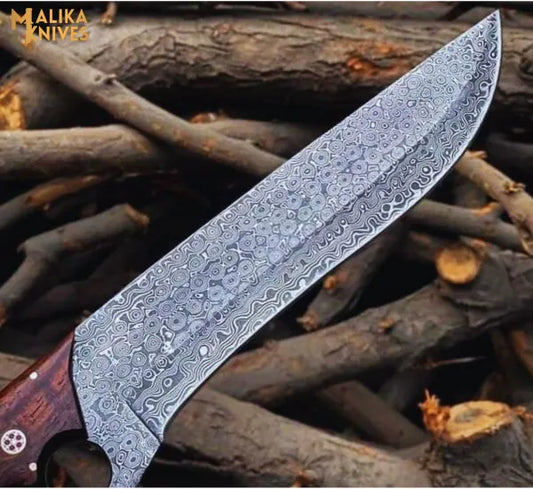
Layered high-carbon steel, forge-welded and folded, then etched to reveal the pattern. Damascus takes a very fine edge and comes back quickly on a stone, which suits anyone who touches up a blade regularly. Damascus is not stainless and will spot if left wet. Browse the Damascus Bowie knives.
VG10 and San Mai Damascus
A laminated construction with a VG10 core jacketed in layered 15N20 and carbon steel. The core carries the edge, while the outer layers add toughness and the pattern. Used on Malika Knives upper-tier models, including the finger guard and sawback builds.
Copper Damascus
Copper layered into the billet gives a warm contrast line through the pattern. Chosen for presentation and collection pieces more than for field work. Browse the Malika Knives copper Damascus Bowie knives.
How do you sharpen and maintain a Bowie knife?
A clip point has a long edge with a pronounced belly, so the technique differs slightly from a small straight-edged knife.
- Work the straight section of the edge flat on the stone, holding a consistent angle of roughly 20 degrees per side.
- As you reach the belly, lift the handle gradually so the contact point tracks around the curve. Lifting too late leaves a dull spot ahead of the belly, which is the most common sharpening fault on this shape.
- Finish the clipped section of the tip last, with lighter pressure, since the steel is thinner there.
- Strop on leather to remove the burr.
Day-to-day care on a carbon or Damascus blade takes about a minute. Wipe the blade dry after every use, including after cutting anything acidic. Apply a light film of mineral oil or a dedicated blade oil. Never store the knife in a wet leather sheath, because leather holds moisture against steel and will pit it. Dry the sheath separately.
Full instructions are in Malika Knives Damascus knife care guide and knife sharpening guide.
What handle materials, guards, and sheaths are available?
Handle material changes grip, weight, and how the knife ages.
- Micarta in white, black, or brown. Layered linen in resin. Grips well wet and takes hand oils without swelling.
- G10. Glass laminate. The hardest-wearing option we fit, and the most weather-indifferent.
- Walnut and pakka wood. Warm, traditional, and best on a knife that sees dry-season use or lives on a wall.
- Camel bone and stag horn. Natural material with no two pieces alike is favored in collection pieces.
- Stabilized resin. Color depth and full moisture resistance, used on Malika Knives upper-tier models.
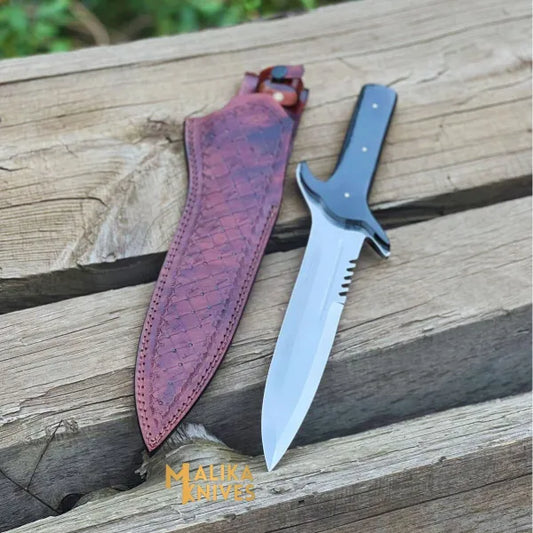
Every knife ships with a fitted leather sheath, and several carry hand-tooled or embossed leather. Engraving is available at checkout on most models.
Are Bowie knives legal to own and carry?
Bowie knives are generally legal to own in Canada, the U.S., and the UK, but public-carry laws vary and may require a lawful or specific reason.
Frequently asked questions about Bowie knives
What blade length should a Bowie knife be?
Most run 8 to 12 inches. Eight inches is the practical sweet spot for a knife that both chops and does detail work, and it is the length we build most often. Above 10 inches, the knife chops better but becomes awkward for skinning and caping.
What is the difference between a Bowie knife and a hunting knife?
Size and intent. A hunting knife runs 3.5 to 5 inches with a drop point, optimized for field dressing and skinning. The larger pattern runs roughly twice that length with a clip point, trading some skinning comfort for chopping ability and reach. Many hunters carry both.
Is D2 or Damascus better for a Bowie knife?
D2 holds an edge longer and resists surface rust better, so it suits hard use with infrequent sharpening. Damascus takes a finer edge and returns to sharp faster on a stone, so it suits owners who maintain their blades regularly. Neither is stainless.
Are your Bowie knives full-tang?
Yes, every knife we make is full tang. The steel runs unbroken from tip to butt with the handle scales pinned on either side. On a blade this size, the load during chopping concentrates exactly where a partial tang would end, so a full tang is not optional.
Can a Bowie knife be used for batoning?
Yes. Full tang construction and a thick spine make Malika Knives blades suitable for splitting kindling by striking the spine with a wooden baton. Strike the exposed spine over the wood, never over the handle, and avoid batoning through knots where the blade can twist.
Do Bowie knives come with a sheath?
Every knife ships with a fitted leather sheath cut for that specific model. Several models carry hand-tooled or embossed leather. Dry the sheath separately from the blade after wet use, since leather holds moisture against steel.
Can the blade be engraved?
Yes. Most models accept engraving, added through the engraving field at checkout. Blade engraving is the usual placement. For text longer than a short name or date, contact us first so we can confirm the layout fits the blade.
Do you ship Bowie knives to the United States and internationally?
Yes. Shipping within Canada is free, and international rates are kept low. Delivery is available wherever knife ownership and import are legally permitted. Buyers are responsible for confirming their local import rules and any duties before ordering.
How long does a hand-forged Bowie knife last?
Decades, with basic care. The limiting factors are corrosion and edge geometry rather than wear. Dry and oil the blade after use, avoid storing it in a damp sheath, and sharpen with light pressure so you remove as little steel as possible over the knife's life.
Does a Bowie knife make a good gift?
A large fixed blade is one of the more common gift knives because the shape is recognizable and the size makes it a display piece as much as a tool. Damascus and copper Damascus models with wood or bone handles suit gifting best. Add engraving at checkout for a dated piece.
