
D2 tool steel gives a bowie the one thing a large working blade needs most: an edge that survives hard use without constant touch-ups. We forge and heat treat every D2 blade in this collection ourselves, in profiles running from classic Dundee and Rambo-inspired builds to plain working spear points, then fit each one with a hand-stitched leather sheath.
-
Dundee Bowie Knife D2 Carbon Steel with Bull Horn
Precio habitual $127.50 USDPrecio habitualPrecio unitario por$230.00 USDPrecio de oferta $127.50 USDOferta -
Deadpool Baby Knife Replica – Handmade Carbon Steel Movie Prop Knife
Precio habitual $190.00 USDPrecio habitualPrecio unitario por$350.00 USDPrecio de oferta $190.00 USDOferta -
Tombstone Billy Clanton Ring Guard Bowie Knife Replica – Handmade 1095 Carbon Steel Knife
Precio habitual $270.00 USDPrecio habitualPrecio unitario por$450.00 USDPrecio de oferta $270.00 USDOferta -
Resident Evil 5 Albert Wesker STARS Replica Knife – D2 Steel Game Knife With Sheath
Precio habitual $165.00 USDPrecio habitualPrecio unitario por$330.00 USDPrecio de oferta $165.00 USDOferta -
Engraved D2 Hunting Knife Brass Inlay Camel Bone
Precio habitual $550.00 USDPrecio habitualPrecio unitario por$1,100.00 USDPrecio de oferta $550.00 USDOferta -
Rambo V Last Blood Replica Bowie Knife – 14" D2 Blade, Micarta Handle
Precio habitual $145.00 USDPrecio habitualPrecio unitario por$290.00 USDPrecio de oferta $145.00 USDOferta -
Rambo-Style Survival Bowie Knife – 14" D2 Spear Point with G10 Handle
Precio habitual $155.00 USDPrecio habitualPrecio unitario por$310.00 USDPrecio de oferta $155.00 USDOferta -
D2 Steel Bowie Knife G10 Handle Leather Sheath
Precio habitual $135.00 USDPrecio habitualPrecio unitario por$270.00 USDPrecio de oferta $135.00 USDOferta -
Double Edge Bowie Knife 15” J2 Steel | Micarta G10
Precio habitual $155.00 USDPrecio habitualPrecio unitario por -
Bushcraft Knife – 5 mm Blade & Red Micarta Handle
Precio habitual $170.00 USDPrecio habitualPrecio unitario por$330.00 USDPrecio de oferta $170.00 USDOferta -
Tracker Bowie Knife G10 Handle Bushcraft Sheath
Precio habitual A partir de $129.99 USDPrecio habitualPrecio unitario por -
Spear Point Bowie Knife D2 Steel G10 Micarta
Precio habitual $155.00 USDPrecio habitualPrecio unitario por$210.00 USDPrecio de oferta $155.00 USDOferta -
Rambo Last Blood Bowie Knife D2 Steel Full Tang
Precio habitual $275.00 USDPrecio habitualPrecio unitario por$550.00 USDPrecio de oferta $275.00 USDOferta -
Hunter Point Bowie Knife D2 Steel G10 Handle
Precio habitual $122.50 USDPrecio habitualPrecio unitario por$175.00 USDPrecio de oferta $122.50 USDOferta -
Handforged D2 Steel Bowie Knife Rosewood Handle
Precio habitual $126.00 USDPrecio habitualPrecio unitario por$210.00 USDPrecio de oferta $126.00 USDOferta -
Handforged D2 Steel Bowie Knife G10 Handle
Precio habitual $125.00 USDPrecio habitualPrecio unitario por$250.00 USDPrecio de oferta $125.00 USDOferta

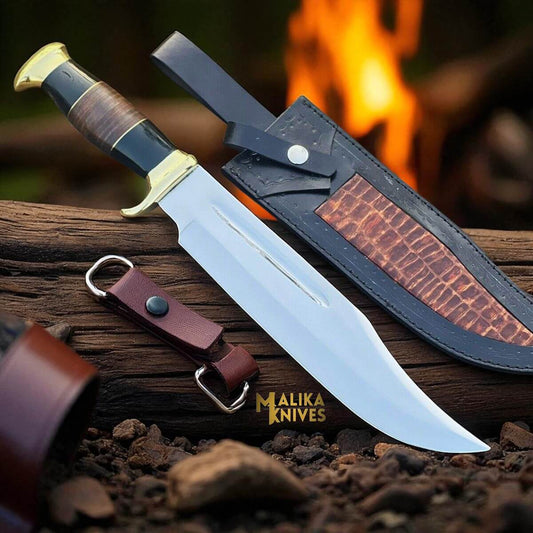

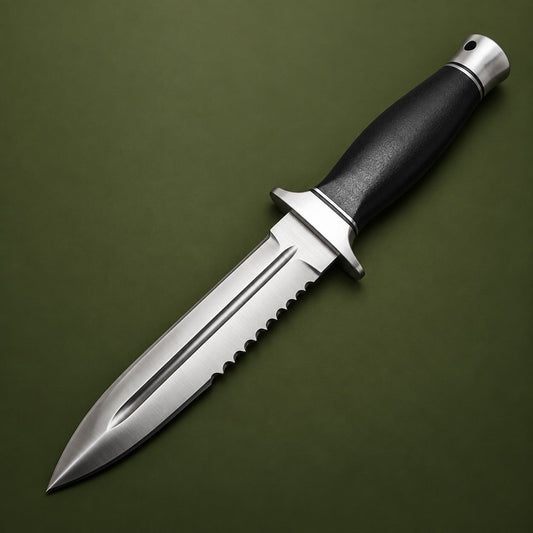

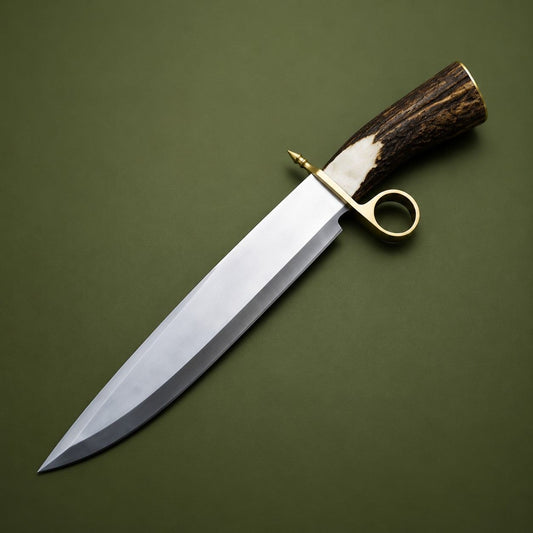

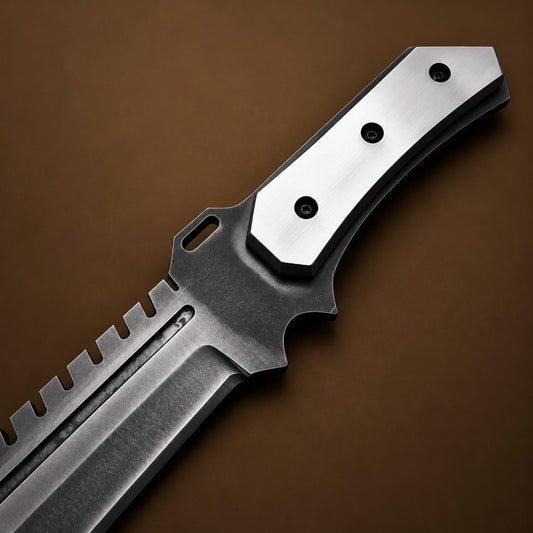

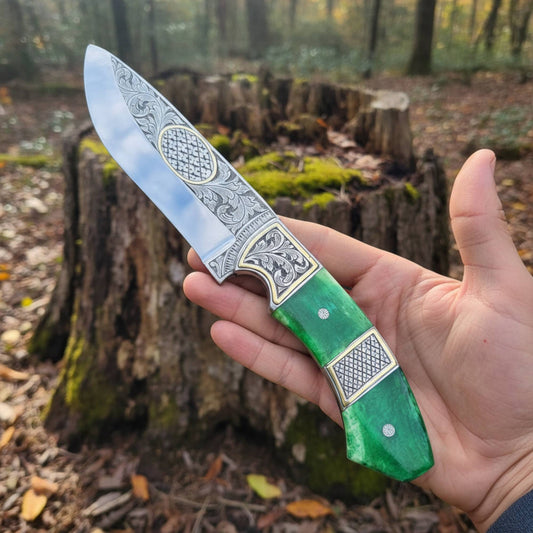

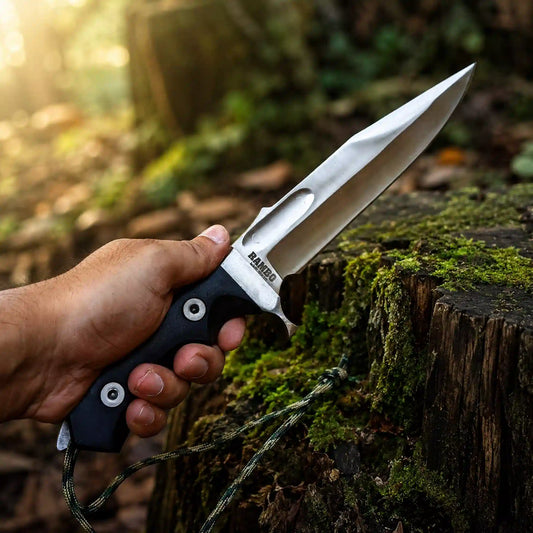

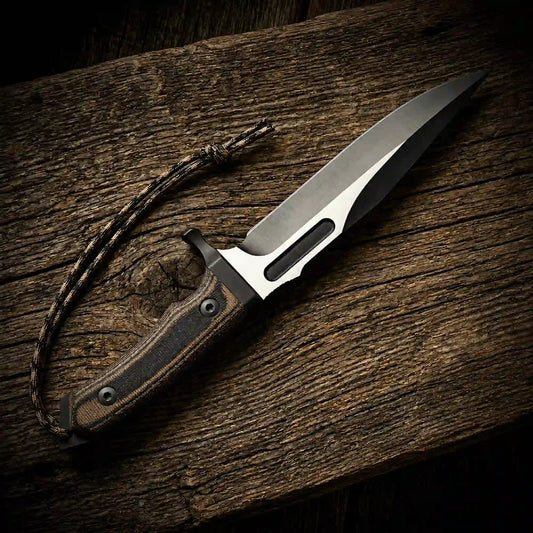

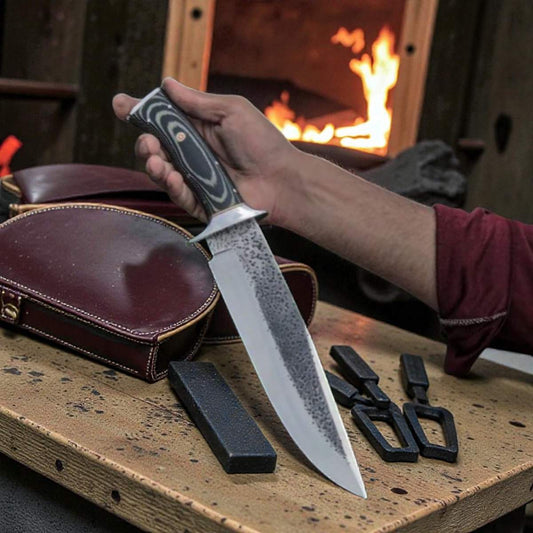

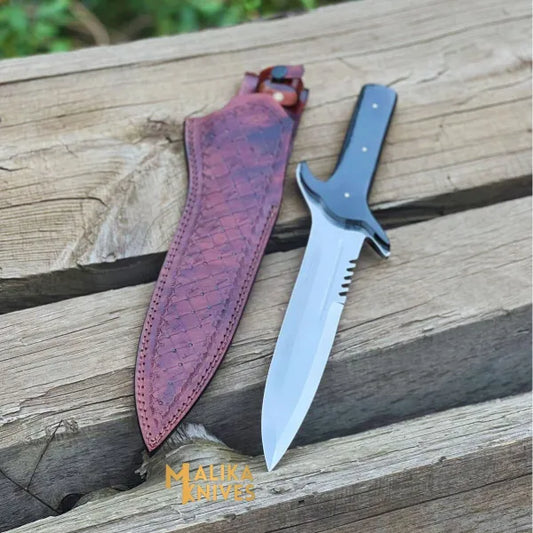

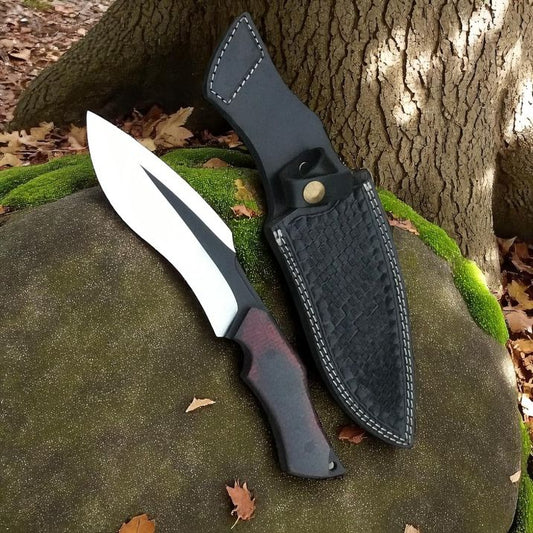


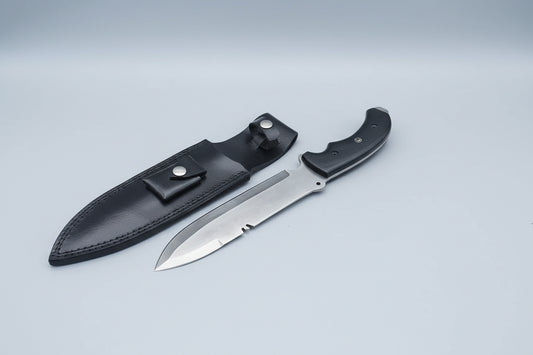

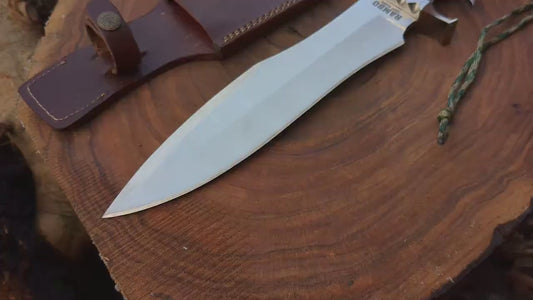

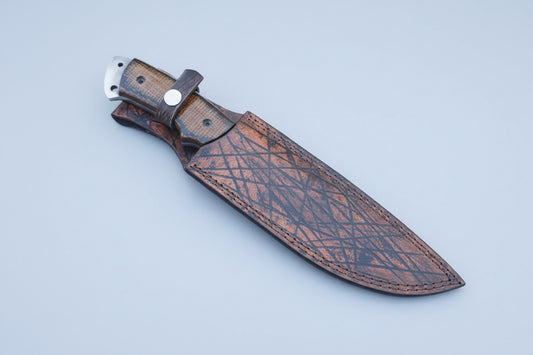
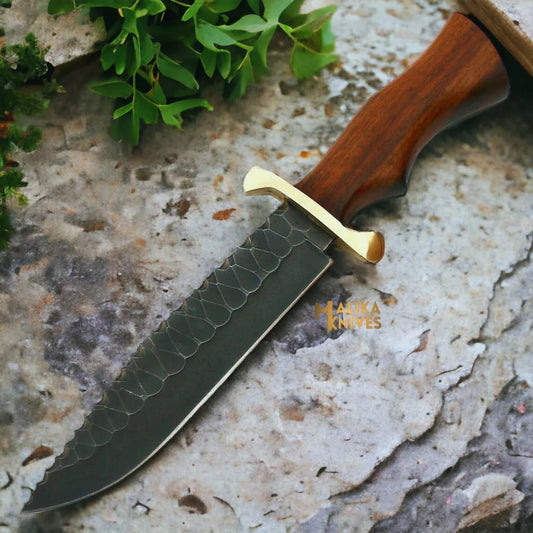
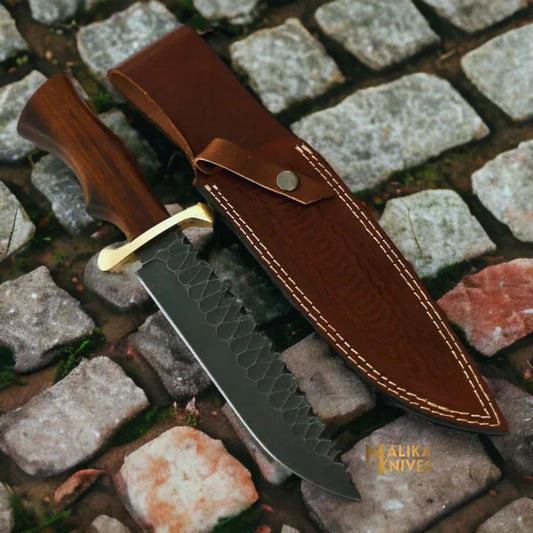

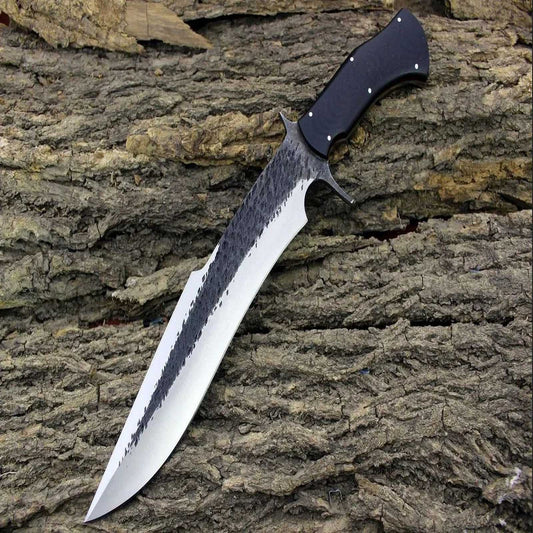
Some designs in this collection borrow the look of well-known film knives. They are Malika Knives own handmade builds in that style, not official merchandise and not connected to any studio or rights holder.
What Is a D2 Steel Bowie Knife?
A D2 steel bowie knife is a fixed-blade bowie, clip point or spear point, full crossguard, a grip built for a hard hand made from D2 tool steel. D2 is a high-carbon, high-chromium tool steel developed for industrial cutting dies, which is exactly the kind of abuse a working bowie is asked to take.
The appeal is simple. D2 holds an edge longer than most stainless steels used on knives this size, and it resists rust better than plain high-carbon steel because of its chromium content. It won't show a forged pattern the way Damascus does, so buyers choosing D2 are usually choosing performance over pattern. New to bowies generally? See Malika Knives guide to what a Bowie knife is.
How Does D2 Compare to the Rest of Malika Knives Bowie Lineup?
D2 sits in a specific spot: tougher and lower-maintenance than carbon Damascus, less showy but easier to live with.
|
D2 Steel Bowie |
Damascus Bowie |
Survival Bowie |
Western Bowie |
|
|
Blade material |
D2 tool steel |
Forge-welded layered steel |
D2 tool steel |
Carbon or Damascus |
|
Edge retention |
Very high |
Good, steel-dependent |
Very high |
Steel-dependent |
|
Corrosion resistance |
Semi-stainless |
Depends on steel pair |
Semi-stainless |
Depends on steel |
|
Visual pattern |
None, uniform steel |
Etched layered pattern |
None |
Varies |
|
Best at |
Hard daily cutting, low upkeep |
Collecting, display, character |
Chopping, camp tasks |
General field and camp use |
|
Sharpening |
Needs a diamond stone |
Easier on a standard stone |
Needs a diamond stone |
Steel-dependent |
|
Where to look |
Here |
Damascus Bowies |
Survival Bowies |
Western Bowies |
What Is a D2 Bowie Knife Used For?
- Field dressing and heavy camp cutting
- Batoning kindling and light chopping
- Everyday hard-use outdoor tasks where the edge takes abuse
- Collecting film-inspired profiles (Dundee, Rambo-style) without paying for licensed goods
- Display pieces where a mirror-polished or acid-etched blade is the draw
Where D2 is the wrong choice: if you want the layered pattern of Damascus for a display piece, or you want the lightest possible chopper—a thinner Damascus or a purpose-built survival bowie may suit those goals better. For fine skinning and caping work, see Malika Knives' skinning knives and gut hook knives instead.
How Do You Choose One?
Clip point or spear point. A clip point gives a finer, more controllable tip for detail work. A spear point puts more steel behind the tip and holds up better to prying.
Finish. Stonewash hides scratches and looks the part for a working knife. Satin is the traditional clean look. Mirror polish is for display pieces and shows every mark, so it's a poor choice for hard use.
Handle material. G10 and micarta grip well when wet and are the practical pick for field use. Bone, horn, and hardwood look the part for a display or collector piece and need more care in damp conditions.
Tang. Most of this collection is full tang. If a specific model is semi-tang, it's built for lighter use. Check the product page before buying it as a chopper.
Which One Is Right for You?
You want the film-collector look without paying licensed prices. The Dundee Bowie in bullhorn or the acid-etched Dundee style. Both carry the profile without the markup of officially licensed goods.
You want the biggest name recognition in the lineup. The Rambo Last Blood, full tang. The longest and most detailed of the Rambo-style builds here.
You'll actually use it outdoors. The Rambo-style 14-inch spear point with G10 and a paracord lanyard. Grips well wet, and the spear point takes prying a clip point wouldn't.
You want a plain, honest working Bowie. The D2 Steel Bowie with a G10 handle. No film reference, no showpiece finish, just a full-tang D2 blade and a sheath.
You want extra hand protection. The Finger Guard Bowie in micarta. The added guard geometry is built for grip security during hard use.
You're buying your first bowie and want the lowest entry point. The Dundee-style acid-etched Bowie or the hand-forged Bowie in rosewood both sit at the bottom of this collection's price range.
Undecided between two? Send us both through contact, and we'll tell you which one we'd keep.
Why D2 Steel on a Bowie This Size?
D2 is a high-carbon, high-chromium tool steel, originally built for industrial cutting and stamping dies rather than knives, which tells you what kind of wear it's designed to shrug off. We heat treat every blade in-house to roughly 59–61 HRC, which is hard enough to hold an edge through extended hard use without becoming brittle on impact.
The trade is sharpening. D2 resists abrasion, which is great for edge life and slower going on stone. A diamond plate cuts that time down considerably. For a knife you touch up once or twice a season, that's a fair trade. If you'd rather sharpen on a soft natural stone more often in exchange for an easier edge, Malika Knives' carbon-damascus bowies are a better fit.
Full Tang Construction: Why It's Non-Negotiable on Most of These
Full tang means the steel runs unbroken from the tip through the full length of the handle, with the scales pinned to either side. Most knives in this collection are built this way, and on a large bowie meant for batoning or hard cutting, it isn't a spec sheet detail; it's the difference between a knife that survives impact and one that snaps at the guard.
A handful of styles in this collection use a semi-tang build instead, which trims weight and cost for a knife intended for lighter use. Those models are marked on their individual product pages. If you plan to chop or baton with the knife, confirm it's full tang before you buy.
Blade Finishes in This Collection
We finish D2 bows in three ways depending on the design:
- Stonewashed, a matte, tumbled texture that hides scratches and fingerprints, is the practical choice for a working knife.
- Satin, a clean traditional finish with light reflectivity, the middle ground between working and display
- Mirror polished, high-shine, built for collectors and display pieces rather than hard use since it shows every mark
Check the individual product listing for the finish on a specific model—it isn't uniform across the collection.
How Do You Sharpen and Care for a D2 Bowie?
Use a diamond stone or plate rather than a soft natural stone. D2's wear resistance is exactly what dishes out a soft stone before it touches the edge.
Hold a consistent angle around 20 degrees per side, which is standard for a working bowie, and work the straight section of the edge first before following the curve into the belly.
Lift the handle gradually as you reach the belly so the stone tracks the curve rather than leaving a dull spot ahead of it. Finish the tip with light pressure and strop to clear the burr.
D2 is semi-stainless, not stainless. Wipe the blade dry after every use, apply a light coat of oil before storage, and never leave the knife in a damp leather sheath; leather holds moisture against the steel and will cause pitting over time.
Are D2 Bowie Knives Legal to Own and Carry?
Ownership of a fixed-blade bowie is legal across the United States, Canada, the UK, and most of the EU. Care is a separate question and depends heavily on blade length, your state or country, and sometimes your city.
Most bowies in this collection sit in the 8–12 inch range and carry more easily than our 14–16 inch survival bowies, but several models here—the Rambo-style builds in particular—run 14 inches, which puts them above the open-carry threshold in a number of U.S. states. Check your state statute and any local ordinance before carrying one in public rather than transporting it.
Who Makes These Knives?
Every D2 Bowie here is forged, heat treated, and finished by hand by Naqash and Younas Minhas in Malika Knives' Casper, Wyoming, workshop. Nothing in this collection is factory-made or mass-produced; each blade is ground, hardened, and fitted individually before it's paired with a hand-stitched leather sheath cut for that knife.
Frequently Asked Questions
Is D2 steel good for a bowie knife?
Yes. D2 is a high-carbon, high-chromium tool steel with excellent wear resistance and edge retention, which suits a large working blade like a bowie. It holds an edge through hard use and resists rust better than plain carbon steel.
How hard is the D2 steel on your bowie knives?
After in-house heat treatment, Malika Knives D2 bowie blades typically reach 59 to 61 HRC—hard enough for long edge retention while staying tough enough for demanding cutting tasks.
Is D2 steel stainless?
D2 is semi-stainless. At roughly 12% chromium, it resists rust far better than plain carbon steel, but it isn't fully stainless. Wipe it down and apply a light coat of oil before storage to keep it clean for years.
Are these Dundee and Rambo-style knives officially licensed?
No. They're Malika Knives' own handmade builds in that visual style, made in our workshop. They carry no license or connection to any film studio or rights holder.
Are your D2 bowie knives full tang?
Most are. The steel runs the full length of the handle for maximum strength. A few styles use semi-tang construction for lighter use—check the individual product page before buying one as a hard-use chopper.
How do I care for a D2 bowie knife?
Wipe the blade dry after each use, avoid storing it in a damp leather sheath, and apply a light coat of oil before storage. When it needs sharpening, use a diamond or ceramic stone rather than a soft natural one.
Do your D2 bowie knives come with a sheath?
Yes. Every knife in this collection ships with a hand-stitched leather sheath, built for horizontal or vertical carry and fitted to that individual blade.
Can I carry a 14-inch D2 bowie in public?
Not everywhere without checking first. Several models in this collection run 14 inches, which exceeds the open-carry length limit in a number of US states. Confirm your local law before carrying rather than transporting one.
