

Handmade Damascus Bowie knives
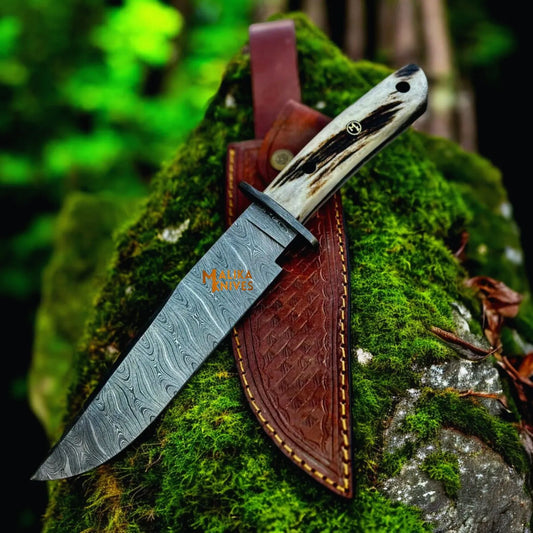
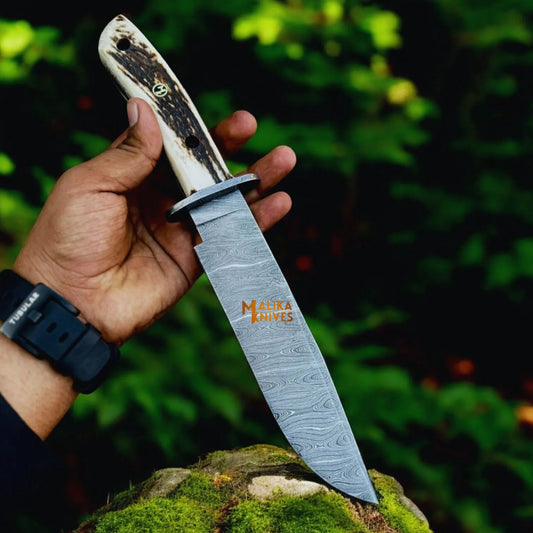
Shop Damascus bowie knives forged in-house from layered high-carbon or stainless steel, built on the classic frontier bowie profile and finished with hand-stitched leather sheaths. Every blade in this collection carries over 500 folded layers and is shaped, heat treated, and finished by hand in our Wyoming workshop.
-
Handmade Alamo Musso Bowie Knife Damascus Steel
Precio habitual $230.00 USDPrecio habitualPrecio unitario por$460.00 USDPrecio de oferta $230.00 USDOferta -
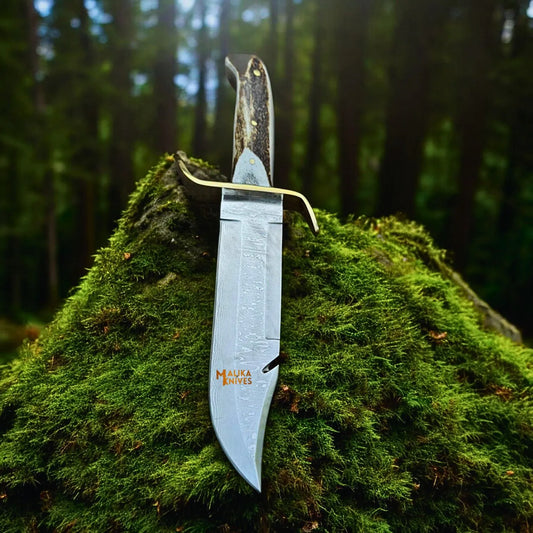
Wild West Bowie Knife Stainless Damascus Stag Handle
Precio habitual $195.00 USDPrecio habitualPrecio unitario por$265.00 USDPrecio de oferta $195.00 USDOferta -
SS Damascus Gut Hook Bowie Knife Stag Antler Handle Sheath
Precio habitual $185.00 USDPrecio habitualPrecio unitario por$370.00 USDPrecio de oferta $185.00 USDOferta -
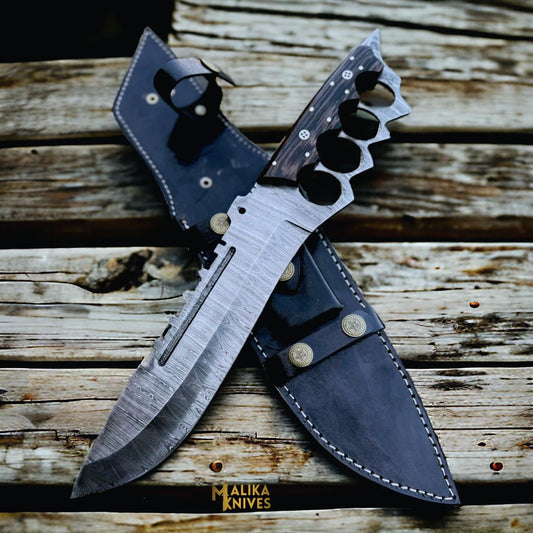
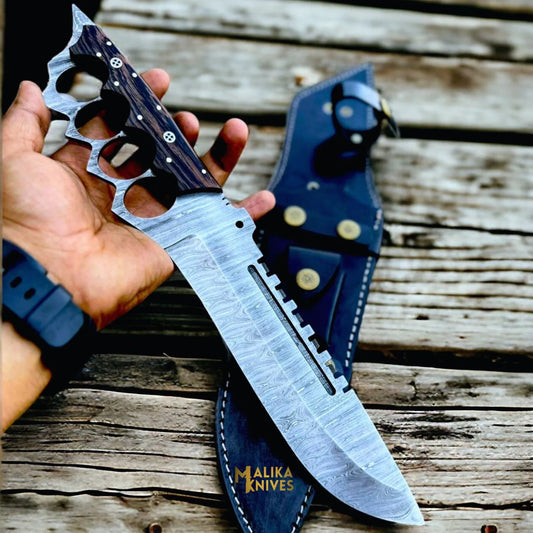
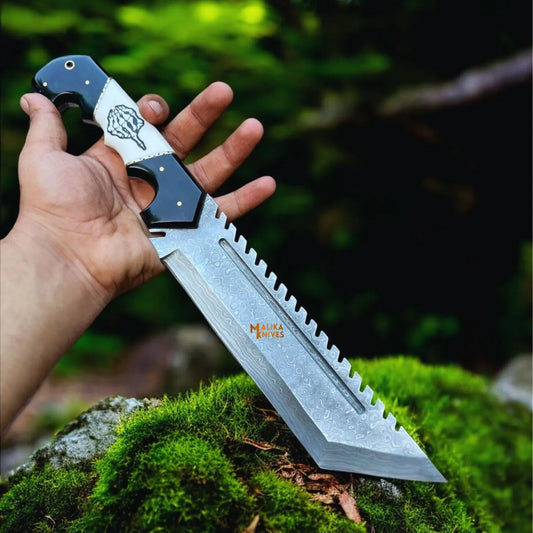
Damascus Knuckle Bowie Knife Wenge Wood Full Tang
Precio habitual $139.00 USDPrecio habitualPrecio unitario por$230.00 USDPrecio de oferta $139.00 USDOferta -
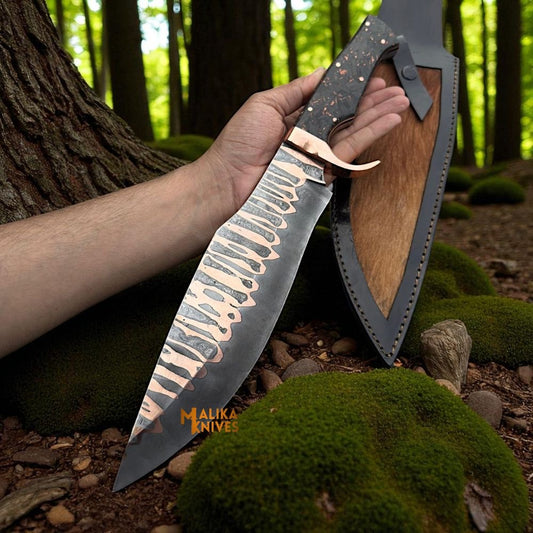
Copper Damascus Bowie Knife | Carbon Fiber Handle
Precio habitual $999.00 USDPrecio habitualPrecio unitario por$1,500.00 USDPrecio de oferta $999.00 USDOferta -
Walking Dead Daryl Dixon Replica Bowie Knife With Leather Sheath
Precio habitual $165.00 USDPrecio habitualPrecio unitario por$330.00 USDPrecio de oferta $165.00 USDOferta -
San Mai Damascus Bowie Knife With Rosewood Handle & Leather Sheath
Precio habitual $450.00 USDPrecio habitualPrecio unitario por$650.00 USDPrecio de oferta $450.00 USDOferta -
Copper Damascus Bowie Knife Handmade Copper Guard
Precio habitual $749.50 USDPrecio habitualPrecio unitario por$1,499.00 USDPrecio de oferta $749.50 USDOferta -
Copper Damascus Alamo Musso Bowie Knife
Precio habitual $1,920.00 USDPrecio habitualPrecio unitario por$3,200.00 USDPrecio de oferta $1,920.00 USDOferta -
Tracker Bowie Knife G10 Handle Bushcraft Sheath
Precio habitual A partir de $129.99 USDPrecio habitualPrecio unitario por -
Mountain Man Bowie Knife Damascus Bull Horn
Precio habitual $136.50 USDPrecio habitualPrecio unitario por$210.00 USDPrecio de oferta $136.50 USDOferta -
Knuckle Bowie Knife Damascus Steel Rosewood Handle
Precio habitual $126.00 USDPrecio habitualPrecio unitario por$210.00 USDPrecio de oferta $126.00 USDOferta -
Handforged Damascus Bowie Knife Micarta Handle
Precio habitual $114.00 USDPrecio habitualPrecio unitario por$190.00 USDPrecio de oferta $114.00 USDOferta -
Feather Damascus Bowie Knife G10 Handle Leather Sheath
Precio habitual $170.00 USDPrecio habitualPrecio unitario por$270.00 USDPrecio de oferta $170.00 USDOferta -
Damascus Stag Handle Bowie Knife Full Tang
Precio habitual $135.00 USDPrecio habitualPrecio unitario por$225.00 USDPrecio de oferta $135.00 USDOferta -
Damascus Tracker Bowie Knife Resin Handle Outdoor Sheath
Precio habitual $125.00 USDPrecio habitualPrecio unitario por$250.00 USDPrecio de oferta $125.00 USDOferta



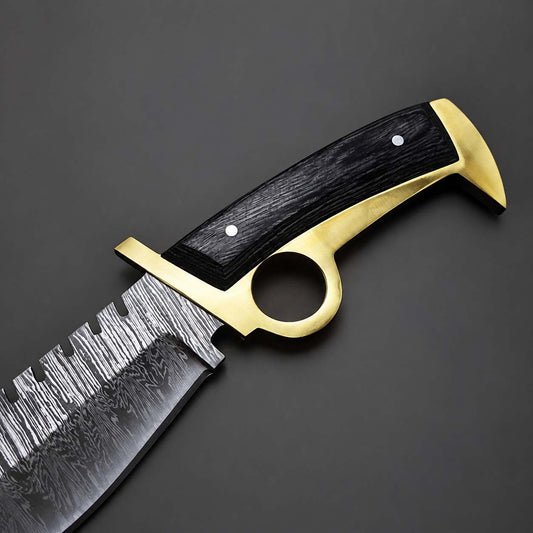

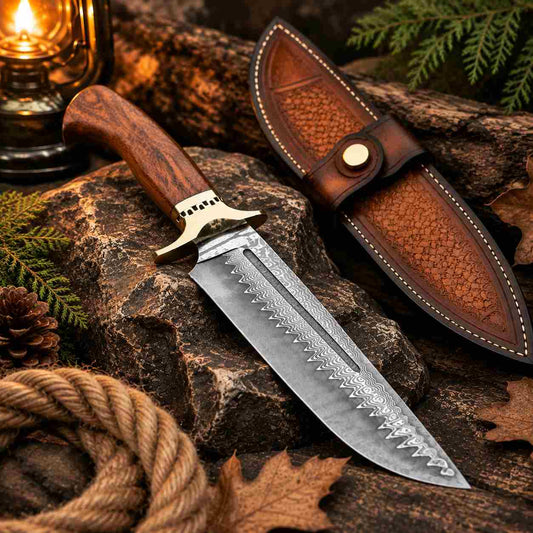


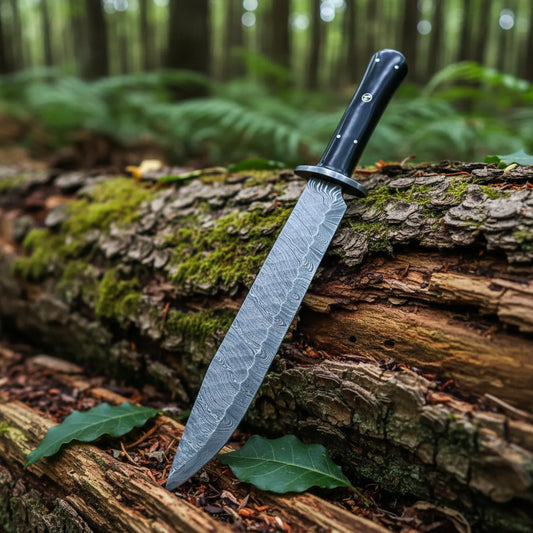
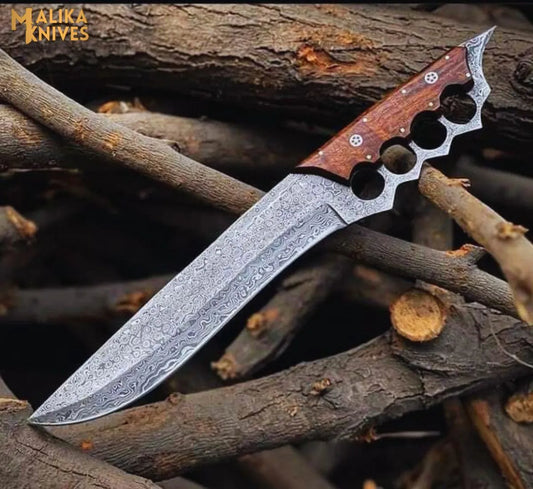


What Makes a Damascus Bowie Knife Different?
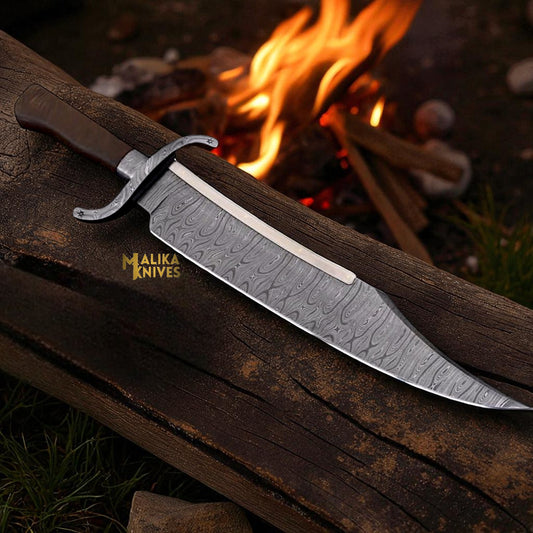
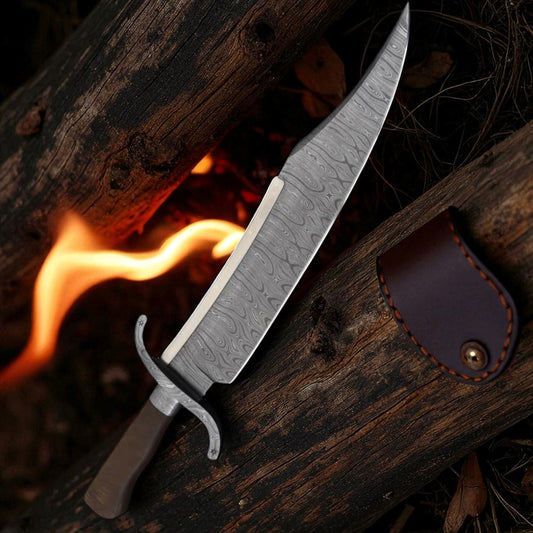
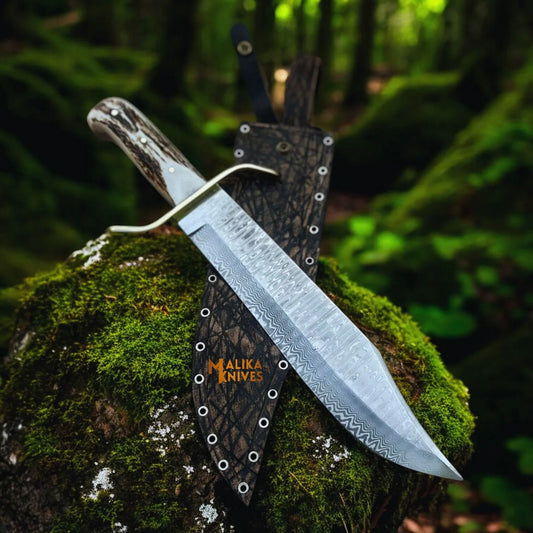
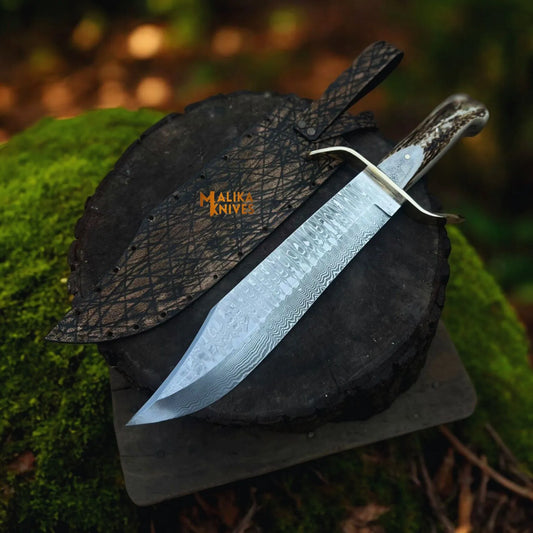
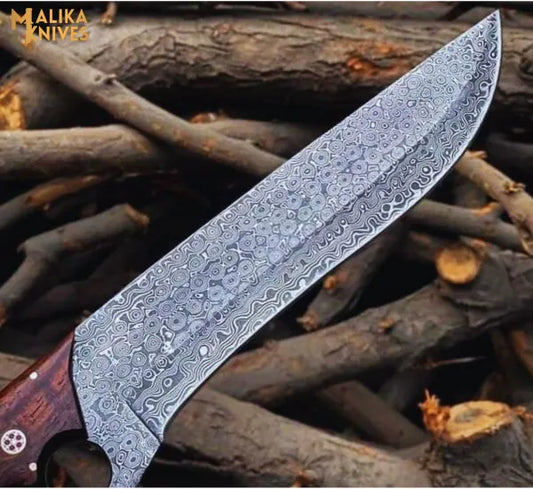
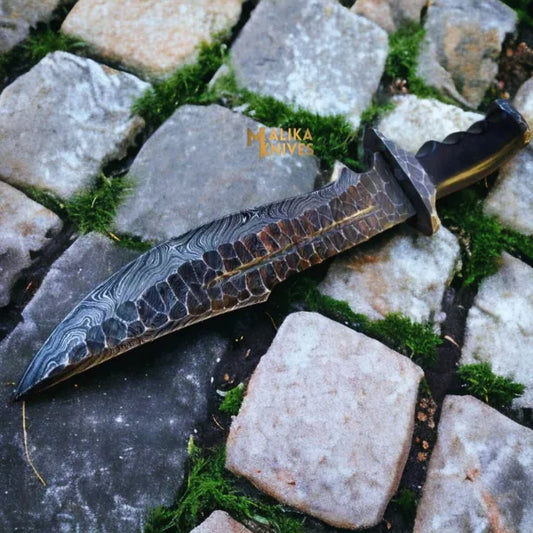
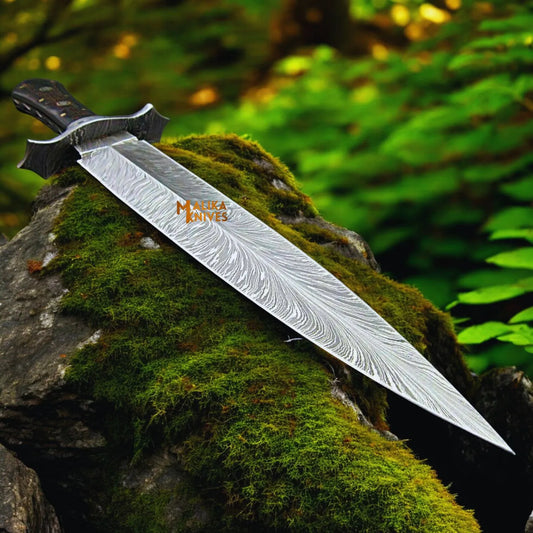
A Damascus bowie knife pairs the large, single-edge fixed-blade bowie profile with pattern-welded steel instead of a single homogenous alloy. Malika Knives forge own billets by layering steels, folding and welding them under hammer and press until the stack reaches hundreds of layers, and then forge and grind that billet into the Bowie shape.
Once etched, those layers surface as the flowing pattern Damascus is known for, meaning no two blades come out identical. That combination of a proven working blade shape and one-of-a-kind steel is why the Damascus bowie remains a standard for collectors and hard-use knife owners alike.
What Is a Damascus Bowie Knife Used For?
A bowie's long, heavy blade and clip point were built for general field and camp work, and that hasn't changed with Damascus steel added to the mix. Typical uses include the following:
- Hunting and field dressing on larger game
- General outdoor and homestead cutting tasks
- Displaying and collecting, given the hand-forged pattern
- Everyday heavy-duty cutting where a full-tang blade holds up
Buyers who need a lighter, more specialized curved blade for rope and cordage should compare Malika Knives' gut hook knives instead of the bowie, which is a general-purpose working blade, not a precision utility tool.
Carbon Damascus vs. Stainless Damascus: Which Should You Choose?
The two steel options in this collection perform differently, and the right one depends on how the knife will be used and stored.
Carbon Damascus is forged from 1095 and 15N20 steel and heat-treated to roughly 59–60 HRC. Folding these two steels together produces the deepest contrast after etching, and it's the traditional choice among collectors who want maximum pattern definition and classic forging character. It needs to be dried and lightly oiled after use to prevent rust.
Stainless Damascus is forged from VG10 and 15N20 and heat treated to roughly 59–61 HRC. It keeps the layered structure and pattern while resisting corrosion far better, making it the practical choice for anyone who carries or uses the knife in wet conditions and wants less maintenance.
How Should Buyers Choose the Best Damascus Bowie Knife?
The right bowie depends on how it will be carried, used, and cared for. Compare these factors before choosing:
- Carbon vs. stainless Damascus steel
- Blade length and thickness (our bowies run 4–6 mm)
- Handle material: stag antler, bull horn, camel bone, micarta, G10, or exotic hardwood.
- Guard and pin construction (brass, Damascus, copper, or mosaic pins)
- Intended use: fieldwork, collecting, or everyday heavy cutting
If most of your use is outdoors in wet or humid conditions, stainless Damascus and a full-tang G10 or micarta handle will hold up with less upkeep. If you're buying to collect or display, carbon Damascus with a natural handle material like stag or bullhorn tends to show the deepest, most traditional pattern.
Buyers who want a tool-steel edge instead of a forge-welded blade can also compare Malika Knives' D2 Steel Bowie Knife collection.
Why Does Blade Thickness Matter on a Bowie?
Blade thickness on Malika Knives' bowies runs 4 mm to 6 mm, depending on the design. That range gives a large working blade the spine strength to handle batoning and heavier field tasks without sacrificing the cutting geometry needed for finer work like skinning or food prep in camp. A thinner blade in this range cuts more efficiently; a thicker one holds up better to prying and heavy chopping. It's worth matching to your primary use before choosing a model.
How Should a Damascus Bowie Knife Be Maintained?
High-carbon Damascus needs more attention than stainless, but both benefit from the same basic habits:
- Wipe and dry the blade fully after every use
- Apply a light coat of oil before storage, especially on carbon Damascus
- Avoid leaving the knife in a damp leather sheath for extended periods.
- Store in a dry environment, blade lightly oiled
- Keep the edge sharpened along its original bevel angle.
With consistent care, both the pattern and the edge on a hand-forged Damascus bowie will last for generations.
Are Handmade Damascus Bowie Knives Good for Collectors and Gifts?
A hand-forged Damascus bowie brings together a historically significant blade shape with a one-of-a-kind steel pattern, which is exactly what collectors look for beyond factory-production knives. Every knife in this collection is made from scratch by Naqash and Younas Minhas in our Casper, Wyoming, workshop. We forge the billets in-house, then shape, heat treat, and finish each blade by hand. That process, and the fact that no two patterns repeat, is what makes a Damascus bowie a strong gift or collection piece rather than just a working tool.
Where Can Buyers Find the Right Damascus Bowie Knife?
Choosing the right Damascus bowie comes down to matching steel type, blade thickness, and handle material to how you'll actually use or display the knife. Field users benefit most from stainless Damascus and a synthetic handle; collectors typically prefer carbon Damascus paired with natural materials like stag or bull horn for the deepest pattern contrast.
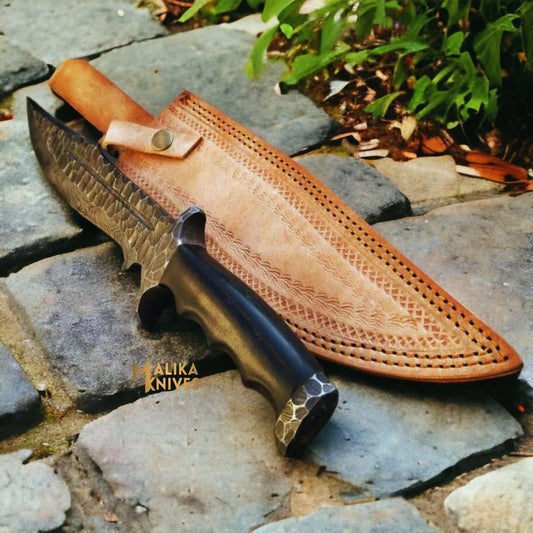
Every knife ships with a hand-stitched leather sheath built for horizontal or vertical carry. Explore the full collection below and choose the bowie whose steel, thickness, and handle match the work or the display case you have in mind.
FAQs About Damascus Bowie Knives
What is a Damascus bowie knife?
A Damascus bowie knife is a large fixed-blade bowie made from layered Damascus steel, where two or more steels are forge-welded together and folded to create hundreds of layers. After etching, those layers reveal the flowing pattern Damascus is known for, combining the classic bowie profile with a one-of-a-kind blade.
Is Damascus steel good for a bowie knife?
Yes, Malika Knives' Damascus blades are forged from 1095 and 15N20 for carbon Damascus or VG10 and 15N20 for stainless Damascus and heat-treated to around 59–61 HRC, giving a strong working edge with excellent retention.
How many layers are in your Damascus bowie knives?
Most blades in this collection carry over 500 layers. We forge the billets in-house, folding the layered steel repeatedly under hammer and press before the blade is shaped, which is what builds that depth of pattern.
What is the difference between carbon and stainless Damascus?
Carbon Damascus (1095/15N20) gives the deepest contrast and most traditional forging character but needs regular oiling to prevent rust. Stainless Damascus (VG10/15N20) offers improved corrosion resistance and easier upkeep while keeping the layered look.
How do I care for a Damascus bowie knife?
Wipe the blade clean and dry after each use and apply a light coat of oil before storage, especially for carbon Damascus. Avoid leaving the knife in a damp leather sheath for long periods.
Do your Damascus bowie knives come with a sheath?
Yes. Every knife ships with a hand-stitched leather sheath built for horizontal or vertical carry and fitted to the individual blade.
Are these Damascus bowie knives handmade?
Completely. We forge the Damascus billets in-house and shape, heat treat, and finish every blade by hand in Malika Knives' Wyoming workshop, made by Naqash and Younas Minhas, with no factory or mass production involved.
