
Handmade Gut Hook Knives
A gut hook knife is one of the most useful tools a hunter can carry. That small hooked blade on the spine is purpose-built to open game cleanly during field dressing, sliding under the hide and unzipping it without puncturing the organs beneath. We forge each gut hook knife by hand in our Wyoming workshop, in both D2 tool steel and layered Damascus, and every one ships with a handmade leather sheath. New to using one? Our field dressing knife guide for hunters explains exactly how a gut hook earns its place.
-
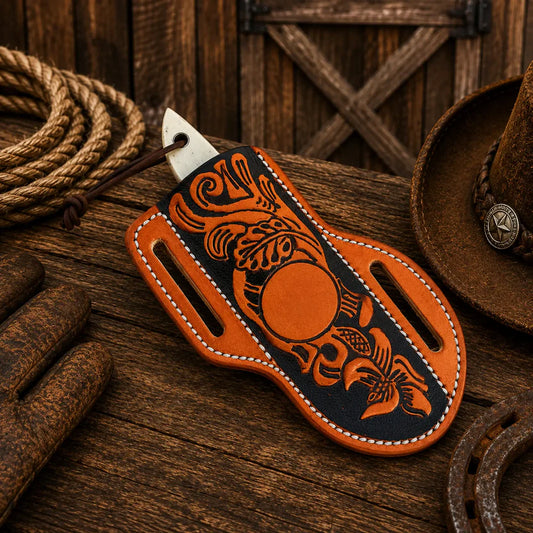
Gut Hook Cowboy Knife | Rasp Steel with Camel Bone Handle
Regular price $99.00 USDRegular priceUnit price per$180.00 USDSale price $99.00 USDSale -
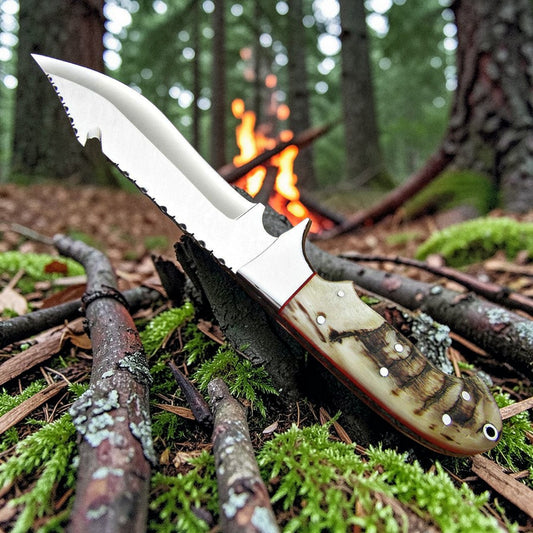
D2 Gut Hook Hunting Knife Ram Horn Handle
Regular price $110.00 USDRegular priceUnit price per$220.00 USDSale price $110.00 USDSale -
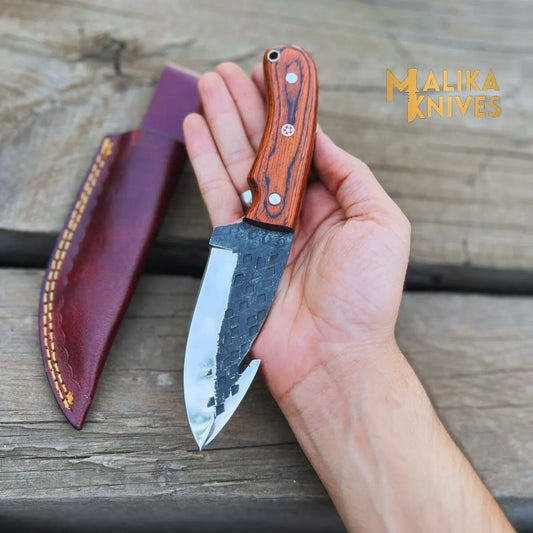
D2 Steel Cowboy Gut Hook Knife | 5mm Thick Blade | Pancake Sheath
Regular price $95.00 USDRegular priceUnit price per$190.00 USDSale price $95.00 USDSale -
Old Timer GutHook Skinner Knife | Exquisite Craftsmanship & Razor-Sharp Blade-0028
Regular price $70.00 USDRegular priceUnit price per$107.00 USDSale price $70.00 USDSale -
Gut Hook Skinning Knife – Big Game Hunting & Deer Processing Knife
Regular price $89.25 USDRegular priceUnit price per$119.00 USDSale price $89.25 USDSale -
Damascus Gut Hook Skinning Knife – Stag Horn Handle
Regular price $101.50 USDRegular priceUnit price per$145.00 USDSale price $101.50 USDSale -
Damascus Gut Hook Hunting Knife Wood Resin Handle
Regular price $89.99 USDRegular priceUnit price per$190.00 USDSale price $89.99 USDSale -
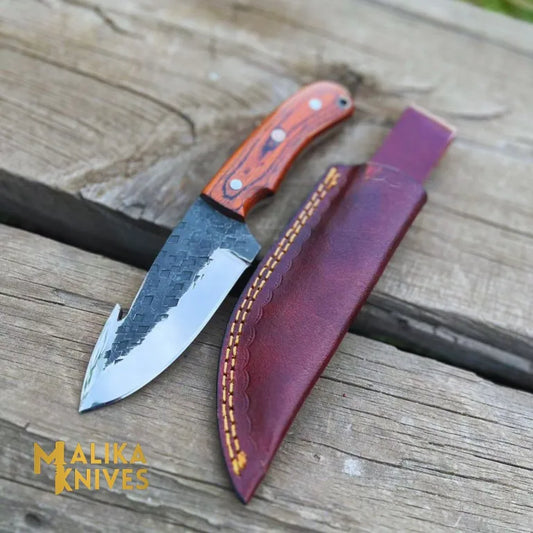
Damascus Gut Hook Hunting Knife with Wood Handle & Sheath
Regular price $137.00 USDRegular priceUnit price per$274.00 USDSale price $137.00 USDSale




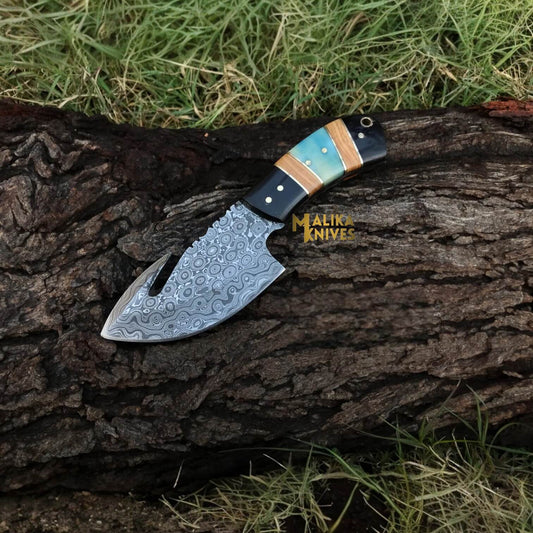
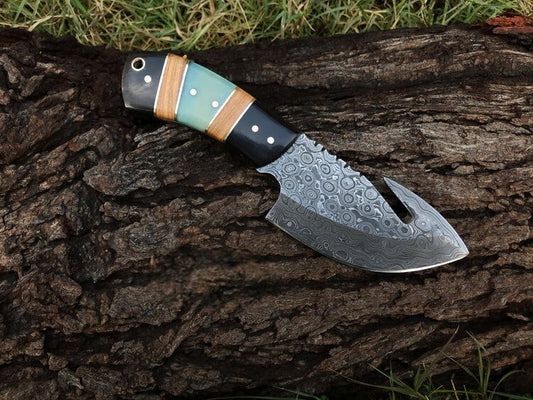
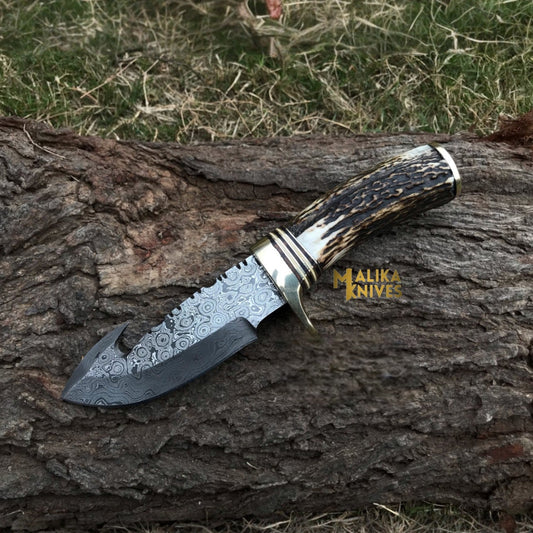
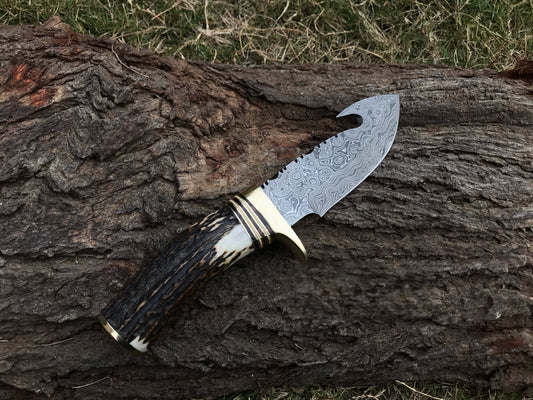

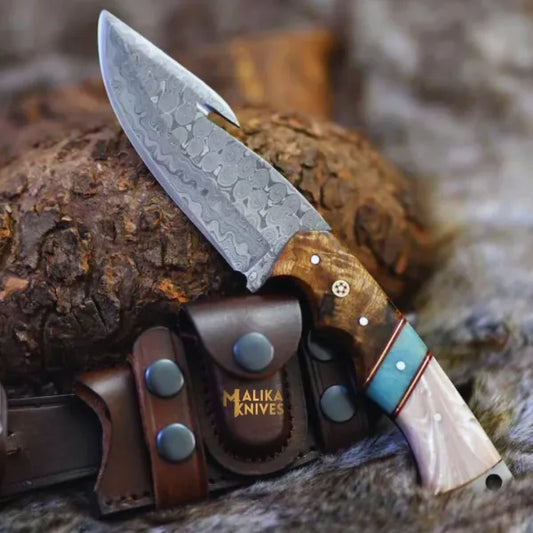


Every blade here is built by us, Naqash and Younas Minhas, with more than 15 years of combined experience at the bench. A hunting knife with a gut hook saves time and keeps your cuts clean in the field, which is why it's one of the most requested designs we make. These knives are part of our wider handmade hunting knives range and pair naturally with our skinning knives.
What Is a Gut Hook Knife For?
The gut hook is a sharpened, curved notch ground into the spine of the blade. During field dressing, you insert the hook under the hide and pull, and it slices the skin open from the inside out — opening the animal cleanly without nicking the stomach or intestines. That makes processing faster and reduces the risk of spoiling meat. The main blade then handles skinning and the rest of the work, so a single gut hook knife covers the whole job.
Steel Options for Gut Hook Knives
We build our gut hook knives in the steels that suit hard field use:
- D2 tool steel — semi-stainless with excellent edge retention and easy upkeep, ideal for a working gut hook hunting knife, as on our D2 gut hook hunting knife with a ram horn handle. Explore more in our D2 steel hunting knives collection.
- Carbon and stainless Damascus — layered 1095/15N20 or VG10/15N20 steel that pairs a striking pattern with a keen edge, like our Damascus gut hook skinning knife with a stag horn handle. See the full range in our Damascus hunting knives collection.
If you're weighing the two, our guide on the best steel for hunting knives, D2 vs Damascus, breaks it down.
Gut Hook Knives for Deer and Big Game
A gut hook really proves itself on deer and larger game, where a clean opening cut matters most. Our Gut Hook Skinning Knife for big game and deer processing is built for exactly that, combining a curved skinning belly with a sharp gut hook so you can open, skin, and process with one blade. For a heavier-duty option, the D2 Cowboy Gut Hook Knife with a 5 mm blade and pancake sheath brings serious strength to the field.
Handle Materials Built for Grip
A gut hook knife has to stay secure in wet, cold, messy conditions, so we fit each blade with a handle chosen for grip and durability. Natural stag horn, ram horn, and camel bone give a traditional look and a sure hold, while wood, resin, and composite handles stand up to hard use. Each handle is shaped and fitted by hand.
Caring for a Gut Hook Knife
The gut hook itself needs a little extra attention because of its curved shape. Wipe the blade and hook clean and dry after each use, and apply a light coat of oil before storage. Sharpening the hook takes a round or tapered sharpener rather than a flat stone — our guide on how to sharpen a hunting knife the right way covers the technique, and for Damascus blades, our Damascus care guide keeps both edge and pattern at their best.
Why Buy From Malika Knives
Every gut hook knife here is forged, ground, and finished by hand by us, Naqash and Younas Minhas, in Casper, Wyoming. We don't mass-produce, and each knife is paired with a hand-stitched leather sheath. You can read more about how we work on our About page, and reach out any time if you'd like help choosing the right gut hook knife for your hunt.
Frequently Asked Questions About Gut Hook Knives
What is a gut hook knife used for?
A gut hook knife is used to open game cleanly during field dressing. The sharpened hook on the spine slides under the hide and slices it open from the inside out, so you can unzip the skin without puncturing the stomach or intestines and risking spoiled meat.
How do you use a gut hook?
After making a small starting cut, insert the gut hook under the hide with the point facing up and pull it along the belly. The hook slices the skin open while keeping the sharp edge away from the organs underneath, making field dressing faster and cleaner.
Is a gut hook worth it on a hunting knife?
For hunters who field dress their own game, yes. A gut hook speeds up opening the animal and reduces the risk of nicking the gut, which helps protect the meat. It also means one knife can handle both opening and skinning.
What steel is best for a gut hook knife?
D2 tool steel is a great low-maintenance choice with strong edge retention, while Damascus offers a striking pattern with a keen edge. Both perform well in the field; the choice comes down to how much upkeep you want versus how much you value the layered look.
How do you sharpen a gut hook?
Because the hook is curved, it needs a round or tapered sharpener, such as a sharpening rod or the tapered tip of a diamond sharpener, rather than a flat stone. Work the inside curve of the hook gently until the edge is restored.
Are your gut hook knives full tang?
Most of our gut hook knives are full tang, meaning the steel runs the full length of the handle for maximum strength and balance, which matters for a knife meant to take real field use.
Can a gut hook knife be used for skinning too?
Yes. Many of our gut hook knives combine a curved skinning belly with the gut hook, so a single blade can open, skin, and process game. They overlap closely with our dedicated skinning knives.
What size are your gut hook knives?
Our gut hook knives are sized for practical field use, with blades and handles balanced for control during dressing and skinning. Blade thickness runs up to around 5 mm on heavier models like our Cowboy gut hook for added strength.
Do your gut hook knives come with a sheath?
Yes. Every gut hook knife in this collection comes with a handmade leather sheath, fitted to the individual blade for safe carry in the field.
Where are your gut hook knives made?
Every gut hook knife is forged and finished by hand in Casper, Wyoming, by Naqash and Younas Minhas.
