
Handmade Western Bowie Knives
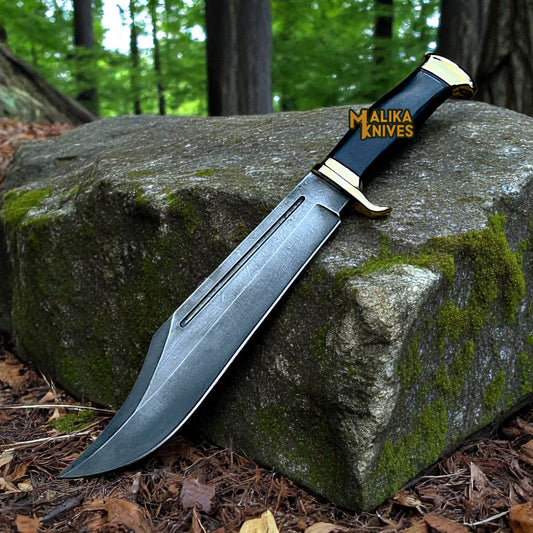
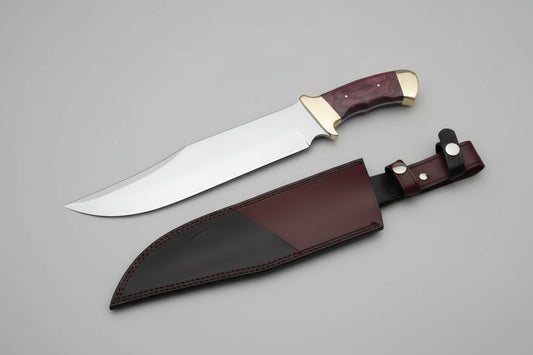
A Western Bowie is a large fixed-blade cut in the old frontier pattern: a broad clip point, a deep belly for skinning and camp work, a solid guard, and a handle that fills the palm. Every knife in this collection is forged and finished by hand and ships with a hand-stitched leather sheath. A blade this size is not a pocket knife and not a kitchen knife, so match the length to the work before you choose.
-
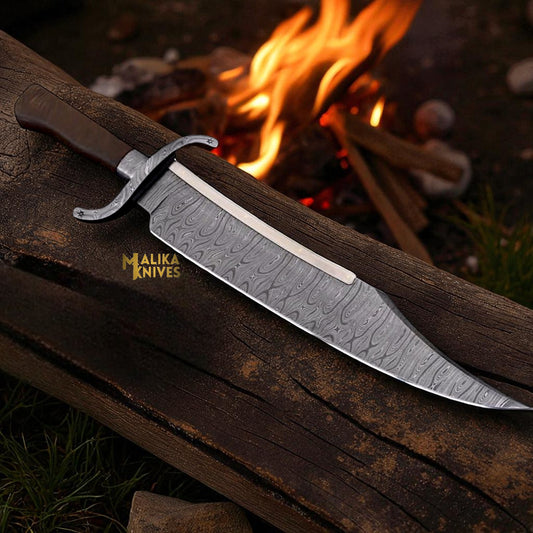
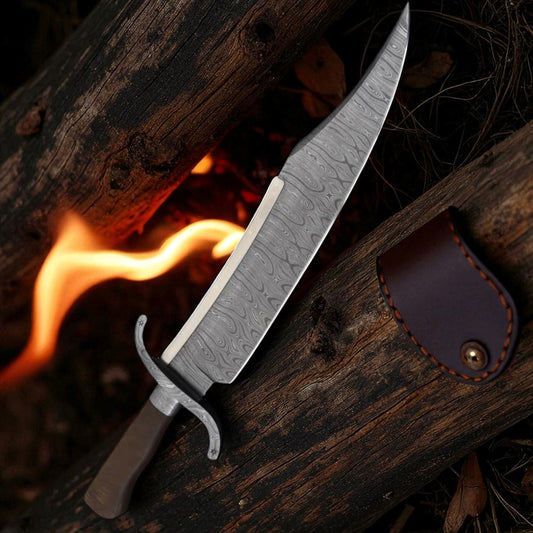
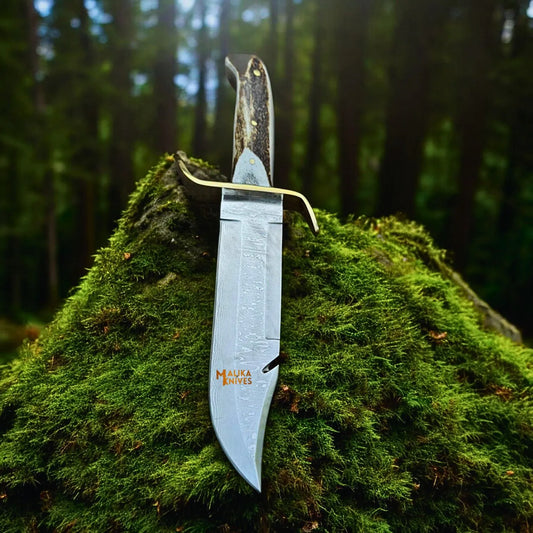
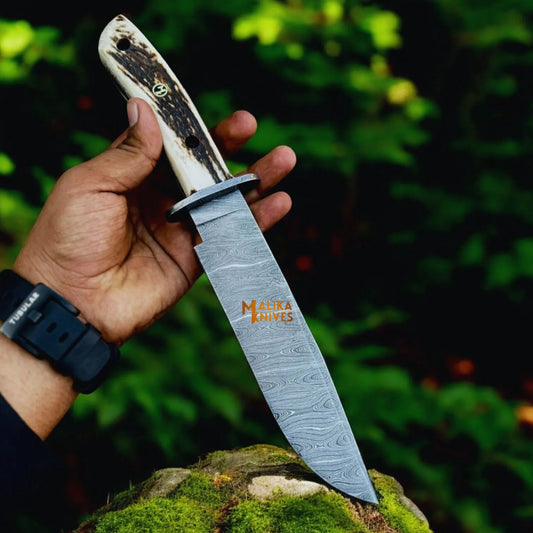
Handmade Alamo Musso Bowie Knife Damascus Steel
Normaler Preis $230.00 USDNormaler PreisGrundpreis pro$460.00 USDVerkaufspreis $230.00 USDSale -
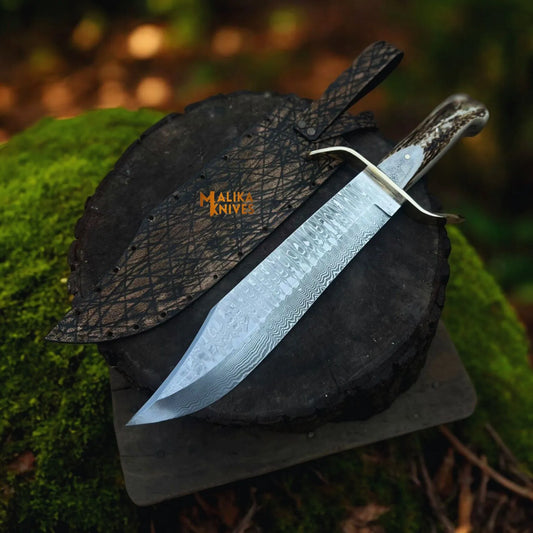
Wild West Bowie Knife Stainless Damascus Stag Handle
Normaler Preis $195.00 USDNormaler PreisGrundpreis pro$265.00 USDVerkaufspreis $195.00 USDSale -
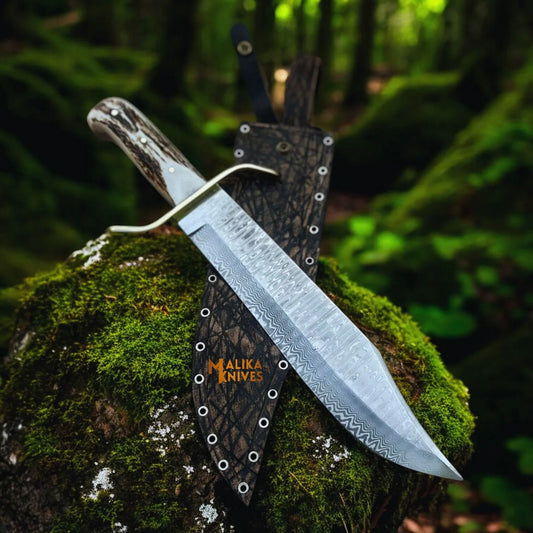
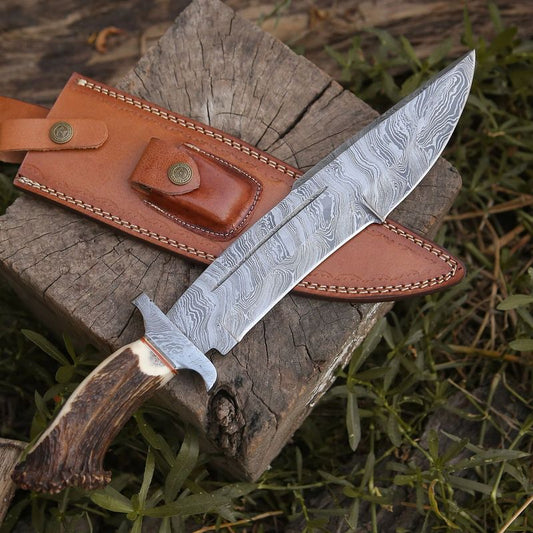
SS Damascus Gut Hook Bowie Knife Stag Antler Handle Sheath
Normaler Preis $185.00 USDNormaler PreisGrundpreis pro$370.00 USDVerkaufspreis $185.00 USDSale -
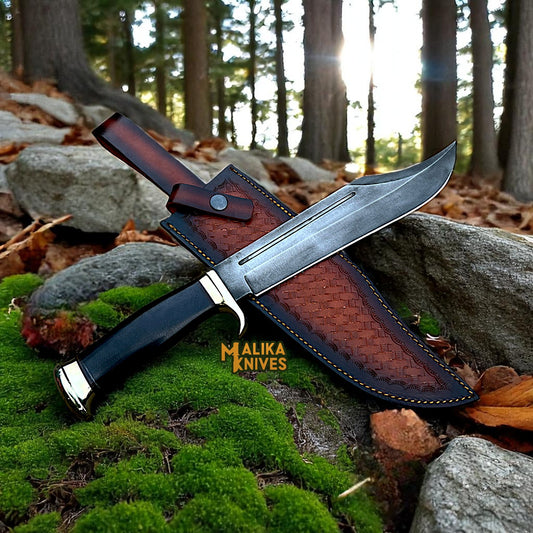
Dundee Bowie Knife D2 Carbon Steel with Bull Horn
Normaler Preis $127.50 USDNormaler PreisGrundpreis pro$230.00 USDVerkaufspreis $127.50 USDSale -
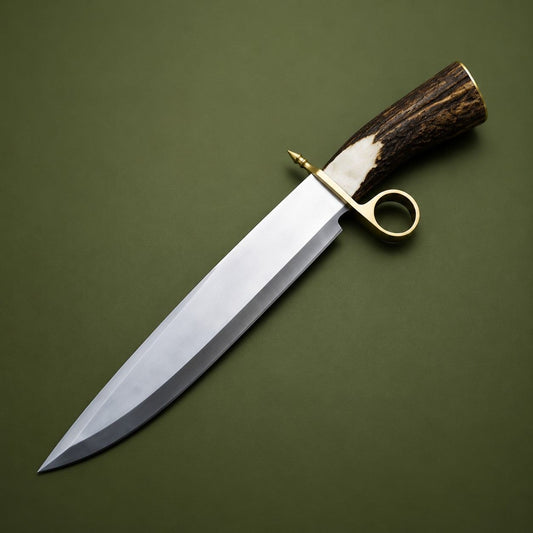
Tombstone Billy Clanton Ring Guard Bowie Knife Replica – Handmade 1095 Carbon Steel Knife
Normaler Preis $270.00 USDNormaler PreisGrundpreis pro$450.00 USDVerkaufspreis $270.00 USDSale -
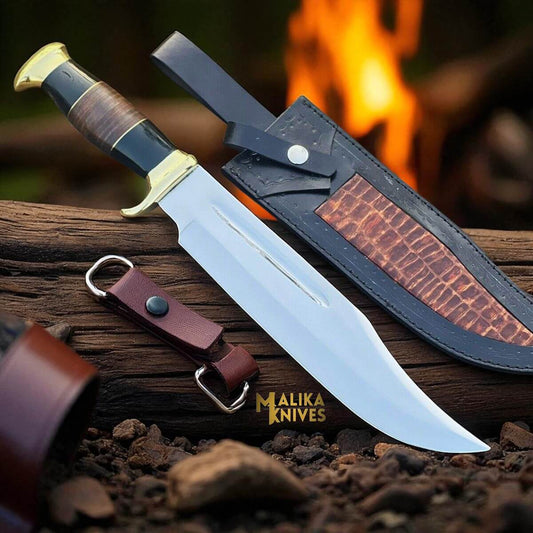
Condor Undertaker Bowie Fixed Blade Knife – Stainless Steel Hunting Knife With Leather Sheath
Normaler Preis $175.00 USDNormaler PreisGrundpreis pro$350.00 USDVerkaufspreis $175.00 USDSale -
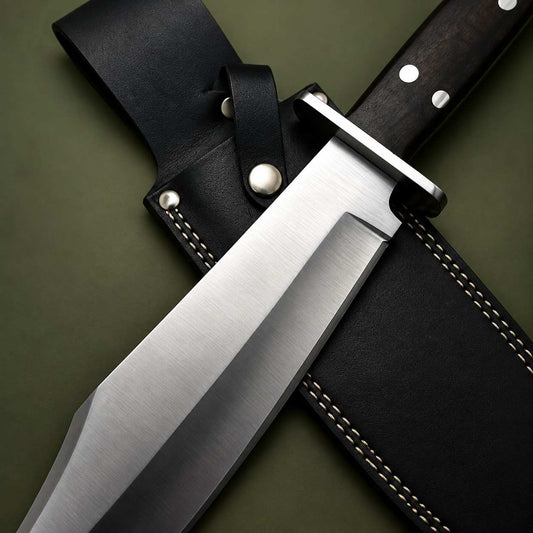
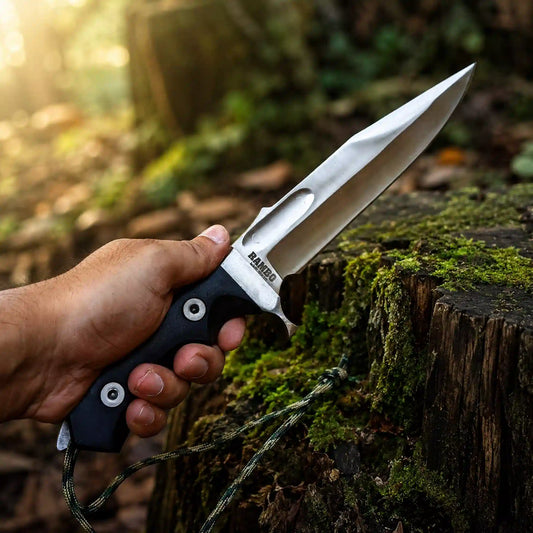
Rambo V Last Blood Replica Bowie Knife – 14" D2 Blade, Micarta Handle
Normaler Preis $145.00 USDNormaler PreisGrundpreis pro$290.00 USDVerkaufspreis $145.00 USDSale -
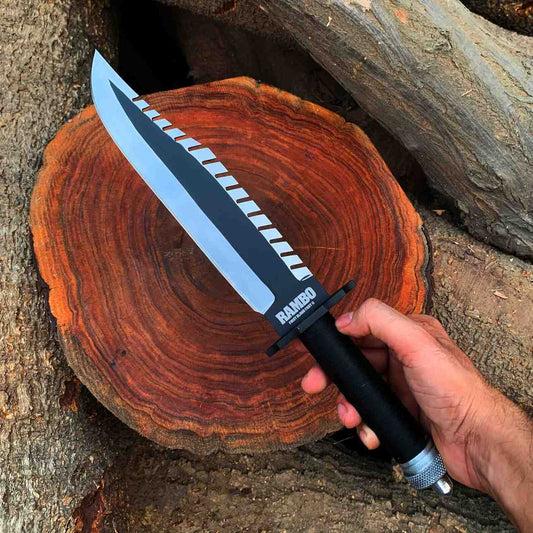
Rambo First Blood Part II Replica Knife – 16" Survival Knife with Leather Sheath
Normaler Preis $140.00 USDNormaler PreisGrundpreis pro$280.00 USDVerkaufspreis $140.00 USDSale -
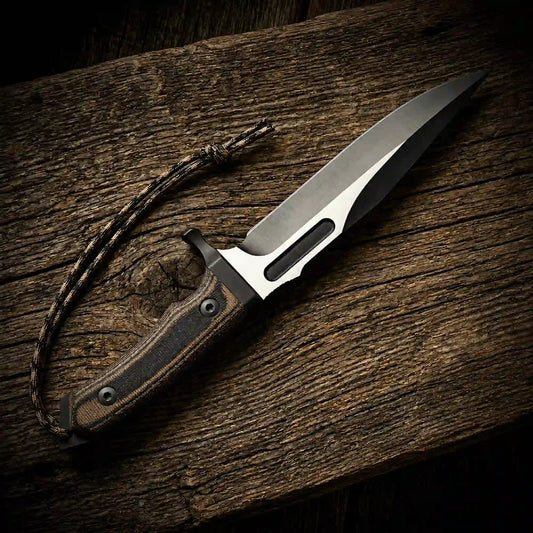
Rambo-Style Survival Bowie Knife – 14" D2 Spear Point with G10 Handle
Normaler Preis $155.00 USDNormaler PreisGrundpreis pro$310.00 USDVerkaufspreis $155.00 USDSale -
Damascus Stag Handle Bowie Knife Full Tang
Normaler Preis $135.00 USDNormaler PreisGrundpreis pro$225.00 USDVerkaufspreis $135.00 USDSale -
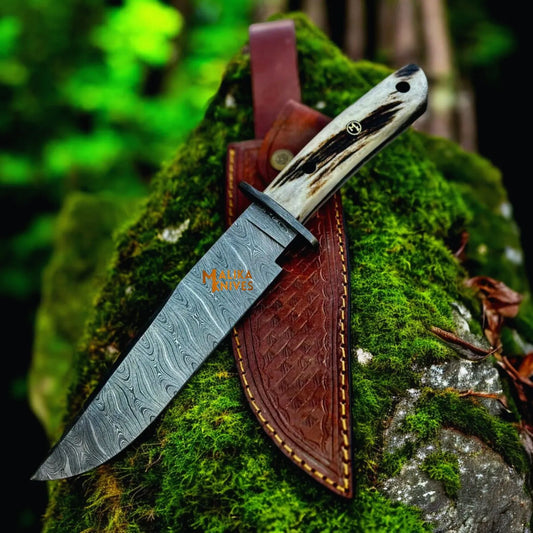
Damascus Stag Bowie Knife with Leather Sheath
Normaler Preis $180.00 USDNormaler PreisGrundpreis pro$250.00 USDVerkaufspreis $180.00 USDSale -
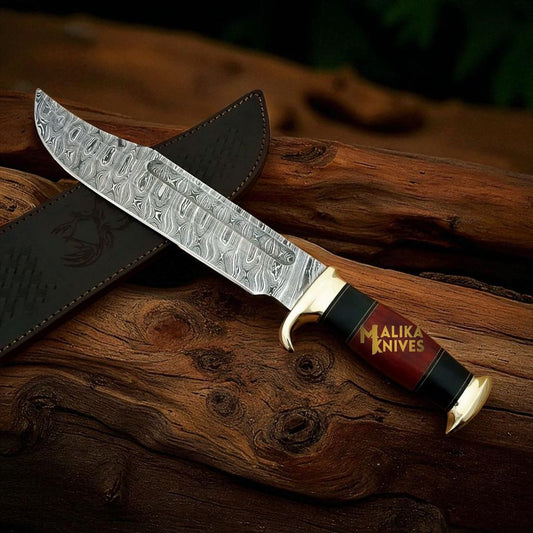
Damascus Dundee Bowie Knife Bull Horn Pakka Wood Handle
Normaler Preis $157.50 USDNormaler PreisGrundpreis pro$225.00 USDVerkaufspreis $157.50 USDSale -
Crocodile Dundee Knife Replica | D2 Steel Blade | Black Micarta Handle
Normaler Preis $252.00 USDNormaler PreisGrundpreis pro$360.00 USDVerkaufspreis $252.00 USDSale -
Full Tang Texas Bowie Knife | Red Pakka Wood
Normaler Preis $130.00 USDNormaler PreisGrundpreis pro$137.00 USDVerkaufspreis $130.00 USDSale -
Copper Damascus Alamo Musso Bowie Knife
Normaler Preis $1,920.00 USDNormaler PreisGrundpreis pro$3,200.00 USDVerkaufspreis $1,920.00 USDSale












- 13 western Bowie knives in stock, from $127.50 to $1,920
- Steels: D2 tool steel, carbon Damascus (1095/15N20), stainless Damascus (VG10/15N20), and J2 stainless
- Blade lengths from working size up to 16 inches on the largest frontier profiles
- Handles: stag horn, stag antler, bull horn, camel bone, rosewood, pakka wood, micarta, and G10
- Hand-stitched leather sheath included with every knife, cut to that individual blade
- Full tang on the working profiles, with brass guards and pommels on the traditional builds
What is a western Bowie knife?
A Western Bowie is a large fixed-blade knife built in the American frontier pattern that spread west through the 1830s and 1840s. The defining features are a broad clip-point blade, a pronounced belly ahead of the handle, and a guard heavy enough to stop the hand under a powerful thrust. Blade lengths generally start around 8 inches and run considerably longer on the display and collector builds.
What separates the western build from the wider Bowie family are proportion and dress. The blade tends to run broader through the belly, the guard is usually more prominent, and the fittings lean traditional: brass guards and pommels, staghorn or bullhorn scales, and hand-tooled leather. New to the pattern? Start with Malika Knives' guide to what a Bowie knife is.
How does a western Bowie compare to other large blades?
Buyers weighing one of these usually have three other shapes in mind. The table sets out where each one wins and where it does not.
|
|
Western Bowie |
Survival Bowie |
Hunting knife |
Ranch or cowboy knife |
|
Blade profile |
Broad clip point, deep belly |
Spear or clip point, sawback spine common |
Drop point, short belly |
Trailing or clip point, slim |
|
Typical length |
8 to 12 inches |
14 to 16 inches |
3.5 to 5 inches |
4 to 6 inches |
|
Fittings |
Brass guard and pommel, natural handle materials |
Synthetic handle, lanyard, utility features |
Minimal or no guard |
Guardless, often ring or stag pommel |
|
Best at |
One blade covering camp, game and general work |
Chopping, batoning, heavy field work |
Field dressing, skinning, caping |
Stock work, rope, daily ranch cutting |
|
Weak at |
Discreet carry, fine kitchen slicing |
Detail and precision work |
Chopping, heavy camp tasks |
Chopping, large game breakdown |
|
Where to look |
Here |
What is a western Bowie used for?
The size earns its keep on work where a small blade runs short:
- Field dressing, skinning and breaking down large game
- Splitting kindling and processing firewood by batoning
- Clearing light brush and cutting saplings around camp
- Camp food preparation on a board or stump
- Cutting rope, webbing, hide and heavy cordage
- Display, gifting and collection, particularly the presentation builds
Where the pattern is the wrong tool: it is too long for pocket or discreet carry, too thick behind the edge for fine kitchen slicing, and heavier than most people want for extended carving. For smaller everyday cutting, look at Malika Knives folding knives. For kitchen work, the kitchen knives range is the right answer.
How do you choose a western Bowie?
Work backwards from the job, not the photograph. Six factors settle it.
- Blade length. Eight to ten inches handles nearly everything and still rides a belt comfortably. Fourteen inches and up chops noticeably better and becomes awkward for anything fine.
- Steel. D2 holds an edge longest and resists weather. Carbon Damascus sharpens fastest and carries the pattern. Stainless Damascus and J2 need the least care.
- Guard. A brass or steel guard stops the hand sliding forward on a hard thrust into wood or bone. Guardless builds draw faster and carry flatter.
- Handle material. Micarta and G10 hold grip when wet. Stag horn, bull horn, rosewood and pakka wood look right on a traditional build and suit a gift or display piece.
- Balance. Forward balance chops harder. Neutral balance skins and carves more comfortably.
- Carry style. Check the sheath belt loop against the belt you actually wear, since a heavy blade on a loose rig shifts all day.
If the knife is going into the field, prioritize length, balance and grip. If it is a gift or a collection piece, prioritize the steel pattern and handle material.
What is a western Bowie used for?
The size of a Western Bowie knife is beneficial for tasks where a small blade is insufficient.
- Field dressing, skinning, and breaking down large game
- Splitting kindling and processing firewood by batoning
- Clearing light brush and cutting saplings around camp
- Camp food preparation on a board or stump
- Cutting rope, webbing, hide, and heavy cordage
- Display, gifting, and collection, particularly the
Where the pattern is the wrong tool: it is too long for pocket or discreet carry, too thick behind the edge for fine kitchen slicing, and heavier than most people want for extended carving. For smaller everyday cutting, look at Malika Knives' folding knives. For kitchen work, the kitchen knife range is the right answer.
How do you choose a western Bowie?
Consider the job requirements first, rather than focusing solely on the photograph. Six factors settle it.
- Blade length. Eight to ten inches handles nearly everything and still rides a belt comfortably. Fourteen inches and up chops noticeably better and becomes awkward for anything fine.
- Steel. D2 holds an edge longest and resists weather. Carbon Damascus sharpens fastest and carries the pattern. Stainless Damascus and J2 need the least care.
- Guard. A brass or steel guard stops the hand sliding forward on a hard thrust into wood or bone. Guardless builds draw faster and carry flatter.
- Handle material. Micarta and G10 hold grip when wet. Staghorn, bullhorn, rosewood, and pakka wood look right on a traditional build and suit a gift or display piece.
- Balance. Forward balance chops harder. Neutral balance skins and carves more comfortably.
- Carry style. Check the sheath belt loop against the belt you actually wear, since a heavy blade on a loose rig shifts all day.
If the knife is going into the field, prioritize length, balance, and grip. If it is a gift or a collection piece, prioritize the steel pattern and handle material.
Which western Bowie is right for you?
Five common cases, and the knife we would hand you at the bench.
- First large fixed blade, tight budget. The D2 Dundee with a bullhorn. D2 edge retention, a brass guard, and a tooled sheath at the entry price point.
- Hunting first, everything else second. The stainless Damascus gut hook model. Stainless needs the least care after a wet day, and the gut hook saves swapping tools mid-field.
- Traditional look, real use. The Wild West in stainless Damascus with stag. Frontier dress with a low-maintenance blade underneath.
- Historic pattern for the wall. The Alamo Musso in carbon Damascus with rosewood, or the copper Damascus Alamo Musso if the piece is the centerpiece of a collection.
- Maximum blade, hard use. The 14-inch D2 spear point with G10. Chopping weight and a handle that grips wetly.
Stuck between two? Send us both through contact, and we will tell you which one we would keep.
What steels do we use, and how do they differ?
No steel wins on edge retention, toughness, corrosion resistance, and ease of sharpening at once. Every choice trades one for another.
D2 tool steel
High-carbon, high-chromium tool steel with strong wear resistance and long edge retention. Often described as semi-stainless, since the chromium resists surface rust better than plain carbon steel without being fully stainless. The trade is patience with the stone. Best for buyers who use a knife hard and sharpen it rarely. See the D2 Bowie knives.
Carbon Damascus, 1095, and 15N20
Layered high-carbon steel, forge-welded, folded, and etched to bring out the pattern. Takes a very fine edge and returns to sharp quickly on a stone, which suits anyone who touches up a blade regularly. Not stainless, so it spots if left wet. See the Damascus Bowie knives.
Stainless Damascus, VG10, and 15N20
Layered construction over a stainless core, giving the pattern without the corrosion sensitivity of carbon Damascus. The practical choice for hunting and wet-weather carry where the knife will not always get dried immediately.
J2 stainless
A clean, low-maintenance stainless steel. Easy to sharpen, easy to keep, and forgiving of neglect. Suited to buyers who want a working knife without a care routine.
Copper Damascus
Copper layered into the billet gives a warm contrast line through the pattern. Chose for presentation pieces rather than fieldwork. See the copper Damascus Bowie knives.
What handle materials and fittings are available?
The handle is where a frontier blade gets its character, and it also decides how the knife behaves wet.
- Stag horn and stag antler. No two pieces alike. The traditional frontier material is the most requested on collector builds.
- Bull horn. Deep color and a smooth finish. Pairs naturally with brass fittings.
- Camel bone. Pale, dense, and takes a fine polish.
- Rosewood and pakka wood. Warm and traditional. Pakka wood adds moisture stability that natural hardwood does not have.
- Micarta and G10. Layered linen or glass laminate. The best grip when wet and the least affected by weather.
Every knife ships with a leather sheath cut and stitched for that individual blade, and several carry tooled or embossed leather.
How do you sharpen and care for the blade?
A deep-bellied clip point sharpens differently from a small straight edge, and the belly is where most people go wrong.
- Work the straight section flat on the stone at roughly 20 degrees per side.
- As the contact point reaches the belly, lift the handle gradually so the stone tracks around the curve. Lifting too late leaves a dull patch just ahead of the belly, which is the single most common fault on this shape.
- Finish the clipped tip last with lighter pressure, since the steel runs thinner there.
- Strop on leather to remove the burr.
Daily care takes about a minute on a carbon or Damascus blade. Wipe dry after every use, including after cutting anything acidic.
Are Western Bowie knives legal to own and carry?
Ownership and carry are separate questions. Carry is where the rules diverge.
United States
Large fixed blades are legal to own throughout the United States. Check both your state statute and your city ordinance before carrying.
Canada
Fixed blades are legal to own in Canada. Prohibited classifications turn on the opening mechanism rather than blade length. Carry it sheathed and inside a pack where practical.
United Kingdom and EU
Ownership is generally legal, but a fixed blade of any length is not a general-carry knife in public without good reason. Hunting, fishing, work use, and transport to and from those activities are the usual grounds. Buyers should confirm current import and age-verification requirements before ordering.
Rules change. Treat the above as a starting point and verify the current law where you live.
Who makes these knives?
Every blade here is forged and finished by hand by Naqash and Younas Minhas, with more than 15 years of combined experience at the bench. Nothing is mass-produced. Each knife is ground, heat-treated, and fitted individually, then paired with a hand-stitched leather sheath cut for that blade.
Because each piece is made individually, we take custom work: blade length, steel choice, handle material, guard and pommel style, and sheath finish. Send a specification through contact and we will tell you what is achievable and what it costs.
Frequently asked questions about Western Bowie knives
What is a western Bowie knife?
A Western Bowie is a large fixed-blade knife built in the American frontier pattern, with a broad clip-point blade, a deep belly, a solid guard, and a full tang. Blade lengths typically start around 8 inches. The style is associated with frontier and Old West care.
What blade length should it be?
Eight to ten inches is the practical range for a knife that both chops and does detail work, and it is what we build most often. Fourteen inches and above chops harder but becomes awkward for skinning and caping. The largest blade in this collection runs 16 inches.
What steel is best for a western Bowie?
D2 for hard use with infrequent sharpening. Carbon Damascus for owners who maintain their blades and want the layered pattern. Stainless Damascus or J2 for wet-weather carry and the least upkeep. All four are represented in this collection.
Are your western Bowie knives full tang?
The working profiles are full tang, meaning the steel runs the full length of the handle with the scales pinned on either side. Full tang matters most on a large blade because chopping loads concentrate exactly where a partial tang would end. Construction is stated on each product page.
Can it be used for hunting?
Yes. The deep belly suits skinning and field dressing, and the strong point handles detail cuts. The stainless Damascus gut hook model was built specifically for that work. Hunters who want a smaller companion blade should also see Malika Knives' skinning and gut hook knives.
Can it be used for batoning?
The full tang models with thick spines handle batoning. Strike the exposed spine over the wood, never over the handle, and avoid knots where the blade can twist. Presentation builds with natural horn or bone scales are not intended for that load.
Do these knives come with a sheath?
Every knife ships with a hand-stitched leather sheath cut for that individual blade. Several models carry toled or embossed leather, and one presentation piece ships in a wooden box. The carry style is listed on the product page.
How long will a hand-forged Bowie last?
Decades with basic care. The limiting factors are corrosion and edge geometry rather than wear. Dry and oil the blade after use, avoid storing it in a damp sheath, and sharpen with light pressure so as little steel as possible is removed over the life of the knife.
Does a western Bowie make a good gift?
The pattern is one of the more common gift knives because the shape is instantly recognizable and the size makes it a display piece as well as a tool. Damascus and copper Damascus builds with stag horn, bull horn, or rosewood handles suit gifting best.
