


Ironwood Ranch Bull Cutter Knife in D2 Rasp Steel
Ironwood Ranch Bull Cutter Knife in D2 Rasp Steel
Couldn't load pickup availability
SKU:Bull Cutter-404
Share


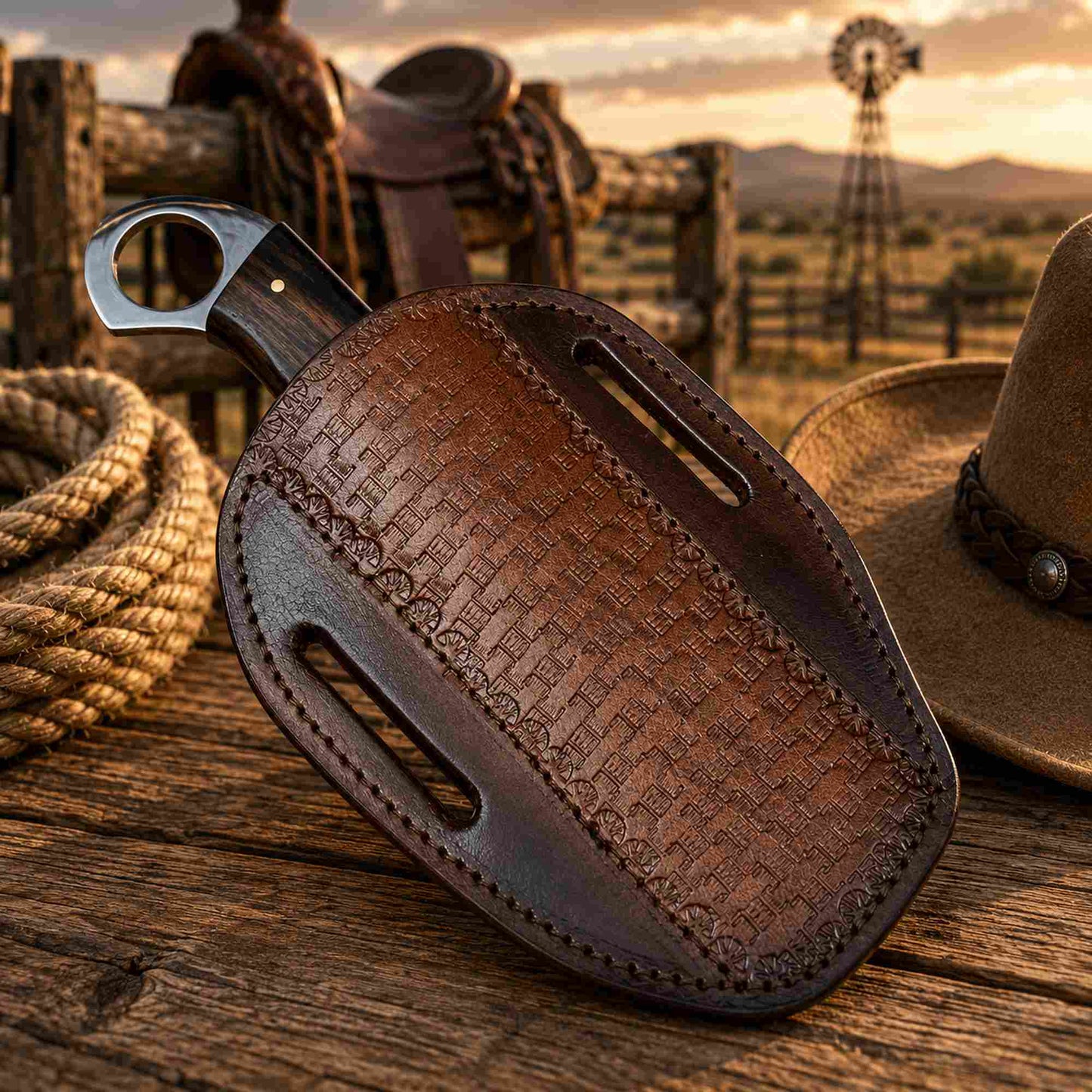
Western Belt Carry with a Heavier Working Feel
Some western knives are built around appearance first. This one feels different the second it hits your hand. The extra blade thickness, forged rasp texture, and forward-weighted cleaver profile give this knife a more grounded working feel compared to cleaner polished fixed blades.
The shape stays compact enough for belt carry, but the wider edge profile gives more authority during rope work, outdoor cutting, and utility tasks around camp or ranch property. The finger ring also changes the handling completely. It keeps the knife planted during movement and gives better control when making repeated cuts.
For people who spend more time outdoors than indoors, this type of compact western fixed blade tends to make more sense than oversized hunting knives that become uncomfortable after a few hours on the belt.
Forged D2 Rasp Steel with Rugged Character
The blade uses hand-forged D2 rasp steel with a raw textured finish that keeps the knife looking closer to a true working tool than a factory-made display blade. The forged pattern gives every knife a slightly different appearance, especially along the darker upper section where the rasp texture remains visible.
D2 steel became popular among outdoor knife users because it handles repeated cutting without losing its edge quickly. Combined with the 4–5mm blade thickness, this knife carries enough strength for harder utility work while still staying manageable for everyday use.
Unlike polished western knives that hide wear easily, rasp steel develops character over time. Small marks and usage patterns tend to add personality instead of making the knife look worn out.
Western fixed blades with wider cutting edges continue to stay popular among ranch users because they balance carry comfort with practical cutting performance. Compact bull cutter profiles especially stand out for rope work, camp use, leather tasks, and daily outdoor carry. If you want to learn more about the origins, blade shape, and working purpose behind this style, read our what is a bull cutter knife guide for a deeper breakdown of traditional western bull cutter designs and their role in ranch utility.
Ironwood Handle Built Around Grip Stability
The dark ironwood handle gives this knife a more traditional ranch appearance without becoming flashy or overdesigned. Ironwood remains popular because it stays dense, durable, and naturally balanced in hand.
The contouring near the finger groove helps reduce slipping during harder cuts while the finger ring creates an additional control point that many western users prefer once they get used to carrying this style.
Brass pins keep the construction visually clean while reinforcing the full tang structure underneath. The result feels more like a purpose-built working knife than a decorative western piece.
Users searching for handmade cowboy knives often move toward ironwood because the material ages naturally and develops a stronger character over time rather than looking artificial after use.
Crossdraw Carry That Stays Comfortable on the Belt
The sheath uses hand-stitched cowhide leather built around horizontal crossdraw carry. This setup changes how the knife rides completely compared to lower hanging western sheaths.
Crossdraw carry remains popular because it:
- stays flatter against the belt
- improves seated comfort
- reduces movement while walking
- allows faster access from horseback or vehicles
That makes this setup especially useful for ranch carry and outdoor movement where larger hanging sheaths become awkward throughout the day.
Many users exploring different bull cutter knives eventually end up preferring crossdraw setups because they feel easier to wear long-term without sacrificing quick access.
Compact Utility Blade for Ranch and Camp Use
This knife was designed around compact utility instead of oversized survival styling. The cleaver-style edge profile works especially well for:
- rope cutting
- camp food prep
- leather work
- ranch utility
- outdoor carry
- general field use
The wider edge also gives better cutting contact compared to narrower clip-point western blades.
You can also explore our broader handmade ranch knife collection for more western fixed blade styles designed around outdoor carry, forged steel construction, and traditional cowboy utility.
Specifications
Blade
- Handmade D2 Rasp Steel
- Approx. 4-inch Blade Length
- 4–5mm Blade Thickness
- Cleaver-Style Bull Cutter Edge
Handle
- Natural Ironwood
- Finger Ring Design
- Brass Pins
Construction
- Full Tang Fixed Blade
- Handmade Build
Sheath
- Hand-Stitched Cowhide Leather
- Horizontal Crossdraw Carry
Size
- Overall Length: Approx. 8.5 inches
- Weight: Approx. 180 grams
FAQs
Why do some ranch users prefer bull cutter blades over clip points?
Bull cutter blades provide more straight cutting edge and better contact during utility cutting tasks like rope work and camp use.
Does ironwood crack easily outdoors?
No. Ironwood is naturally dense and handles outdoor conditions better than many softer woods.
Is the rasp texture only cosmetic?
No. The forged rasp texture comes from the steel itself and gives the knife a rougher working character.
What advantage does crossdraw carry offer?
Crossdraw carry keeps the knife flatter on the belt and improves comfort while sitting or riding.
Is this knife better for utility work or skinning?
This profile leans more toward utility and ranch-style cutting rather than dedicated skinning tasks.
Does the finger ring affect grip control?
Yes. Many users prefer finger ring designs because they help stabilize the knife during repeated cuts.
Will the blade show wear over time?
Yes. Like most forged working knives, the blade develops natural usage character with regular carry and cutting.
Is this knife balanced for everyday belt carry?
Yes. The compact dimensions and horizontal sheath setup keep the knife manageable during long wear.
Does each forged blade look identical?
No. Forged rasp steel patterns vary slightly from knife to knife.
Who usually buys this style of knife?
This style is popular among ranch users, western knife collectors, outdoor workers, and people who prefer compact fixed blades with stronger cutting profiles.
