
Every blade here is hand-forged in layered Damascus steel, in the straight-bladed European patterns: Viking swords, medieval arming swords, Templar and Crusader types, and a Roman gladius. Each ships with a hand-stitched leather scabbard. These are collector and display pieces built by hand rather than production blades, so if you need one for cutting practice or reenactment contact, read the section below on functional versus display pieces before you buy. We would rather tell you plainly than sell you the wrong thing.
-
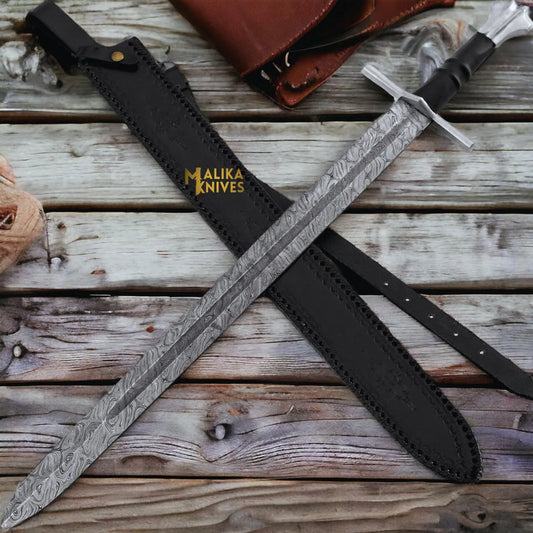
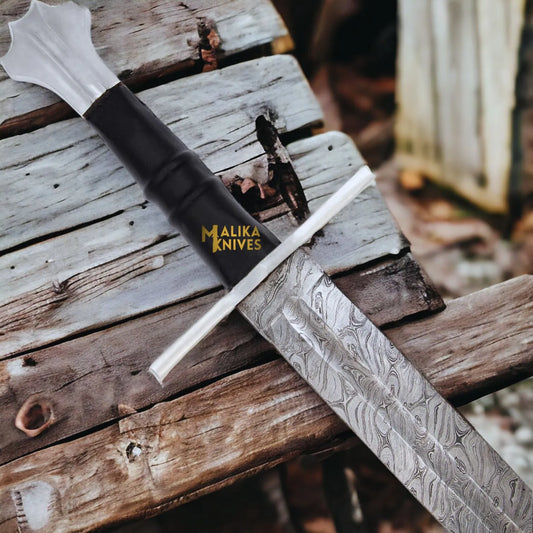
Handmade Medieval Damascus Arming Templar Knight Sword with Leather sheath-901
Regular price $235.00 USDRegular priceUnit price per$470.00 USDSale price $235.00 USDSale -
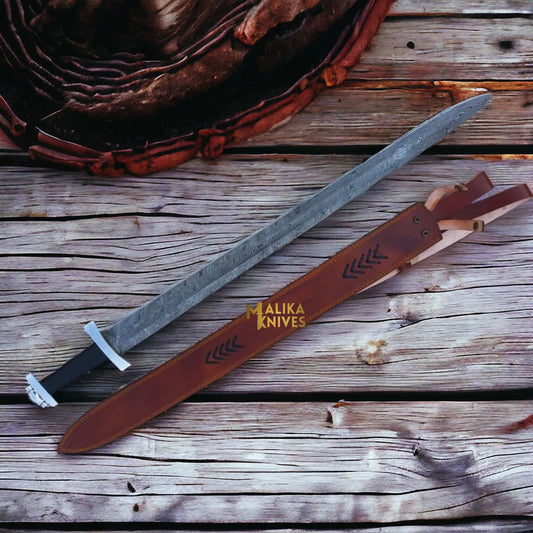
Ulfberht Damascus Viking Sword | Leather Sheath
Regular price $255.00 USDRegular priceUnit price per$510.00 USDSale price $255.00 USDSale -
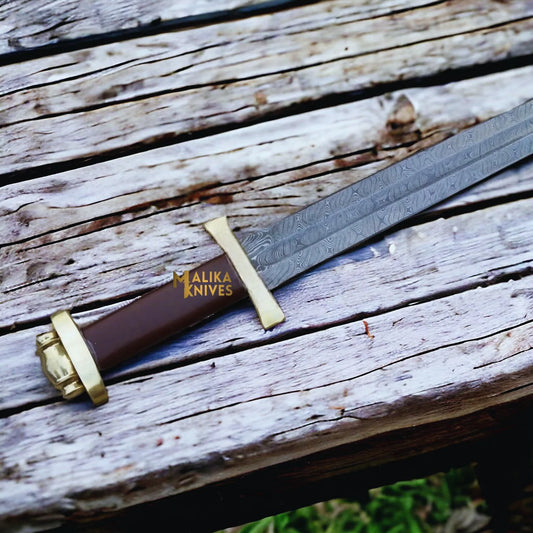
Sigurd Damascus Viking Sword
Regular price $265.00 USDRegular priceUnit price per$530.00 USDSale price $265.00 USDSale -
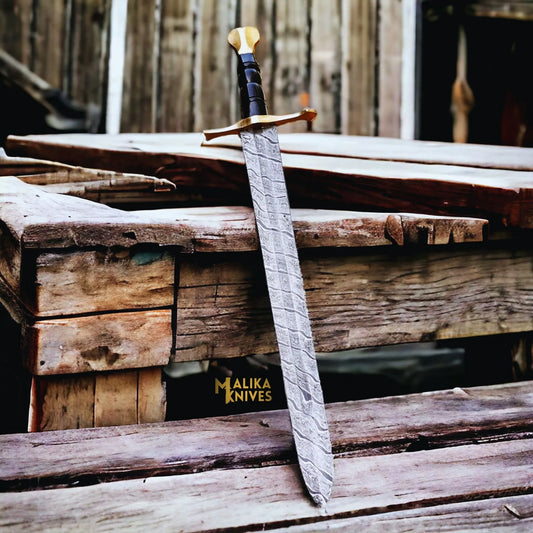
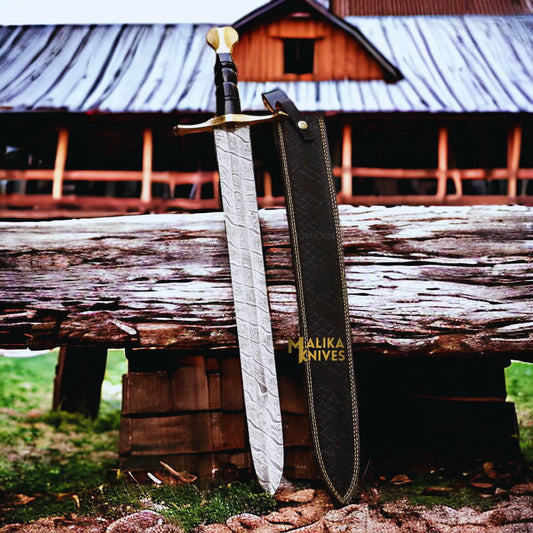
Damascus Kingslayer Arming Sword with Leather sheath-904
Regular price $275.00 USDRegular priceUnit price per$550.00 USDSale price $275.00 USDSale -
Damascus Medieval Arming Sword with Leather sheath-906
Regular price $240.00 USDRegular priceUnit price per$480.00 USDSale price $240.00 USDSale -
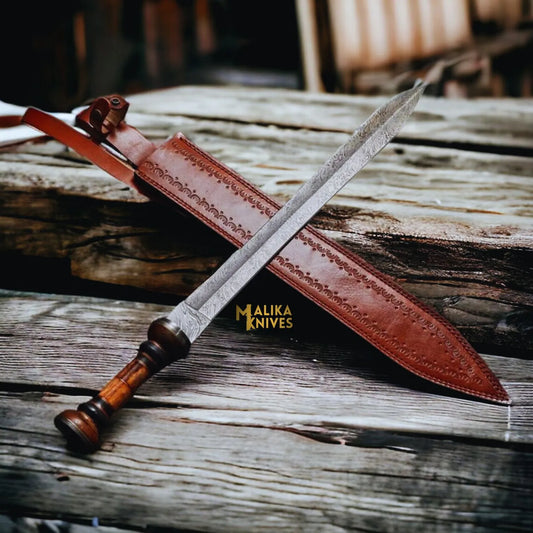
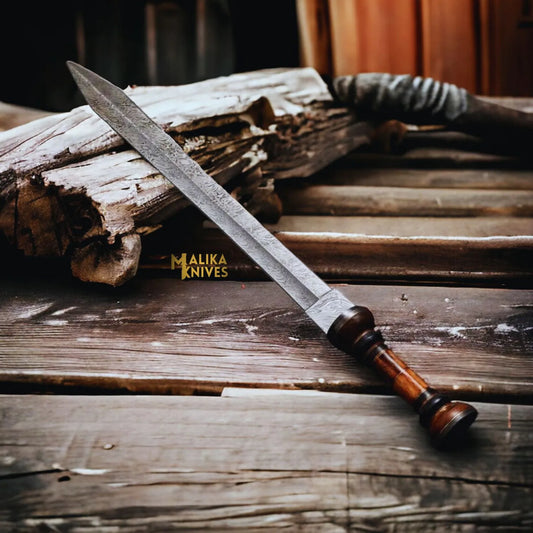
Damascus Gladiator sword with Leather sheath-905
Regular price $265.00 USDRegular priceUnit price per$530.00 USDSale price $265.00 USDSale -
Damascus Battle Arming sword with Leather sheath-907
Regular price $290.00 USDRegular priceUnit price per$580.00 USDSale price $290.00 USDSale -
Damascus Battle Medieval sword with Leather sheath-908
Regular price $390.00 USDRegular priceUnit price per$580.00 USDSale price $390.00 USDSale -
Custom Damascus Crusades sword with Leather sheath-909
Regular price $290.00 USDRegular priceUnit price per$580.00 USDSale price $290.00 USDSale -
Custom Viking Sword With Damascus Pummel & Guard-910
Regular price $350.00 USDRegular priceUnit price per$700.00 USDSale price $350.00 USDSale -
Handcrafted Viking Sword with Damascus Steel Blade-911
Regular price $275.00 USDRegular priceUnit price per$550.00 USDSale price $275.00 USDSale


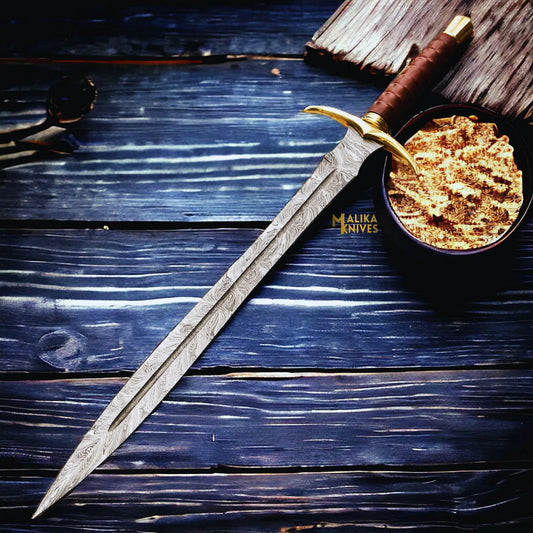
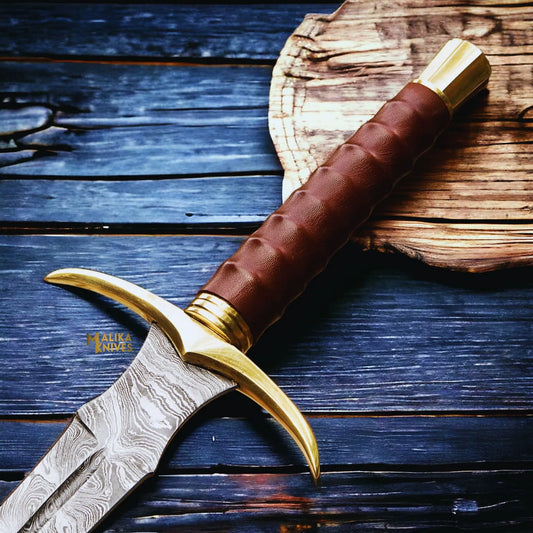
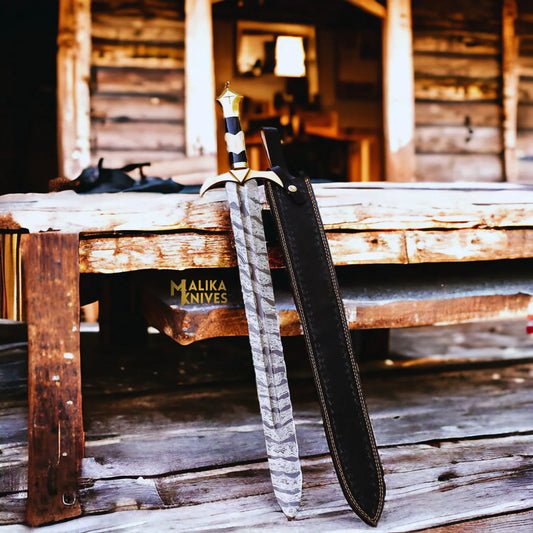
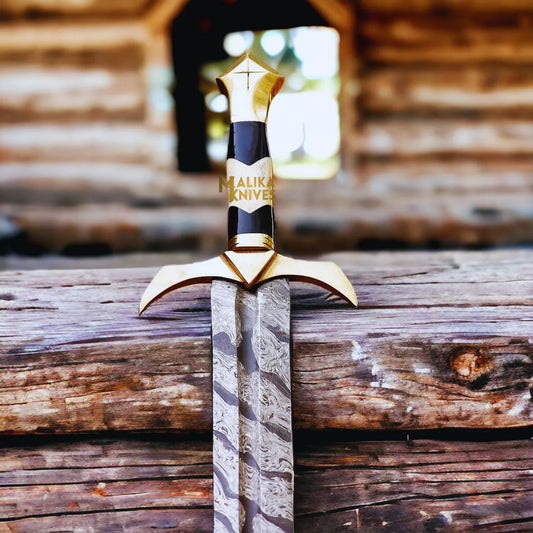
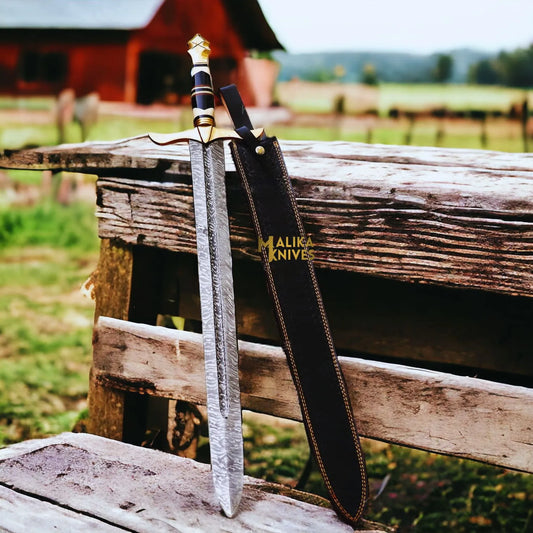
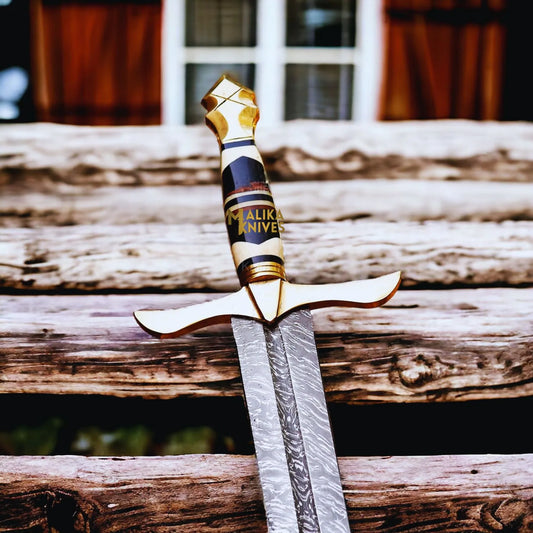
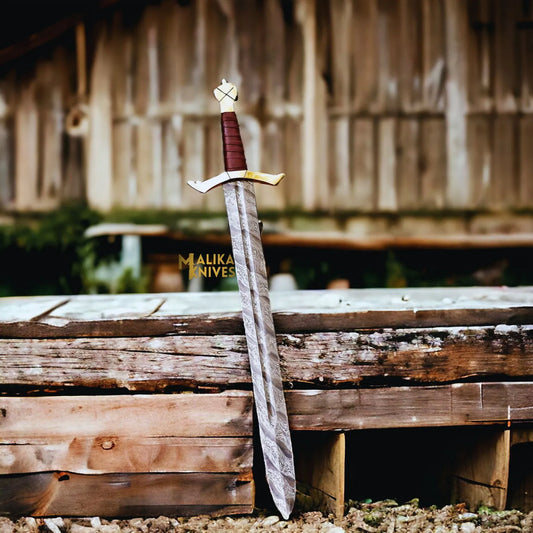
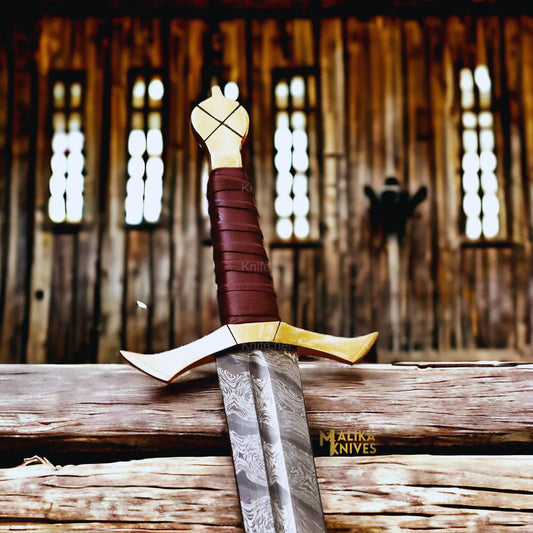
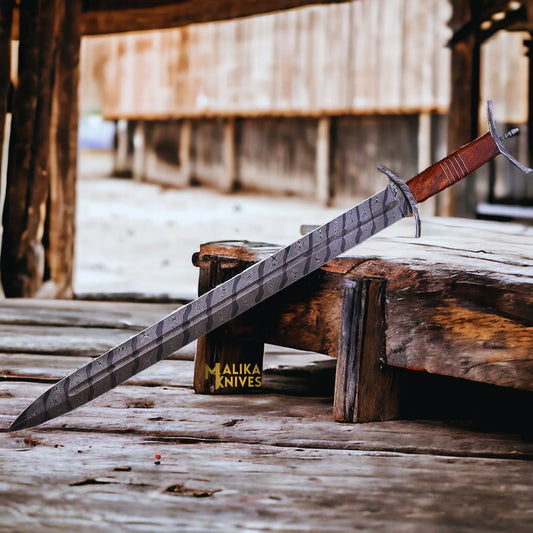
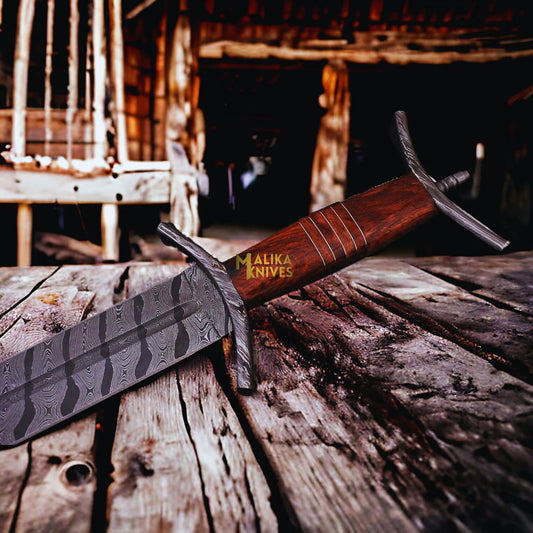
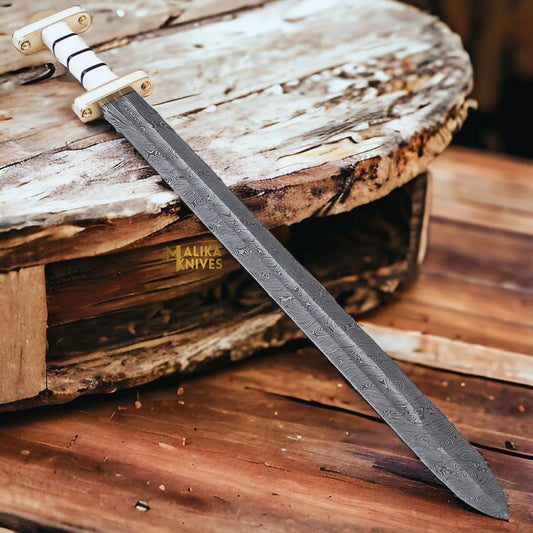
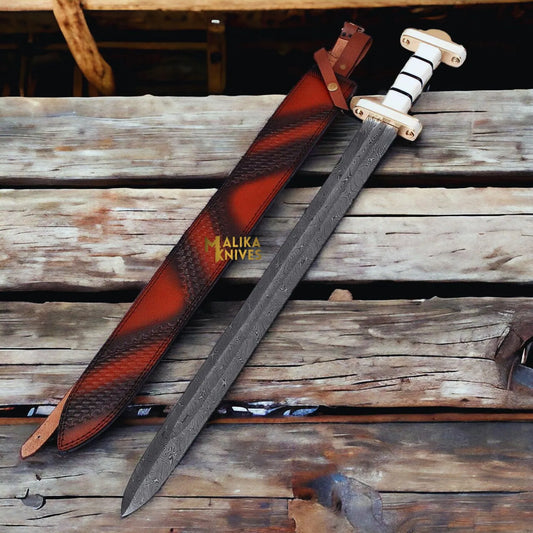
Quick facts:
- Hand-forged layered Damascus, pattern-welded in our own shop
- Straight blades throughout, which matters for UK and EU buyers (see the legality section)
- Patterns: Viking, medieval arming, Templar, Crusader, gladius
- Fittings: brass and stainless guards and pommels, Damascus guards and pommels on selected builds
- Handles: rosewood and wrapped grips
- Hand-stitched leather scabbard with every piece
Who makes them?
Every blade is forged and finished by hand by us, Naqash and Younas Minhas, with more than 15 years of combined experience at the bench. We pattern-weld the Damascus billets ourselves, then forge, grind, heat treat, fit and finish each sword individually before it is paired with a hand-stitched leather scabbard.
Length changes the job considerably. A blade three or four times the length of a knife has to be forged, ground and heat treated evenly along its whole length, and the fittings have to be seated so nothing moves. Each takes far longer than a knife, which is why the run is small.
Functional or display: what you are actually buying
The market is full of the phrase "battle ready", and a great deal of it is not earned. Rather than repeat it, here is the honest position.
Types Of Swords
|
Type |
Period |
Blade |
Built around |
Grip |
|
Viking sword |
c. 800 to 1050 |
Straight, double edged, broad, fullered |
One-handed cutting, used with a shield |
Short, single hand, heavy pommel |
|
Medieval arming sword |
c. 1000 to 1350 |
Straight, double edged, tapering |
The knight's sidearm, cut and thrust |
Single hand, cruciform guard |
|
Templar and Crusader |
c. 1100 to 1300 |
Arming sword profile, cruciform |
The same role with crusading-era dress |
Single hand |
|
Gladius |
Roman, c. 200 BC to 200 AD |
Short, straight, broad, strong point |
Close-formation thrusting |
Single hand, ribbed grip |
Viking. The Viking pattern is a broad, straight, double-edged blade with a central fuller running most of its length, a short single-hand grip and a heavy pommel that counterweights the blade. Ours include the Ulfberht Damascus Viking, named for the inscription found on a group of exceptional Norse blades, and the Sigurd Damascus Viking with brass fittings.
Medieval arming. The single-hand blade a knight carried alongside shield or lance, and the most common European type for three centuries. Straight, double edged, cruciform guard. See the Damascus medieval arming sword and the Damascus battle arming sword.
Templar and Crusader. The same arming-sword architecture presented in crusading-era dress, which is what most buyers of this style are after. See the medieval Damascus Templar knight sword and the Damascus Crusades sword.
Gladius. The Roman short blade, built for thrusting from behind a shield in close formation rather than for sweeping cuts. See the Damascus gladiator sword.
Which one is right for you?
- Viking, with the most striking fittings. The Viking with Damascus guard and pommel. Pattern-welded fittings as well as blade, and the most work in the collection.
- Norse look, warmer fittings. The Sigurd with brass. Brass ages and warms, stainless stays bright.
- Crusading-era display piece. The Templar knight sword or the Crusades sword.
- The most historically common European type. The medieval arming. If you want one piece that represents the period rather than a specific order or legend, this is it.
- Something different on the wall. The gladius. Short, broad and Roman, and nothing else in a collection looks like it.
- Entry price. The Templar knight sword at the bottom of the range.
Caught between two? Send us both through contact and we will tell you which one we would keep.
Why Damascus at this length?
Damascus steel is made by forge welding two steels together and folding the billet repeatedly to build hundreds of layers. Etching the finished blade reveals the layers as a flowing pattern, because the two steels react to the acid differently.
On a blade this long, the pattern becomes the point. A 30-inch blade shows far more of the billet's movement than a 4-inch knife does, and the pattern runs the full length rather than being confined to a small flat. That is why these are bought as display and collector pieces: the surface is doing something no monosteel blade can.
Being straight about what layering does and does not do. Layering is not a strength multiplier. Performance in any blade comes from the component steels and the heat treatment, not from the number of folds. Historically, folding was a way of working out impurities in less refined steel. Anyone selling on layer count alone is selling appearance, and appearance is a perfectly good reason to buy one, as long as it is called that.
The same steel in field patterns is in our Damascus Bowie knives and Damascus hunting knives.
How do you care for and display one?
Carbon Damascus is not stainless, and a blade this long has far more exposed surface than a knife, so care matters more here.
- Oil the blade on arrival and every few months after. A light film of mineral oil across the whole blade, both flats and the edge. A 30-inch blade needs the full length covered, and the area near the guard is what people miss.
- Handle it with a cloth, or wipe it after handling. Fingerprints are salt and acid, and on a polished Damascus surface they etch in as visible marks within days.
- Never store it in the scabbard long term. Tanned leather holds moisture against steel and will pit it. The scabbard is for transport and display, not storage.
- Display it dry and away from humidity. Bathrooms, basements and exterior walls are the three places a sword corrodes. A wall bracket on an interior wall is ideal.
- Never use abrasive polish or a wire wheel. Both strip the etch and flatten the pattern permanently. If a spot appears, a soft cloth with oil usually lifts it.
- Do not test it on anything. Swinging a display piece into wood, water bottles or a tree is how blades and fittings fail, and it is the single most common way one of these gets damaged.
Our guide to caring for a Damascus steel knife covers the routine, and it applies here with the length caveats above.
Are swords legal to own, and can we ship to you?
Ownership and public carry are two different questions, and it is carry that gets restricted almost everywhere. In the United States there are no federal restrictions on owning a sword, and state or municipal rules cover carry rather than ownership, so owning and displaying one at home is legal throughout. Canada is the same in practice: prohibited classifications there turn on mechanism, such as automatic opening or concealment inside another object, rather than on blade length.
The United Kingdom is the one worth reading, and the rule works in favour of these. Rules change, and none of this is legal advice. Verify the current position where you live, and contact us before ordering if you want us to confirm we can ship to your country.
Frequently asked questions
What is the difference between a battle ready and a decorative sword?
Steel type, tang construction, heat treatment and edge geometry. Functional pieces use high-carbon monosteel, a full tang, a proper quench and temper, and a working edge. Decorative and display pieces may use stainless, a partial or welded tang, or no heat treatment at all. Ours are hand-forged Damascus display and collector pieces.
Are these battles ready?
No, and we would rather say so. They are hand-forged Damascus collectors and display pieces. For cutting practice, reenactment contact or HEMA sparring, buy monosteel from a maker who stresses tests to that standard. Using a display piece for contact work risks damaging the blade or the fittings.
What is a full tang, and does it matter on a sword?
A full tang is one continuous piece of steel running the whole length of the handle. On a sword it matters more than on any knife, because a rat-tail or welded tang can separate under the force of a swing, which is a safety hazard rather than just a performance problem.
Why is stainless a bad choice here?
At sword length, stainless becomes brittle and cannot absorb the shock that a high-carbon blade can. A mirror-bright polished sword is usually a stainless display piece. Functional blades are made from carbon or spring steel, never stainless.
Does the number of folds or layers make it stronger?
No. Layering is aesthetic, and historically it was a way of working out impurities in less refined steel. A blade's performance comes from the component steels and the heat treatment. Anyone selling on layer count alone is selling appearance.
What is an arming sword?
The single-hand straight double-edged blade a European knight carried from roughly 1000 to 1350, usually with a cruciform guard. It was the sidearm rather than the primary battlefield weapon, and it is the most common European sword type of the medieval period.
What is an Ulfberht sword?
Ulfberht is an inscription found on a group of Viking-era blades of unusually high quality, made over roughly two centuries. The name has since become shorthand for the Norse sword at its best, which is why it is used for Viking-pattern swords today.
What is a gladius?
The Roman short blade, straight and broad with a strong point, built for thrusting from behind a shield in close formation. Shorter than a medieval arming blade and shaped for a completely different fighting style.
Do these come with a scabbard?
Yes. Every one ships with a hand-stitched leather scabbard made for that individual blade. Use it for transport and display, and store the blade out of it, since leather holds moisture against steel.
Are swords legal to own?
In the United States and Canada, yes, with carry in public regulated separately. In the UK, straight blades are not caught by the curved-sword provision that restricts curved blades over 50 cm, and hand-forged pieces are treated more favourably than factory blades in any case. Check your national rules before ordering.
Can I order a custom build?
Yes. Blade type and profile, fittings, guard and pommel style, grip material and scabbard finish are all specifiable. Send us what you have in mind through contact and we will tell you what is achievable and what it costs.
