
The right skinning knife makes all the difference between a clean job and a frustrating one. Our handmade skinners are shaped to glide through hide with control, minimising waste and keeping cuts clean, whether you are processing a deer, an elk or other big game. Each one is forged by hand and ships with a handmade leather sheath. New to choosing one? Our field dressing knife guide for hunters is a useful place to start.
-
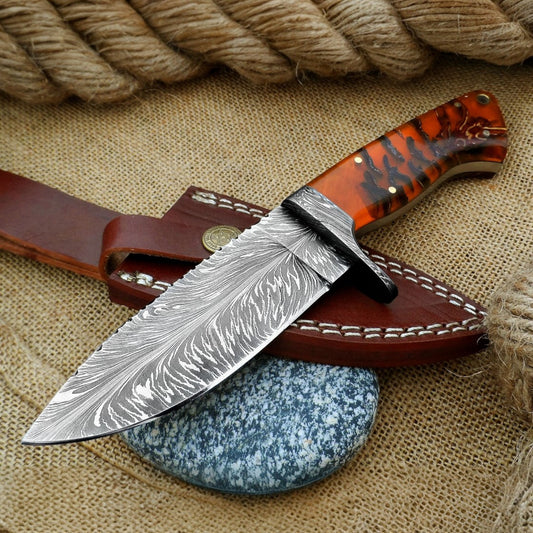
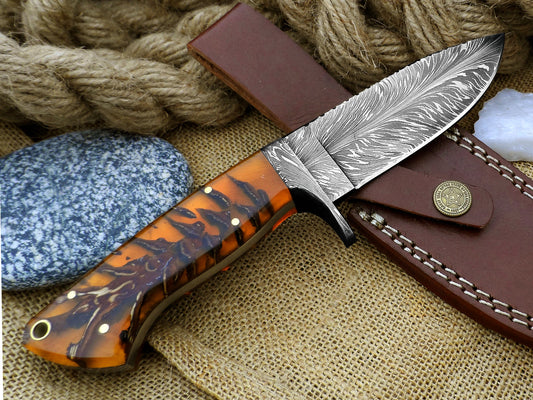
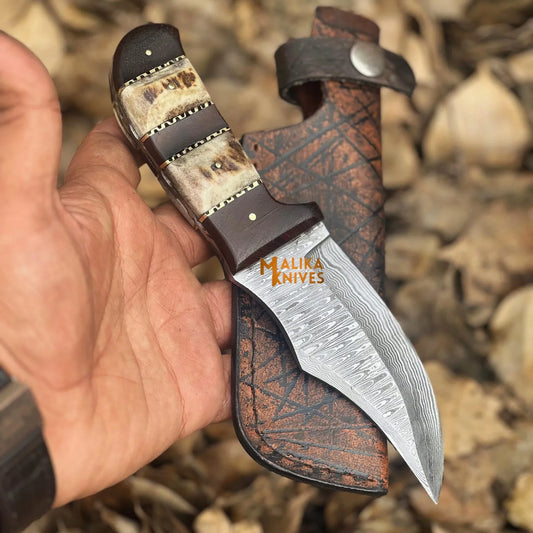
Best Deer Skinning Knife - Feather Damascus Pinecone Handle
Regular price $156.00 USDRegular priceUnit price per$270.00 USDSale price $156.00 USDSale -
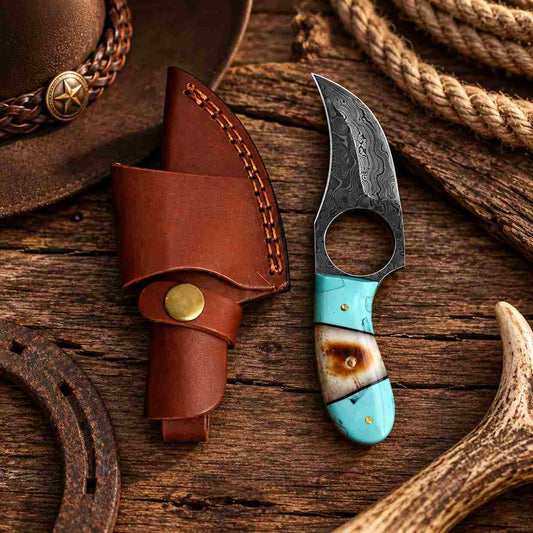
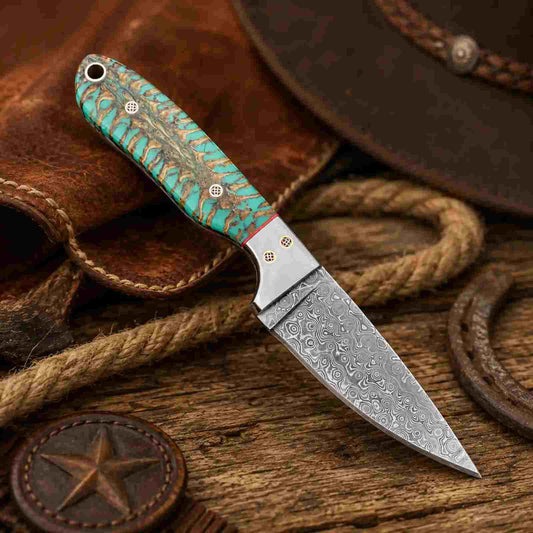
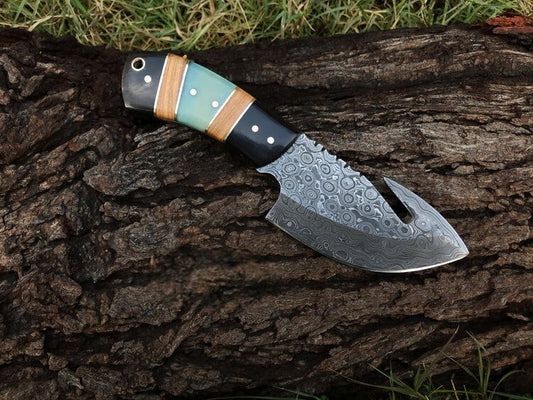
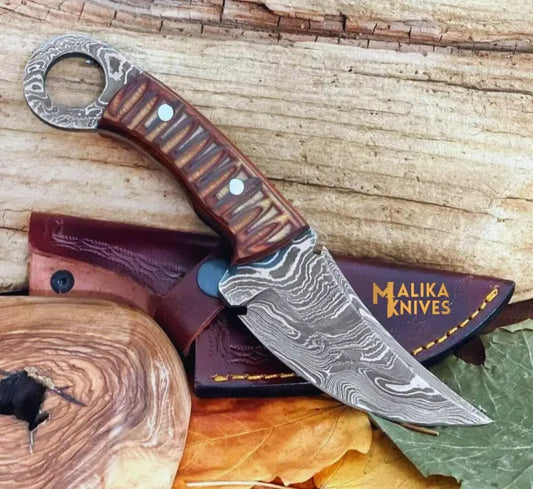
Damascus Skinner Knife with Turquoise Horn Handle, Finger Ring & Leather Sheath
Regular price $110.00 USDRegular priceUnit price per$220.00 USDSale price $110.00 USDSale -
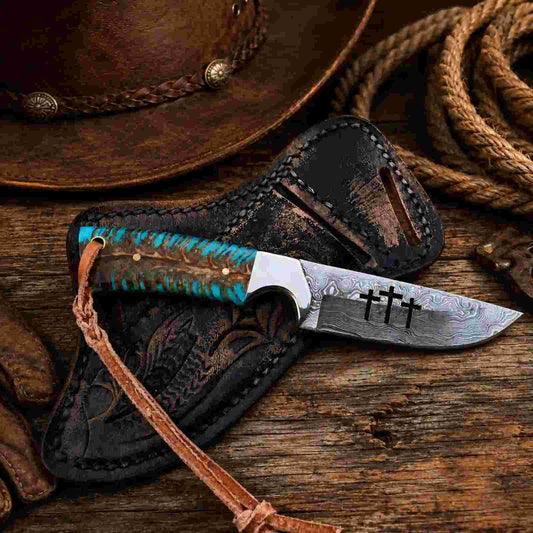
Praying Cowboy Knife – Damascus Steel Blade with Pine Cone Handle & Leather Sheath
Regular price $120.00 USDRegular priceUnit price per$240.00 USDSale price $120.00 USDSale -
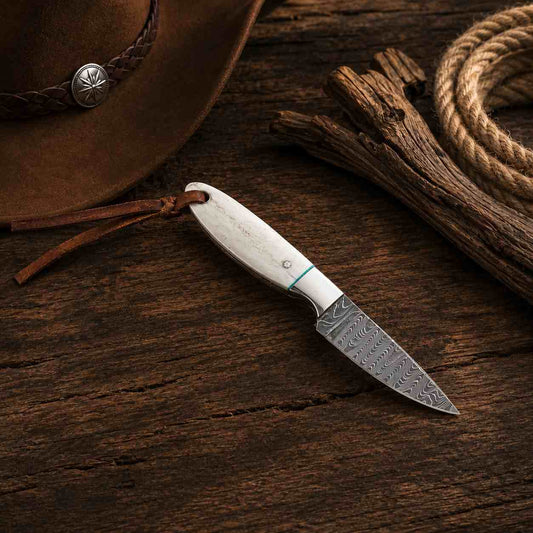
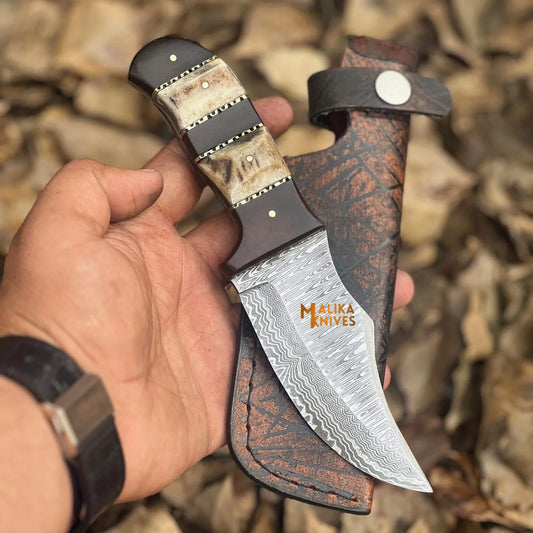
Buckaroo Damascus Steel Knife – Western Fixed Blade with Camel Bone Handle
Regular price $105.00 USDRegular priceUnit price per$210.00 USDSale price $105.00 USDSale -
Damascus Buckaroo Knife with Pine Cone Handle & SS Masonic Bolster
Regular price $140.00 USDRegular priceUnit price per$280.00 USDSale price $140.00 USDSale -
Gut Hook Cowboy Knife | Rasp Steel with Camel Bone Handle
Regular price $99.00 USDRegular priceUnit price per$180.00 USDSale price $99.00 USDSale -
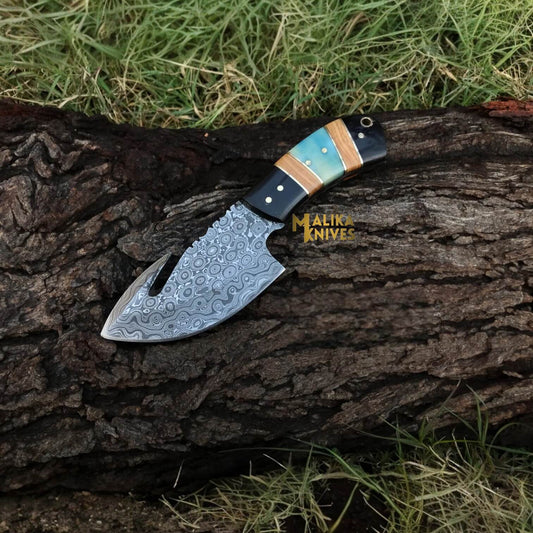
Gut Hook Skinning Knife – Big Game Hunting & Deer Processing Knife
Regular price $89.25 USDRegular priceUnit price per$119.00 USDSale price $89.25 USDSale -
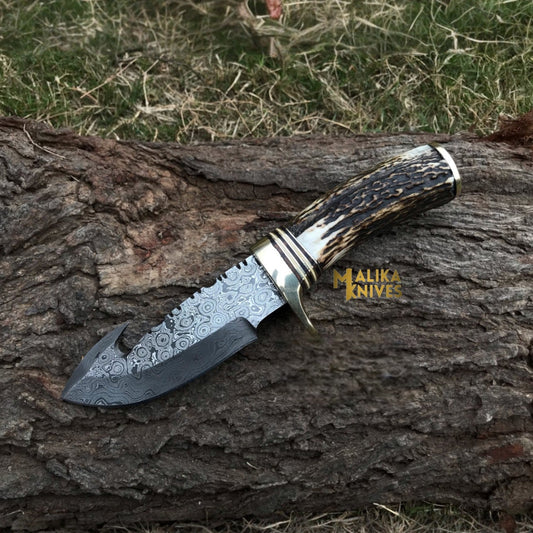
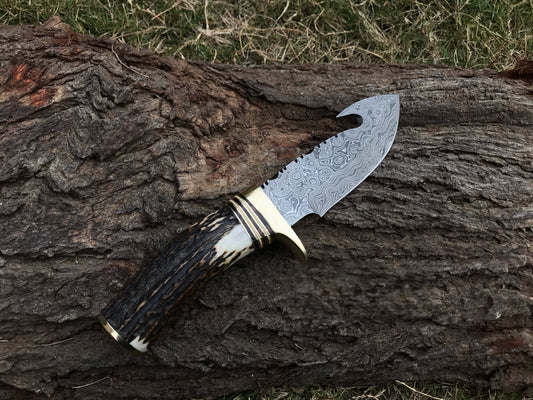
Damascus Gut Hook Skinning Knife – Stag Horn Handle
Regular price $101.50 USDRegular priceUnit price per$145.00 USDSale price $101.50 USDSale -
SS Damascus Stag Skinner Knife with Custom Leather Sheath-0047
Regular price $195.00 USDRegular priceUnit price per$300.00 USDSale price $195.00 USDSale -
Handmade Ringtail Skinner Knife: Unmatched Quality for Everyday Carry-0038
Regular price $90.00 USDRegular priceUnit price per$180.00 USDSale price $90.00 USDSale -
Handcrafted Fixed Blade Skinner Knife with Durable Camel bone Handle-0037
Regular price $115.00 USDRegular priceUnit price per -
The Ultimate Spear Point EDC Knife for Everyday Precision & Durability-0036
Regular price $107.99 USDRegular priceUnit price per -
The Ultimate Straight Back EDC Knife for Everyday Precision & Durability-0035
Regular price $105.99 USDRegular priceUnit price per -
Experience Unmatched Quality: Handcrafted EDC Knives for Everyday Precision and Durability-0034
Regular price $115.99 USDRegular priceUnit price per -
Handmade 3-Pointer EDC Knife: Unmatched Quality for Everyday Carry-0033
Regular price $135.99 USDRegular priceUnit price per$117.00 USDSale price $135.99 USD -
Handmade Straight Edge Skinner Knife with Wenge Wood Handle-0032
Regular price $70.00 USDRegular priceUnit price per$105.00 USDSale price $70.00 USDSale






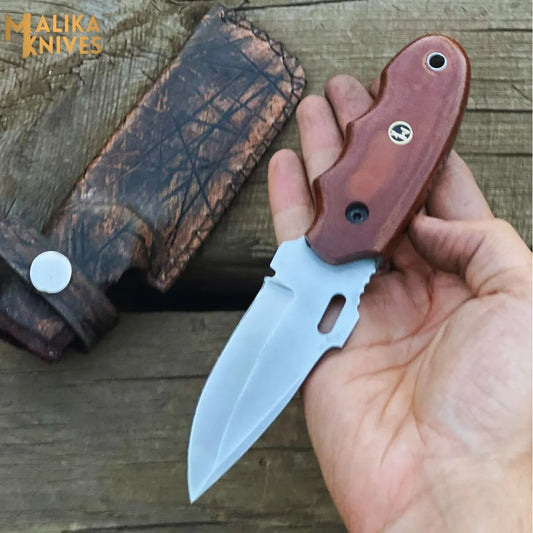
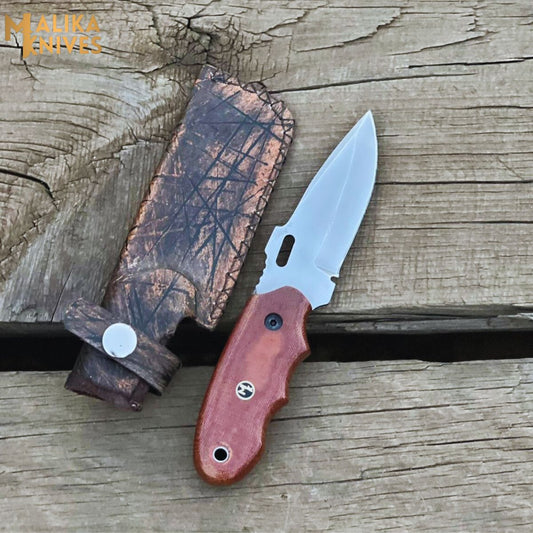
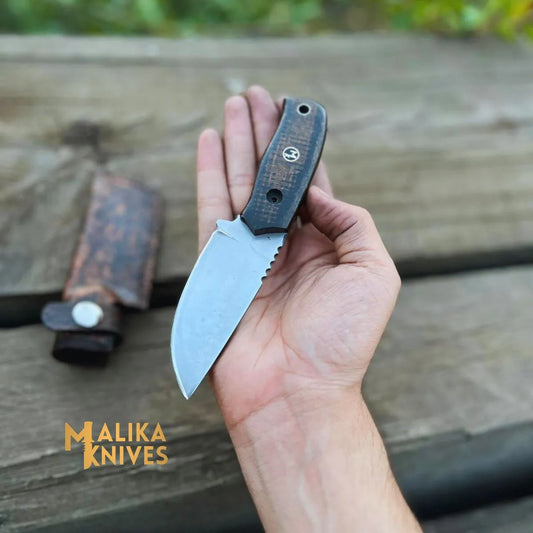
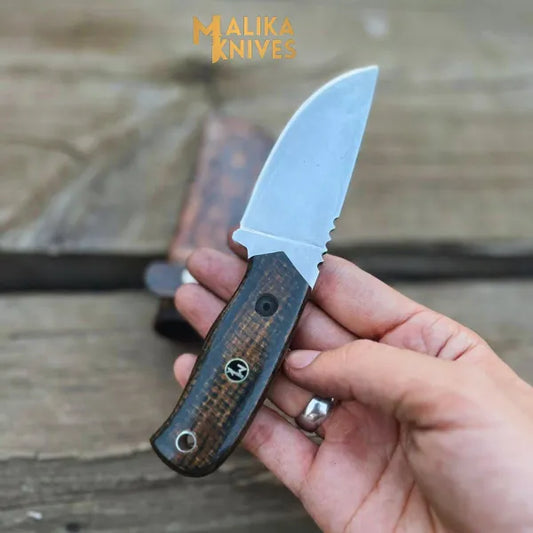
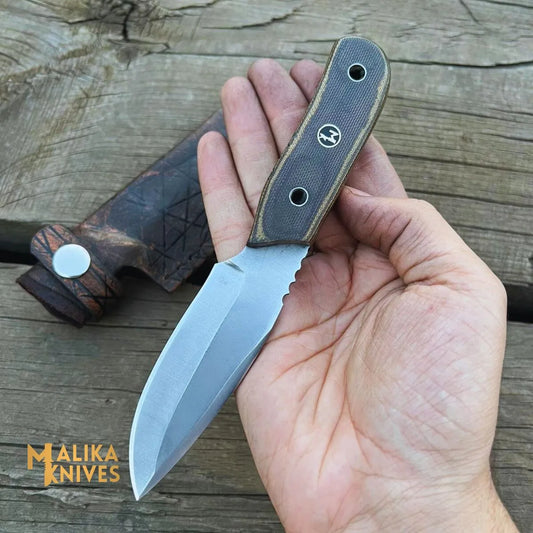
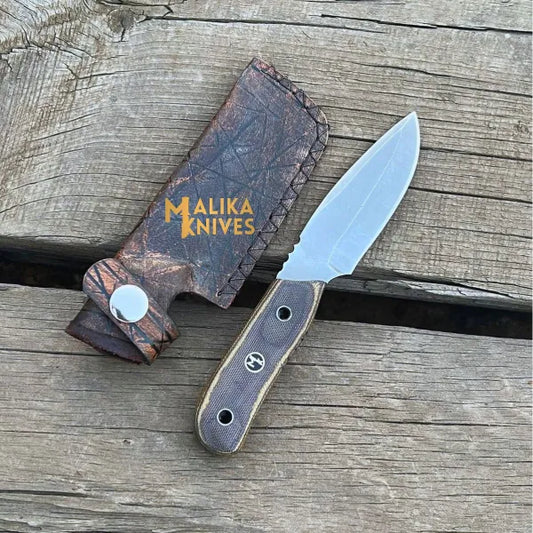
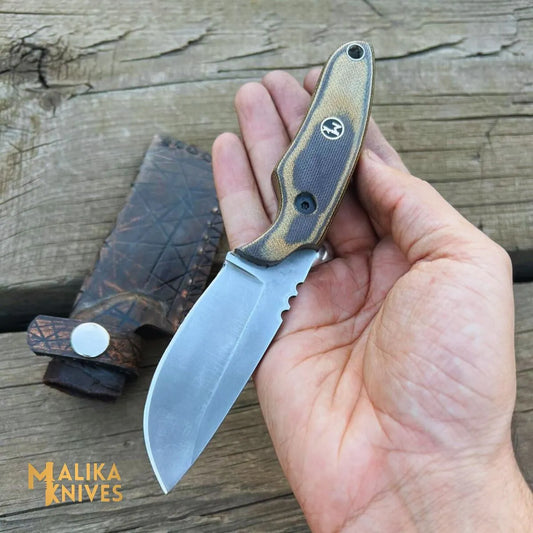
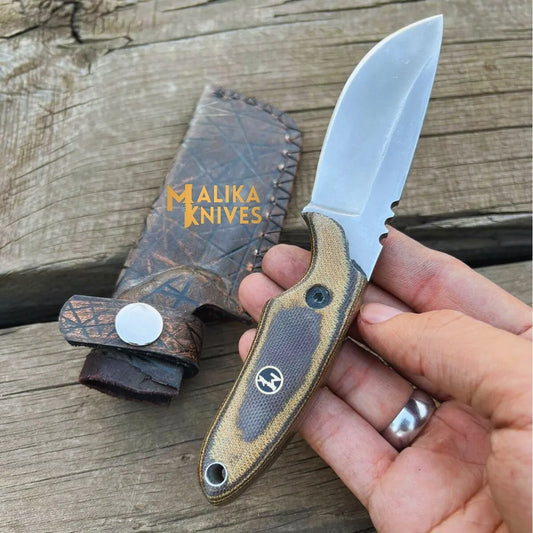
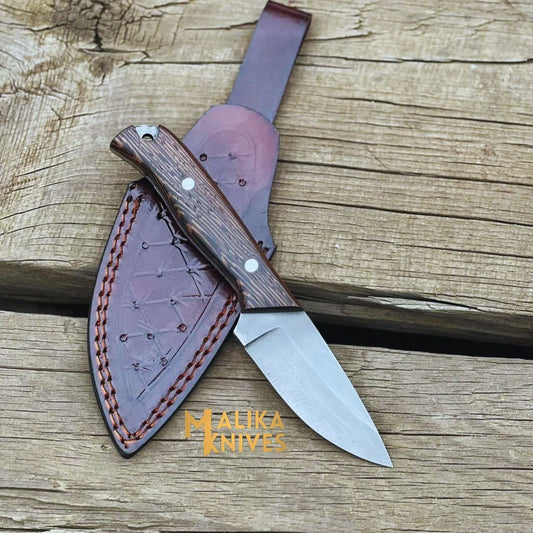
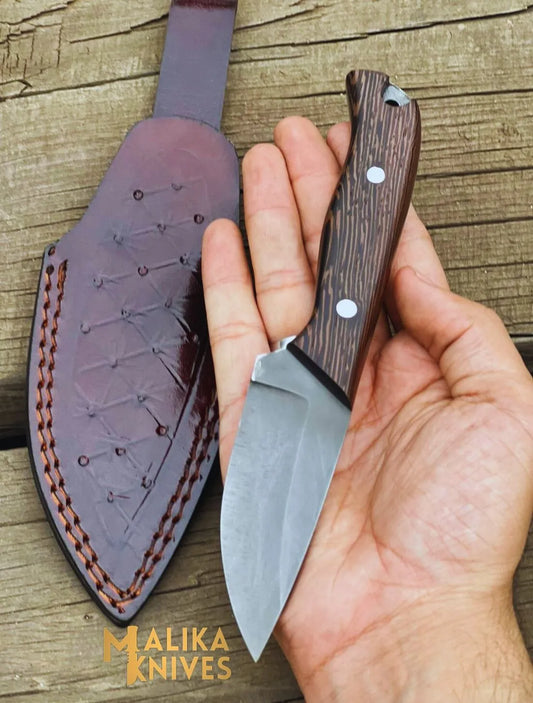
Quick facts:
- Four steels: D2 tool steel, 1095/15N20 carbon Damascus, VG10/15N20 stainless Damascus, and copper Damascus (Cu-Mai)
- Hardness runs approximately 59 to 60 HRC on carbon Damascus and 59 to 61 HRC on D2
- Blade shapes: trailing point, drop point, straight back, ringtail, ulu-style finger hole, and gut hook
- Handles: rosewood, walnut, ironwood, pakka wood, ash, camel bone, bull horn, ram horn, stag horn, micarta, G10, resin, pine cone, marble stone
- Full tang construction, handmade leather sheath with every knife, engraving and a gift box available
Who makes these knives?
Every knife here is built by us, Naqash and Younas Minhas, with more than 15 years of combined experience at the bench. Each blade is forged, ground, heat treated and finished by hand, then paired with a leather sheath cut for that knife. These are part of our wider handmade hunting knives range, and many double as all-purpose hunting and outdoor blades.
What is a skinner, and why is the shape different?
A skinner is a short fixed blade with a deep, sweeping belly and a tip that is deliberately restrained. The whole design solves one problem: separating hide from meat without cutting into either.
Three features do the work.
The belly is deeper than on any other hunting blade. A long curve keeps more edge in contact through a drawing stroke, so the blade peels hide in continuous passes rather than short sawing cuts. Continuous strokes are what leave clean hide and clean meat.
The tip is swept upward or blunted. A skinner is worked flat against the inside of the hide with the edge doing the cutting, not the point. A fine forward point in that position punctures hide, nicks meat, and on a cape ruins the piece. Sweeping the tip up or rounding it removes that risk.
The blade is short. Control matters more than reach, because every cut happens within a few inches of your other hand.
What that costs you: a skinner is poor at anything needing a point. It cannot start a cut mid-surface, cannot bore, and is awkward for joint work. Most hunters carry a skinner alongside a drop point rather than instead of one.
Which skinner blade shape should you choose?
|
Shape |
Tip |
Belly |
Best at |
Weak at |
|
Trailing point |
Swept above the spine line |
Deepest |
Long hide strokes, the classic skinner |
Any point work |
|
Drop point |
Strong, usable |
Wide |
Skinning plus general field work in one blade |
Very fine caping |
|
Straight back |
Conventional |
Moderate |
Skinning plus camp and food prep |
Deep hide peeling |
|
Ringtail |
Upswept, narrow |
Pronounced |
Precise hide work in tight areas |
Heavy or general use |
|
Ulu-style finger hole |
Minimal |
Full curve |
Rocking strokes over large hide areas, very low fatigue |
Anything outside hide work |
|
Gut hook |
Separate hook on the spine |
Varies |
Opening the cavity and running the hide seam |
Adds bulk, needs a round file |
The practical answer for most buyers is a trailing point if skinning is the job, or a drop point if the knife has to do everything. A ringtail or an ulu is worth having once you process enough animals to want a specialist.
How do you skin without puncturing hide or meat?
Technique matters more than the knife, and the knife makes good technique easier.
- Work the edge, not the tip. Lay the blade nearly flat against the inside of the hide with the belly doing the cutting. If the point is leading, the angle is wrong.
- Cut from the inside out. Push the hide away with your free hand so the blade cuts into a tensioned surface. Tension is what lets a curved edge run cleanly.
- Use long strokes. Short sawing cuts are what leave ragged hide. The deep belly exists to let one stroke do what three otherwise would.
- Follow the seam. Most of the work is separating along the natural membrane layer, not cutting through anything. If you are working hard, you have left the seam.
- Stop and hone. Hide, hair and connective tissue dull a blade faster than most hunters expect. A few passes on a rod part way through keeps the edge pulling rather than tearing.
- Caping needs the shortest blade you own. If the head is going to a taxidermist, switch to a 3 inch blade and slow down.
Our field dressing knife guide covers the full sequence from opening to quartering.
How do you choose the right one?
Choosing well is about more than blade length. Precision, comfort and the right materials for the job all matter. Here is what to look for.
Blade steel
You need a blade that holds a razor edge and is still tough enough for field work. We offer four steels, each suited to different needs.
- D2 tool steel. High carbon and wear-resistant, well suited to edge retention through long skinning sessions. Lightly oil it after use. See our full D2 steel hunting knives range.
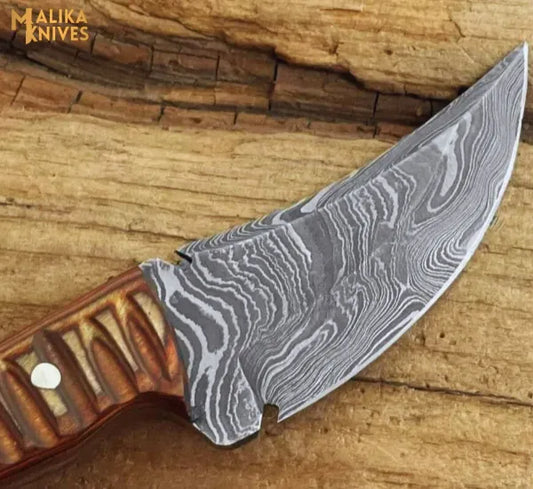
- 1095/15N20 Damascus. Traditional carbon Damascus with deep layering and aggressive sharpness, and the heart of our Damascus hunting knives range.
- VG10/15N20 stainless Damascus. Corrosion-resistant with the same layered look, suited to anyone who wants less maintenance.
- Copper Damascus (Cu-Mai). Combines 1095 and 15N20 with real copper layers, producing warm contrast lines alongside reliable toughness.
If you are weighing the options, our guide to the best steel for hunting knives, D2 vs Damascus breaks down the differences.
Handle grip and control
The handle has to grip when wet and feel natural in the palm over extended use, because skinning is the wettest and longest job a hunting knife does. We use materials chosen for both comfort and durability.
- Woods: rosewood, walnut, ironwood, pakka wood, ash
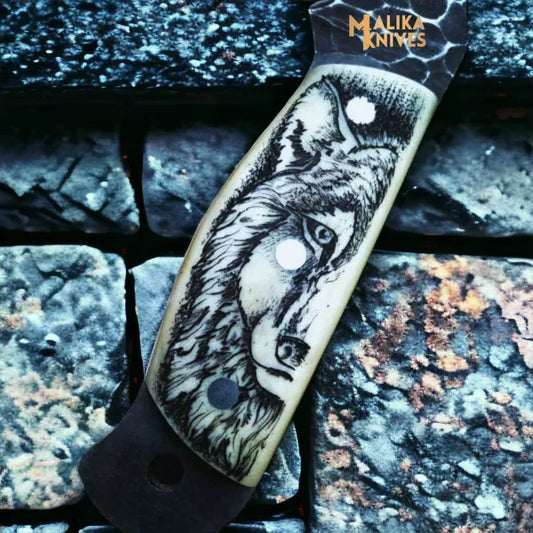
- Natural horn and bone: camel bone, bull horn, ram horn, stag horn
- Modern composites: micarta, G10, resin, pine cone, marble stone
The honest split for skinning specifically: micarta and G10 hold grip best with blood and fat on your hands, which is why they belong on a knife you will actually process game with. Stag horn, camel bone and polished wood look better and are noticeably slicker wet. Textured wood such as ironwood sits in between. If the knife is a gift or a display piece, take the natural material. If you are skinning an elk in the cold, take the synthetic.
A finger ring or finger groove is worth looking for on this pattern, since it locks the grip regardless of what is on your hands. Our Damascus skinner with a turquoise horn handle and finger ring is built that way.
Which skinner is right for you?
- Best deer skinner overall. The feather Damascus with a pine cone handle. Curved edge, grippy stabilised handle, and the hardest Damascus pattern we forge.
- One knife for dressing and skinning. A gut hook skinning knife. The hook opens the cavity, the belly does the hide, and you carry one blade instead of two.
- Best grip when wet. A knife with a finger ring or a micarta handle. Grip failure is the real risk on this job, not edge failure.
- Lowest price into the pattern. The straight back skinner with a wenge wood handle at $70, the cheapest knife in the collection.
- A gift or a collection piece. The SS Damascus skinner with a genuine stag horn handle. Stainless Damascus, so it asks less of the recipient than carbon would.
- Ranch and hunting crossover. A gut hook cowboy knife in rasp steel with camel bone, for anyone who wants western dress on a working blade.
Caught between two? Send us both through contact and we will tell you which one we would keep.
Care instructions
A skinner earns its keep in tough conditions, so a little care keeps it performing.
- Lightly oil D2 and carbon steel blades after use
- Wipe dry after each job and avoid long-term moisture exposure
- Do not store the knife in a leather sheath long-term, because tanned leather holds moisture against steel and will pit it
- Sharpen with a honing rod or whetstone, and see our guide on how to sharpen a hunting knife the right way
For Damascus blades specifically, our full guide to caring for a Damascus steel knife keeps both the edge and the pattern at their best. Stainless Damascus resists rust well, but proper cleaning is still worthwhile.
Gift-ready for hunters, collectors and outdoorsmen
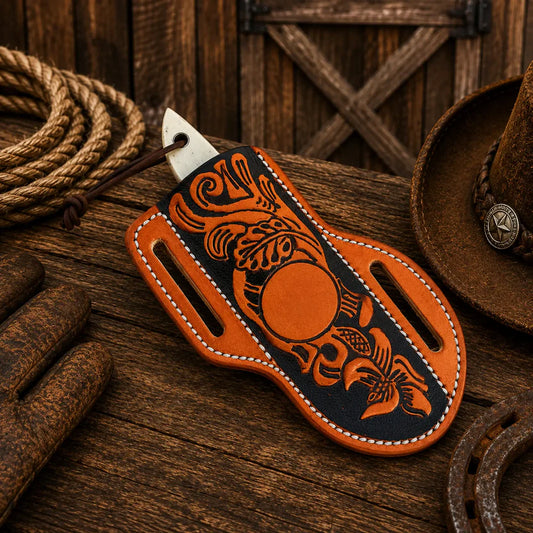
Our skinners make good gifts for birthdays, Father's Day and holidays, and for hunters, outdoorsmen and knife collectors. Each knife comes with optional custom engraving, a gift-ready wooden box, and a handmade leather sheath.
One piece of advice if you are buying as a gift: choose stainless Damascus or D2 over carbon Damascus unless you know the recipient maintains their blades. Carbon Damascus is the better-looking and better-cutting steel, and it will spot within a season in the hands of someone who does not oil it.
Are these knives legal to own and carry?
United States
Short fixed blades are legal to own throughout the United States and sit below the blade length thresholds most states apply. Carry is regulated at state and often municipal level, and many states treat carry while lawfully hunting differently from general public carry. Check both your state statute and your hunting regulations.
Canada
Fixed blades are legal to own in Canada, where prohibited classifications turn on the opening mechanism rather than blade length. Carry sheathed and for a lawful purpose.
United Kingdom and EU
Ownership is generally legal, and hunting, fishing and transport to and from those activities are among the recognised reasons for carrying a fixed blade in public. Confirm current import and age-verification rules before ordering.
Rules change. Treat this as a starting point and verify current law and hunting regulations where you hunt.
Frequently asked questions
What is a skinner used for?
A skinner separates hide from meat cleanly during field dressing and processing of deer, elk and other big game. Its curved belly lets you work along the hide efficiently while reducing the risk of puncturing the meat.
What blade shape is best?
A curved blade with a trailing point or drop point tip is ideal, because the curve glides along the hide while the restrained tip prevents accidental punctures. Some hunters also prefer a gut hook for opening game.
What steel is best?
D2 tool steel is an excellent low-maintenance choice with strong edge retention, while carbon Damascus in 1095 and 15N20 offers aggressive sharpness and a deep layered pattern. Stainless Damascus adds corrosion resistance for anyone who wants less upkeep.
What is the difference between copper Damascus and stainless Damascus?
Copper Damascus combines 1095 and 15N20 with copper layers, producing warm contrast lines and excellent sharpness. Stainless Damascus uses VG10 and 15N20, offering corrosion resistance with a similar layered look.
Are these real Damascus knives or etched patterns?
All our Damascus knives are true multi-layer forge-welded steel, with no laser etching and no shortcuts. Each pattern is created in the forge and is unique to that blade. Layers run through the full thickness rather than sitting on the surface, so you can see them continue through the edge bevel.
Will D2 or high-carbon Damascus rust?
D2 is semi-stainless but should still be oiled after use. High-carbon Damascus in 1095 and 15N20 needs proper care to avoid rust, so wipe it dry and apply a light coat of oil before storage.
What is the best skinning knife for deer?
A compact curved skinner with a trailing or drop point and a secure handle works best. Our feather Damascus deer skinner is a popular choice, balancing a sharp curved edge with a comfortable, grippy handle.
Do these knives come with a sheath?
Yes. Every knife in this collection comes with a handmade leather sheath fitted to the individual blade, plus an optional gift-ready wooden box and custom engraving.
Can I customize the handle or engrave a name?
Yes. We offer personalisation including handling material choices and custom name or logo engraving, so you can build a skinner that is genuinely your own.
What blade length is best?
Shorter than a general hunting knife. Around 3 to 4 inches gives the control skinning needs, since every cut happens within a few inches of your other hand. Anything longer trades control for reach you will not use on hide.
Can it be used for anything else?
For camp food preparation and general cutting, yes, and the straight back and drop point builds handle that well. For joint work, boning or anything needing a point, no. A blunted or swept tip is the whole design and it cannot be worked around.
