
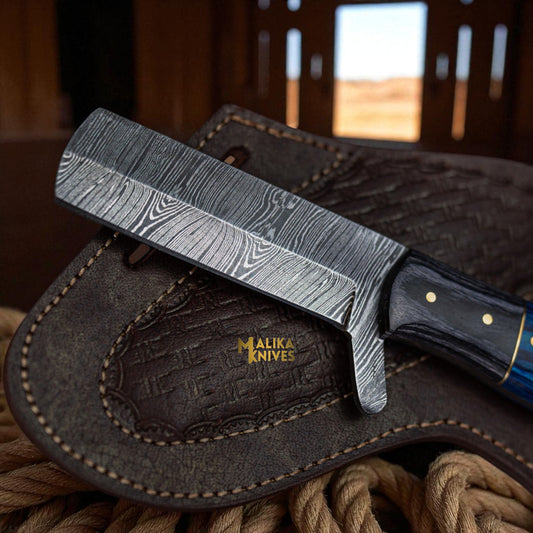
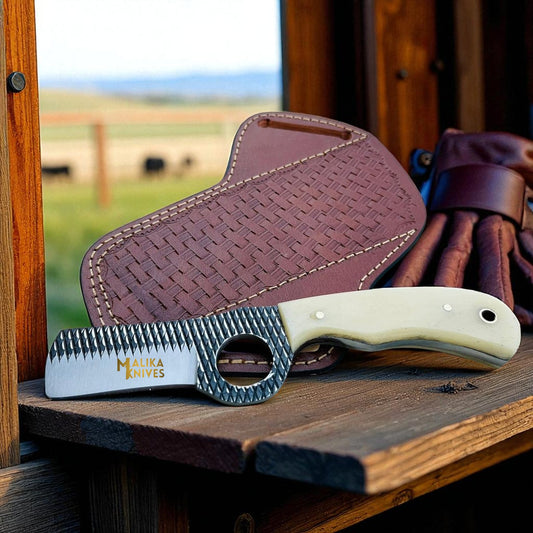
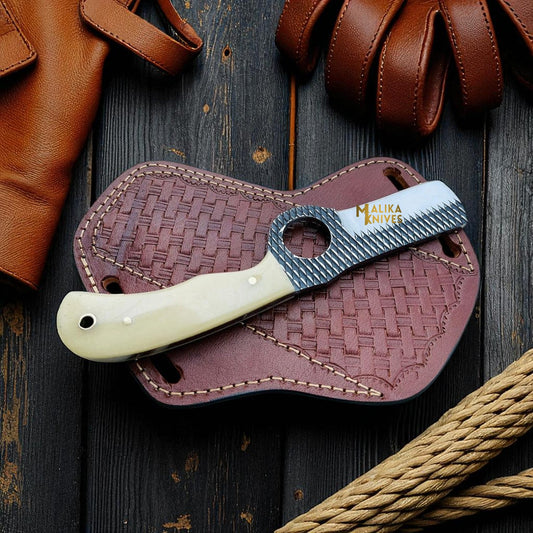
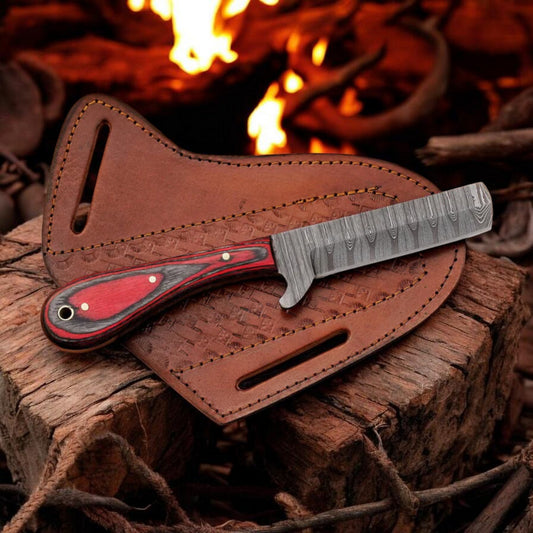
A bull cutter is a short, wide ranch knife with a deep belly and a blunted or squared tip. The tip is the whole design: a rounded point cannot puncture what you are working close to, which is why the pattern exists and why cowboys have carried it for stock work since long before it became a collector's knife. Around four inches of blade on an eight inch overall, forged here in rasp steel, D2 and Damascus.
-
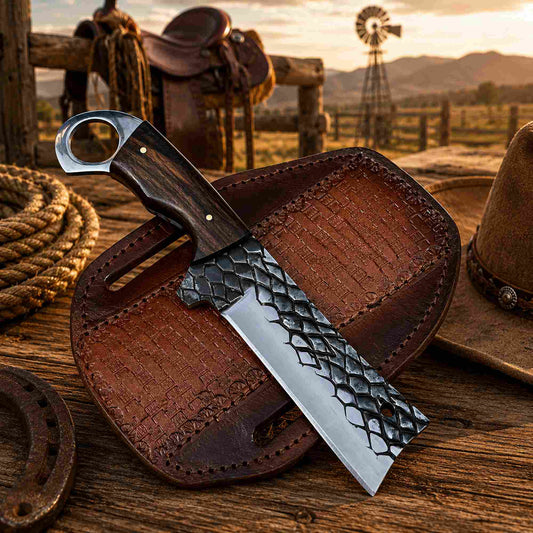
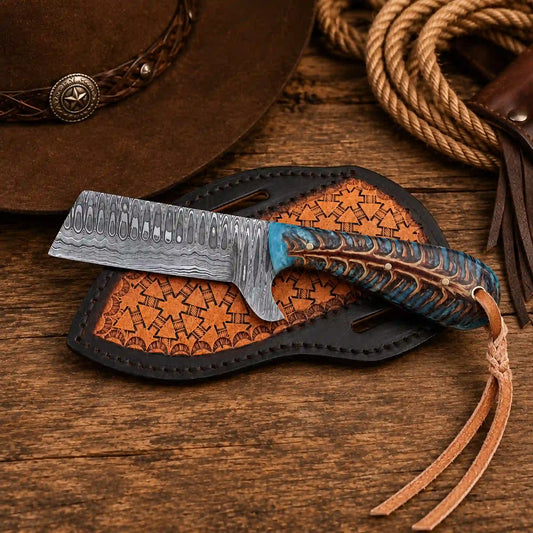
Ironwood Ranch Bull Cutter Knife in D2 Rasp Steel
Regular price $135.00 USDRegular priceUnit price per$250.00 USDSale price $135.00 USDSale -
5-Inch Western Bull Cutter Knife with Red Turquoise Pine Cone Handle & Blue Leather Sheath
Regular price $110.00 USDRegular priceUnit price per -
Handmade Damascus Bull Cutter with Blue Resin & Natural Wood Handle
Regular price $115.00 USDRegular priceUnit price per$230.00 USDSale price $115.00 USDSale -
Handcrafted Fixed Blade Bull Cutter Knife with Wood and Resin Handle | Leather Sheath
Regular price $125.00 USDRegular priceUnit price per$250.00 USDSale price $125.00 USDSale -
Custom Handmade Damascus Steel Bull Cutter Knife with Leather Sheath
Regular price $119.99 USDRegular priceUnit price per$240.00 USDSale price $119.99 USDSale -
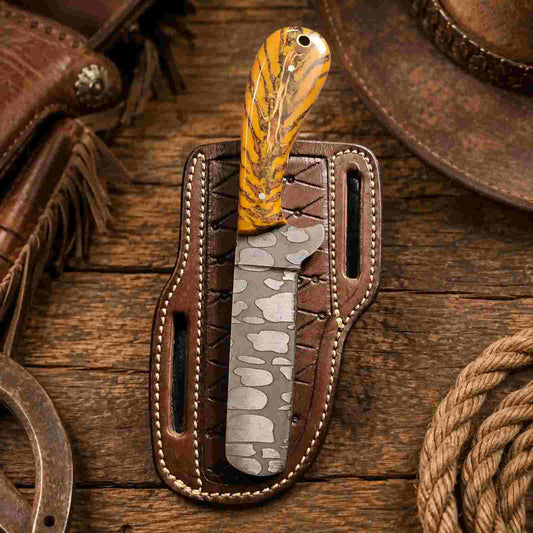
Bullcutter Knife – Acid Wash D2 Steel Blade with Pine Cone Handle & Leather Sheath
Regular price $110.00 USDRegular priceUnit price per$220.00 USDSale price $110.00 USDSale -
Rasp Steel Bullcutter Knife with Black Pine Cone Handle
Regular price $120.00 USDRegular priceUnit price per$240.00 USDSale price $120.00 USDSale -
Damascus Steel Bullcutter Knife with Pine Cone Handle & Leather Sheath
Regular price $140.00 USDRegular priceUnit price per$280.00 USDSale price $140.00 USDSale -
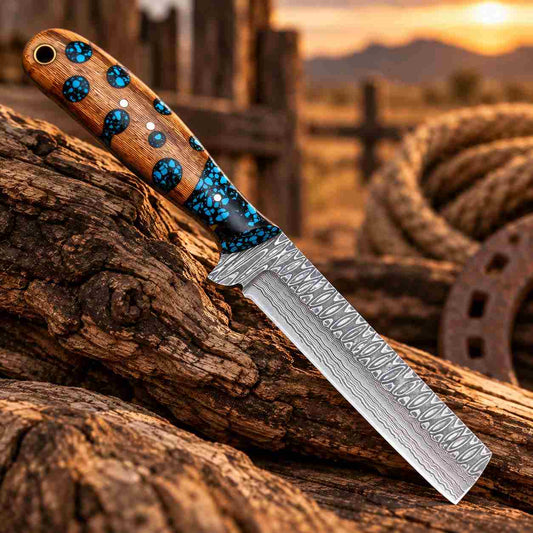
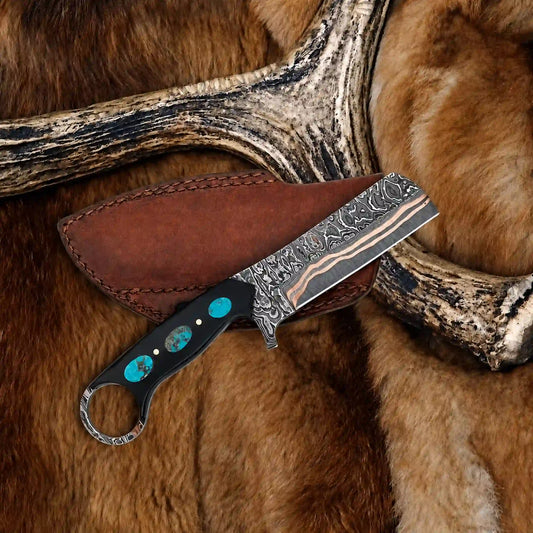
Bull Cutter Knife | Copper Damascus with Turquoise and Ring Pommel
Regular price $270.00 USDRegular priceUnit price per$500.00 USDSale price $270.00 USDSale -
Bull Cutter Knife | D2 Rasp Steel with Ironwood Handle
Regular price $130.00 USDRegular priceUnit price per$260.00 USDSale price $130.00 USDSale -
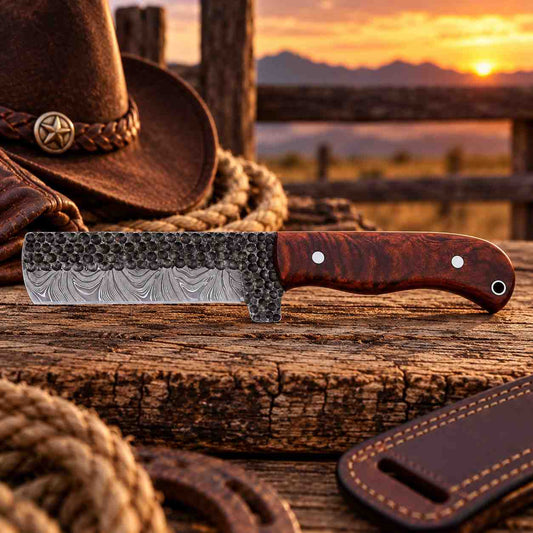
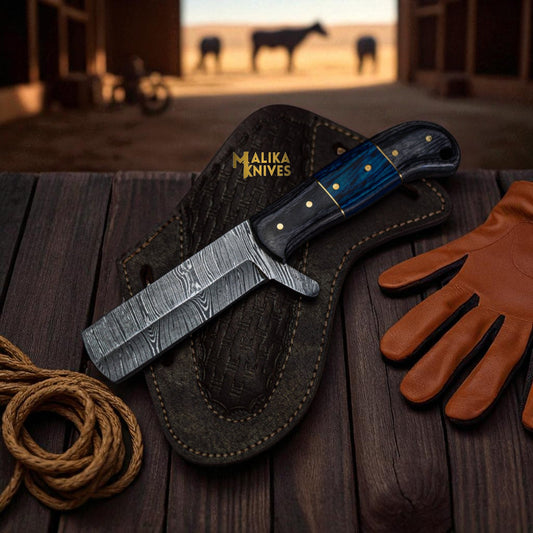
Damascus Bull Cutter Knife with Pakka Wood Handle
Regular price $95.00 USDRegular priceUnit price per$190.00 USDSale price $95.00 USDSale -
Bull Cutter Knife 1095 Damascus Steel Ranch Knife
Regular price $89.99 USDRegular priceUnit price per$180.00 USDSale price $89.99 USDSale -
Damascus Bull Cutter Knife VG10 Cowboy Ranch Knife
Regular price $120.00 USDRegular priceUnit price per$240.00 USDSale price $120.00 USDSale -
D2 Rasp Steel Bull Cutter Knife Camel Bone Handle
Regular price $89.99 USDRegular priceUnit price per$180.00 USDSale price $89.99 USDSale -
Damascus Bull Cutter Knife Cowboy Fixed Blade
Regular price $89.99 USDRegular priceUnit price per$180.00 USDSale price $89.99 USDSale -
Damascus Cowboy Bull Cutter Knife | Red Pakka Wood | Pancake Sheath
Regular price $85.00 USDRegular priceUnit price per$170.00 USDSale price $85.00 USDSale














Quick facts:
- Around 4 inches of blade on an 8 inch overall length
- Steels: reclaimed farrier's rasp, D2 rasp steel, acid-washed D2, 1095 Damascus, VG10 Damascus, copper Damascus
- Blunted or squared tips across the pattern, with ring pommels and finger rings on several builds
- Handles: ironwood, pakka wood, pine cone resin, camel bone, turquoise-inlaid resin
- Hand-stitched leather sheath with every knife, pancake or crossdraw
What is a bull cutter knife?
A bull cutter is a short, broad fixed blade built for close stock work on a ranch. Four features define it, and each one comes from the job rather than from styling.
The tip is blunted or squared off. That is the defining trait and the reason the pattern exists. A bull cutter was made for cutting on live animals at close range, where a sharp point is a liability rather than an advantage. Rounding or squaring the tip removes the ability to puncture something you did not intend to.
The blade is wide with a deep belly. A deep curve keeps more edge in contact through a drawing cut, which is what makes it efficient on hide, rope and anything fibrous. The width gives the blade rigidity at a short length.
Many carry a ring pommel or finger ring. A steel ring at the butt or the front of the handle locks the grip, so the knife stays put in a wet or bloody hand. Several builds here have one.
The blade is short. Around four inches on an eight inch overall. Close work needs control, not reach.
Read our bull cutter knife history, design and buying guide for the fuller background on where the pattern came from.
What is a bull cutter knife used for?
The name comes from castrating young bulls, which is a job that needs a curved edge, complete control at close range, and a tip that will not go where it should not. The pattern outlived that single use because the same geometry turned out to suit most of what happens on a working property.
Day to day, a bull cutter handles:
- Baling twine, hay strings and poly rope
- Leather tack, latigo and saddle strings
- Feed sacks, mineral bags and bulk packaging
- Hide work and close cuts on stock
- Butchering and general cleaver-style work on a board
- Barbecue, camp cooking and food preparation
- Everyday belt carry where a long blade would be in the way
Where it is the wrong tool: anything needing a point. A blunted tip cannot start a cut in the middle of a surface, cannot bore, and cannot do fine cape work. It also slices poorly in a straight push cut, because a deep belly wants a drawing motion. For a pointed blade see the ranch knives, and for game work the skinning knives and gut hook knives.
That limitation is not a flaw. Buyers who want a point are buying the wrong pattern.
Which bull cutter is right for you?
- Cheapest way into the pattern. The Damascus with red pakka wood at $85, or the 1095 Damascus with a wood handle. Both are real forged blades on a pancake sheath.
- Hardest daily use. The D2 rasp steel with an ironwood handle. Best edge retention here, and ironwood grips better wet than resin or bone.
- You ride or work from a truck. The ironwood ranch bull cutter with a finger ring and crossdraw sheath, cut for a seated draw.
- Wet work, least upkeep. The VG10 Damascus. Stainless-cored Damascus takes a wet day far better than 1095.
- Butchering and board work. The Damascus with a pakka wood handle, the widest profile in the run and closest to a cleaver.
- A collection piece. The copper Damascus with turquoise and a ring pommel, the top of the collection at $270.
Caught between two? Send us both through contact and we will tell you which one we would keep.
Ring pommels and finger rings
A ring at the butt of the handle or ahead of the guard is not a decoration on this pattern. It exists because stock work happens with wet, greasy or bloody hands, and a plain handle can slide in that grip. Hooking a finger through a ring locks the knife in place regardless of what is on your hands.
Practically, a ring adds a little weight at the rear, which shifts balance back toward the hand and makes the knife feel quicker at close range. It also gives somewhere to put a lanyard or hang the knife.
If you work stock, take a ring. If the knife is for rope, packaging and general chores, a plain handle carries flatter and is more comfortable in a pocket-adjacent sheath.
Handle materials
- Ironwood. The densest option here and the best grip in a wet or gloved hand. The working choice.
- Pakka wood. Wood laminate stabilised in resin, so it holds a finish and shrugs off moisture better than natural hardwood. Available in natural and red.
- Pine cone resin. Whole pine cones cast into stabilised resin, cured, then cut into scales. Fully waterproof and dimensionally stable, with moderate grip when wet.
- Camel bone. Pale, dense, takes a fine polish, and the traditional look on a western knife.
- Turquoise-inlaid resin. Used on the copper Damascus build, where the knife is meant to be looked at.
For genuine stock work, ironwood or pakka wood. For appearance, camel bone or the turquoise inlay.
Pancake or crossdraw?
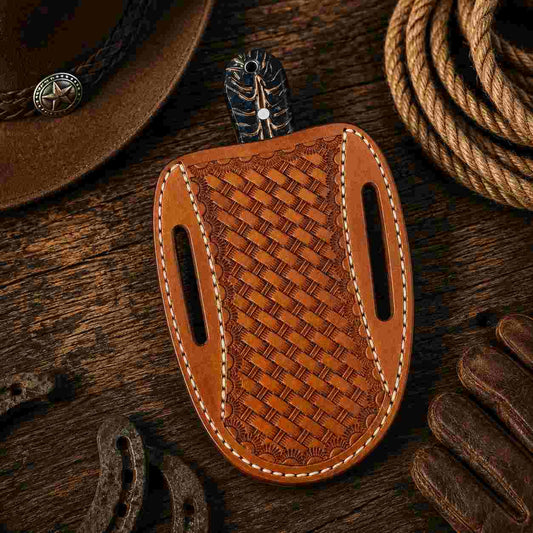
A pancake sheath has belt slots either side of the blade pocket, which holds the knife flat against the hip and spreads the weight across the belt instead of hanging it off one loop. It is more comfortable on foot through a long day, and it is the default across this collection.
A crossdraw sheath rides on the weak-hand side with the handle angled forward, so it can be seated or mounted without twisting for it. Two builds here ship crossdraw.
Our cowboy knife sheath guide covers pancake, crossdraw and vertical belt carry and when each earns its place.
How do you sharpen a curved blade with a blunt tip?
The deep belly is what most people get wrong, and the blunted tip changes the finish.
- Start at the heel with the blade flat on the stone at roughly 20 degrees per side.
- Sweep the handle up steadily as you draw the knife back, so the contact point tracks around the curve at a constant angle. On a blade this curved the handle finishes noticeably higher than it started.
- Use fewer, slower strokes than on a straight edge. Rushing the sweep is what leaves a flat spot mid-belly, which is the single most common fault on this pattern.
- Stop at the tip. A bull cutter tip is meant to be blunt, so do not try to bring it to a point. Keep the edge sharp right up to where it turns, and leave the tip itself alone.
- Strop on leather to take off the burr.
Are bull cutter knives legal to own and carry?
United States
A four inch fixed blade is legal to own throughout the United States and sits below the length thresholds most states apply to larger knives. A blunted tip also puts it outside most concealed-carry restrictions written around pointed blades, though carry rules are still set at state and often municipal level. Check your local ordinance.
Canada
Fixed blades are legal to own in Canada, where prohibited classifications turn on the opening mechanism rather than blade length. Carry sheathed and for a lawful purpose.
United Kingdom and EU
Ownership is generally legal, but a fixed blade of any length is not a general-carry knife in public without a specific reason such as work or transport to and from it. Confirm current import and age-verification rules before ordering.
Rules change. Treat this as a starting point and verify current law where you live.
Who makes these knives?
Every blade here is forged and finished by hand by Naqash and Younas Minhas, with more than 15 years of combined experience at the bench. Nothing is mass-produced. Each knife is ground, heat treated and fitted individually, then paired with a leather sheath cut and stitched for that blade.
Custom work is available on blade width, tip shape, steel, handle material, ring pommel and sheath pattern. Send a specification through contact and we will tell you what is achievable and what it costs.
Written by Naqash Minhas, knifemaker, Malika Knives. More about how we work.
Frequently asked questions
What is a bull cutter knife?
A short, broad ranch knife with a deep belly and a blunted or squared tip, around four inches of blade on an eight inch overall. The blunt tip is the defining feature: it exists so the knife cannot puncture what you are cutting close to during stock work.
Why do bull cutter knives have a blunt tip?
Because the pattern was made for cutting on live animals at close range, where a sharp point is a hazard rather than a help. Rounding or squaring the tip removes the ability to puncture something unintended. Buyers who need a point should choose a different pattern.
What is a bull cutter knife used for?
Named for castrating young bulls, it now handles most close ranch work: rope, baling twine, leather tack, feed sacks, hide work, butchering, and camp or barbecue food preparation. Anything that suits a drawing cut with a curved edge.
What is the difference between a bull cutter and a ranch knife?
The tip and the blade width. A bull cutter is wider with a deeper belly and a blunted tip. A ranch knife is a pointed general-purpose blade with a moderate belly. A bull cutter is better on rope and hide, a ranch knife handles a wider range of tasks.
Can a bull cutter be used as a butcher knife?
Yes, and one build here is made specifically with that in mind. The width and deep belly work well on a board, and the blunt tip is no disadvantage in butchering. It is not a substitute for a boning knife, which needs a point.
What blade length should a bull cutter be?
Around four inches on an eight inch overall. The pattern is built for control at close range, so a longer blade works against the design. Every knife in this collection sits in that range.
What steel is best for a bull cutter?
D2 rasp steel for the hardest use with the least sharpening. Plain rasp steel or 1095 Damascus for easy field sharpening and a working character. VG10 Damascus if the knife will see wet work regularly, since it corrodes far less than 1095.
Do these knives come with a sheath?
Every knife ships with a hand-stitched leather sheath cut for that blade. Most are pancake patterns, which ride flat against the belt, and two are cut crossdraw for a seated or mounted draw. Carry style is listed on each product page.
