
A buckaroo knife is the working blade of the Great Basin cowboy, the vaquero-descended hand who rides the high desert of Nevada, Oregon, and northern California. Longer in the handle than a common belt knife, carried crossdraw or flat against the hip so it clears a saddle, and ground thin enough to skin but stout enough to cut latigo. Every knife below is forged by hand, one at a time.
-
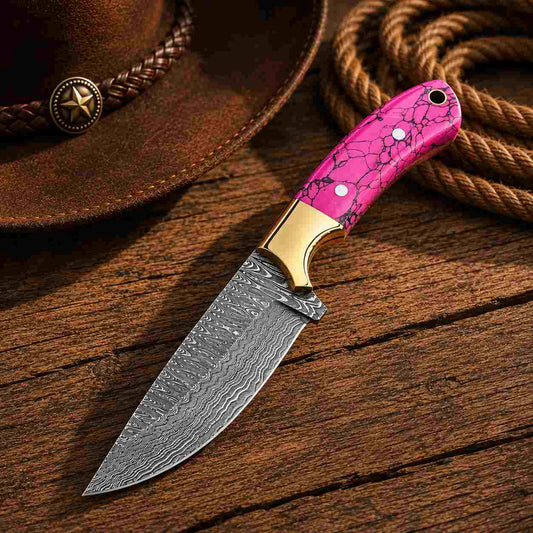
Buckaroo Knife | Damascus Steel with Pakka Wood Handle
Regular price $115.00 USDRegular priceUnit price per$210.00 USDSale price $115.00 USDSale -
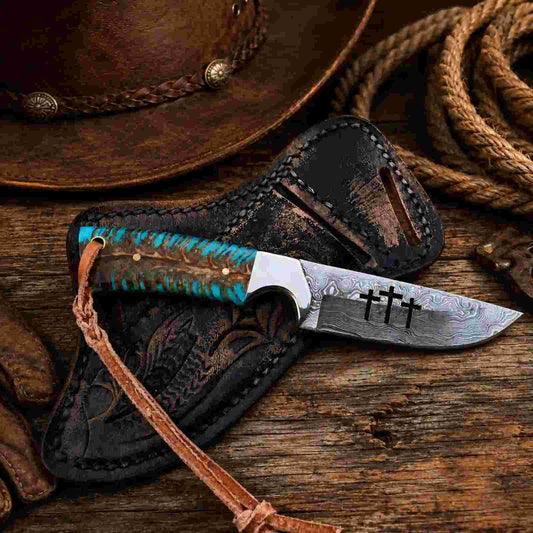
Handmade Cowboy Knife with Rasp Steel Blade, Resin & Wood Handle, Steel Bolster
Regular price $120.00 USDRegular priceUnit price per$240.00 USDSale price $120.00 USDSale -
3.5-Inch D2 Steel Cowboy Knife with Texas Enforcement Resin Handle & Steel Bolster
Regular price $130.00 USDRegular priceUnit price per$260.00 USDSale price $130.00 USDSale -
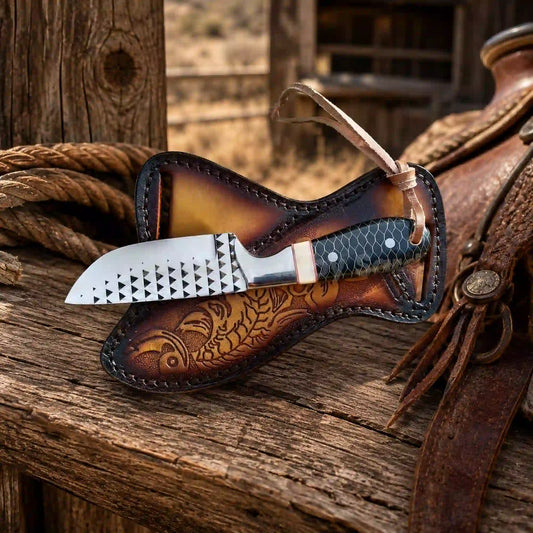
4-Inch Rasp File Steel Knife with Cross Wirecut Blade, Rosewood Handle & Leather Sheath
Regular price $125.00 USDRegular priceUnit price per$250.00 USDSale price $125.00 USDSale -
Praying Cowboy Knife – Damascus Steel Blade with Pine Cone Handle & Leather Sheath
Regular price $120.00 USDRegular priceUnit price per$240.00 USDSale price $120.00 USDSale -
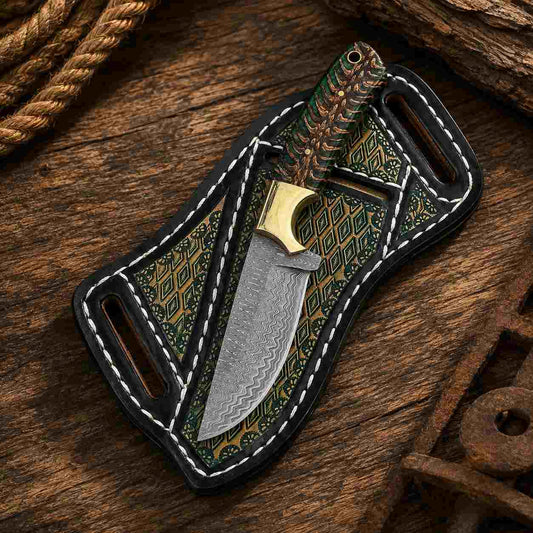
Green Pine Cone Damascus Steel Buckaroo Knife
Regular price $130.00 USDRegular priceUnit price per$260.00 USDSale price $130.00 USDSale -
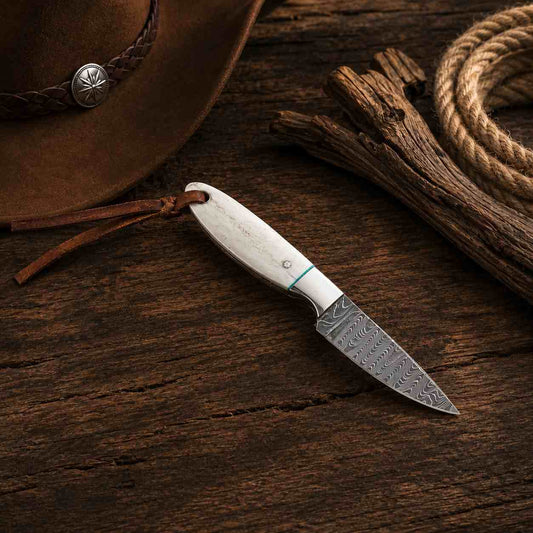
Buckaroo Damascus Steel Knife – Western Fixed Blade with Camel Bone Handle
Regular price $105.00 USDRegular priceUnit price per$210.00 USDSale price $105.00 USDSale -
Damascus Buckaroo Knife with Pine Cone Handle & SS Masonic Bolster
Regular price $140.00 USDRegular priceUnit price per$280.00 USDSale price $140.00 USDSale -

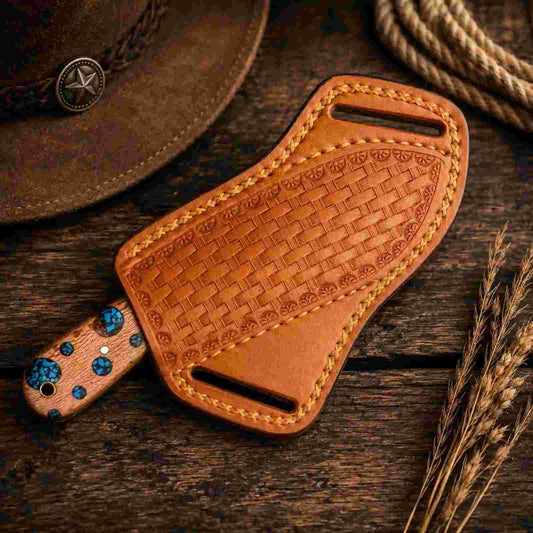
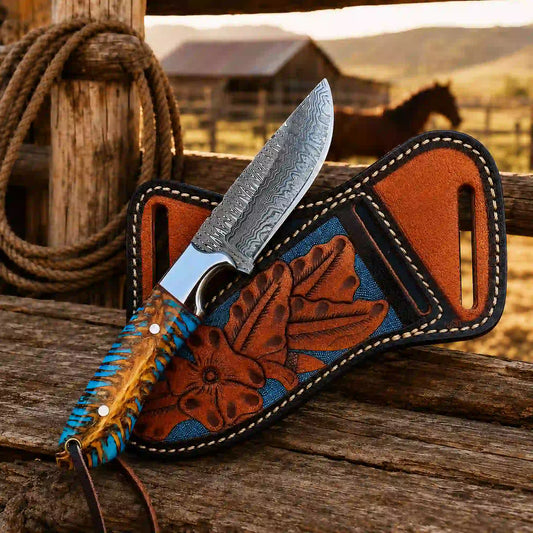
Cholla Cactus Buckaroo Knife – Damascus Steel Blade with Natural Cactus Handle & Leather Sheath
Regular price $125.00 USDRegular priceUnit price per$250.00 USDSale price $125.00 USDSale -
Rasp Steel Cowboy Knife with Pine Cone Handle & Leather Sheath
Regular price $120.00 USDRegular priceUnit price per$240.00 USDSale price $120.00 USDSale -
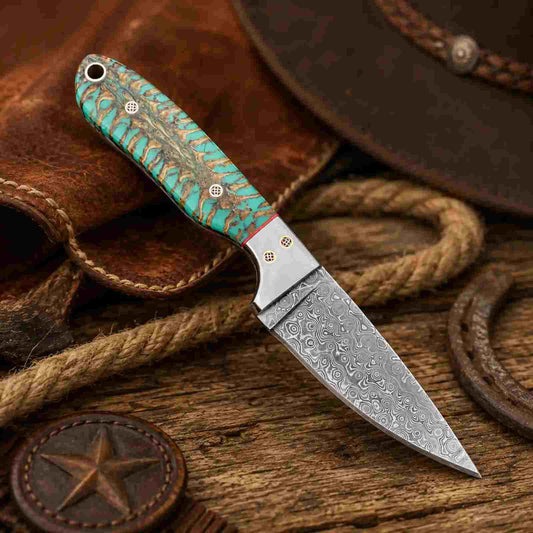
Turquoise Buckaroo Damascus Knife with Brass Bolster
Regular price $130.00 USDRegular priceUnit price per$260.00 USDSale price $130.00 USDSale -
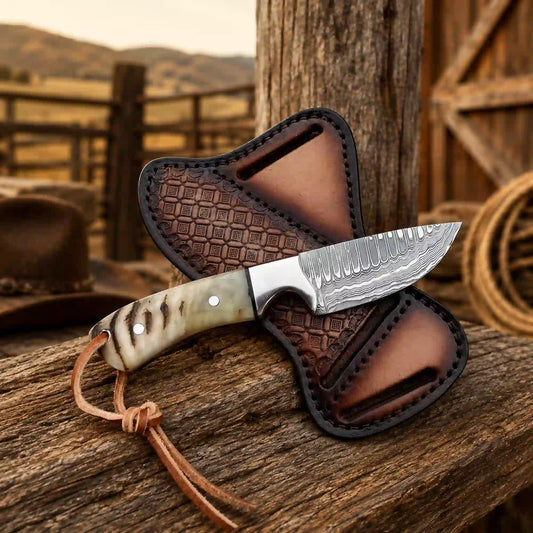
Buckaroo Knife | Damascus Steel with Ram Horn Handle
Regular price $115.00 USDRegular priceUnit price per$210.00 USDSale price $115.00 USDSale -
Buckaroo Knife | Camel Bone and Honeycomb with Crossdraw Sheath
Regular price $125.00 USDRegular priceUnit price per$250.00 USDSale price $125.00 USDSale -
Buckaroo Knife | Rasp Steel with Pine Cone Handle
Regular price $125.00 USDRegular priceUnit price per$250.00 USDSale price $125.00 USDSale -
Buckaroo Knife | Rasp Steel with Cholla Cactus and Turquoise Handle
Regular price $119.00 USDRegular priceUnit price per$238.00 USDSale price $119.00 USDSale -
Buckaroo Knife | Rasp Steel with Camel Bone Handle
Regular price $115.00 USDRegular priceUnit price per$230.00 USDSale price $115.00 USDSale

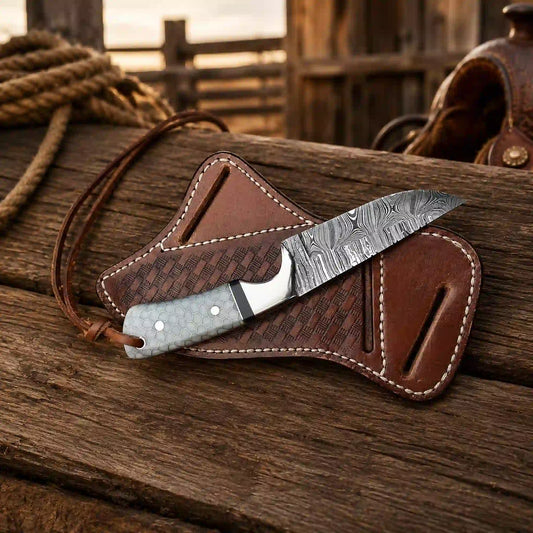

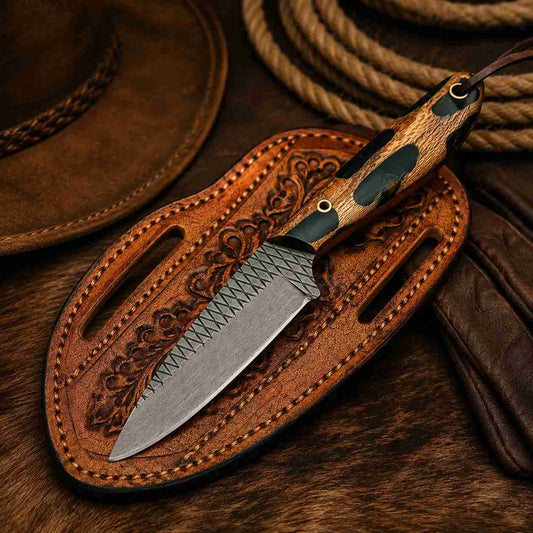


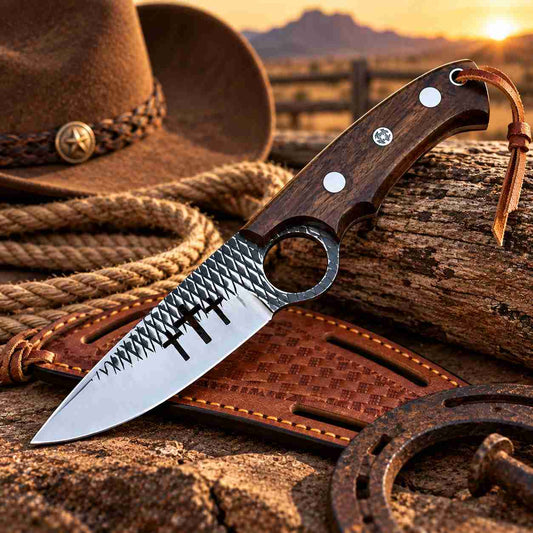








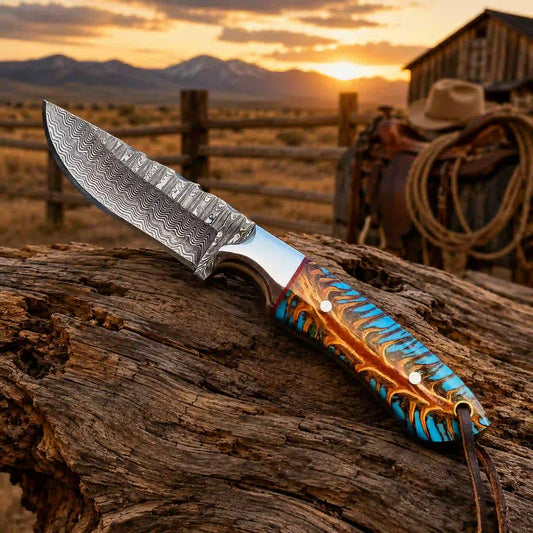

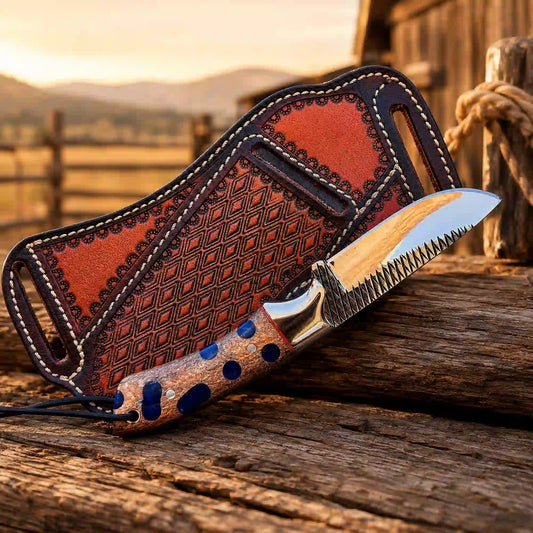

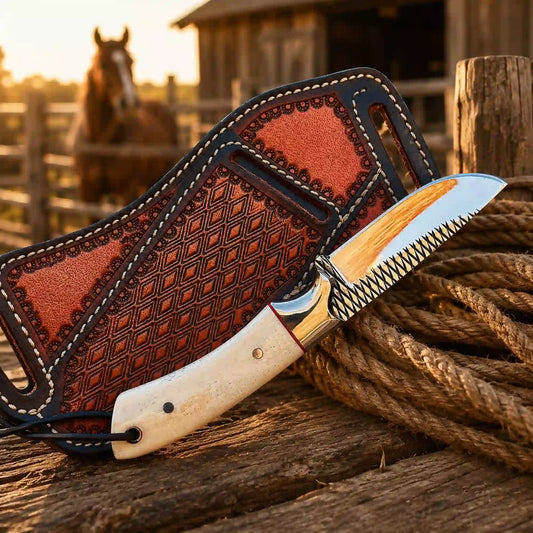
Quick facts:
- Two steels: reclaimed farrier's rasp and folded Damascus, both at 59 to 61 HRC
- Around 4 inches of blade on an 8 inch overall length
- Handles: rosewood, camel bone, ram horn, pakka wood, pine cone resin, cholla cactus, honeycomb, turquoise
- Bolsters in brass and stainless on the dressed builds
- Handmade leather sheath with every knife, pancake or crossdraw
What is a buckaroo knife?
A buckaroo knife is the working fixed blade carried by Great Basin cowboys, the hands who ride the high desert of Nevada, Oregon, Idaho and northern California. The tradition runs directly back to the Spanish and Mexican vaquero, and so does the word: English-speaking hands heard vaquero and said buckaroo.
Three things separate it from a generic belt knife. The handle runs longer, because a hand holding long reins in a glove needs more to grip. The blade sits moderate, around four inches on an eight inch overall, long enough to skin and short enough to stay controllable. And the sheath is cut flat or crossdraw so the knife clears a saddle instead of fouling on the swell.
None of that is decoration. Each detail comes from working stock from horseback rather than on foot, which is the whole distinction between the Great Basin tradition and the Texas one.
Rasp steel and Damascus, 59 to 61 HRC
Most of the run is forged from farrier's rasp, an old ranch-country practice that leaves the file teeth visible along the spine and puts high-carbon steel into a blade that holds an edge through a long day. The Damascus pieces are folded and etched, then fitted with ram horn or pakka wood. Both steels finish at 59 to 61 HRC, hard enough to hold, soft enough to bring back on a stone at the tailgate.
Choosing between them:
|
Rasp steel |
Damascus |
|
|
Origin |
Reclaimed farrier file, high carbon |
Folded and forge-welded, then etched |
|
Look |
File teeth along the spine, working finish |
Layered pattern, no two alike |
|
Hardness |
59 to 61 HRC |
59 to 61 HRC |
|
Corrosion resistance |
Low, will patina and needs oiling |
Low, same care |
|
Sharpening |
Easy on a pocket stone |
Easy on a pocket stone |
|
Price band here |
$110 to $125 |
$105 to $140 |
|
Best for |
A knife with a working history |
A knife that gets looked at |
Neither is stainless. Both come back on a stone without special equipment, which is the point on a ranch. The choice is honestly aesthetic rather than functional: rasp steel carries the record of what it was, Damascus carries the pattern of how it was made.
Handles cut from the country
Rosewood, camel bone, pine cone in resin, cholla cactus with turquoise, ram horn, honeycomb. No two are identical because none of the materials are. Rosewood darkens where your hand sits. Bone takes on the colour of whatever it rides against.
Pine cones and cholla cactus are set in resin, which stabilises the natural structure and seals it against moisture, so those are the two that shrug off a wet day. Rosewood, ram horn, camel bone and pakka wood are finished but stay natural, so grain and colour move between knives and change over years of carry. Turquoise appears as inlay and as spacer work against rosewood and cholla.
For a working hand in a wet country, rosewood or pakka wood gives better grip than a polished bone or resin. For a knife that will be looked at as much as used, the cholla cactus and turquoise builds are the ones people stop on.
Which buckaroo knife is right for you?
- Working knife, lowest upkeep on the wallet. The rasp steel with a rosewood handle. Plain, grippy, and the entry price in the run.
- You ride most days. The camel bone and honeycomb with a crossdraw sheath, cut specifically for a seated draw.
- Traditional Great Basin dress. The Damascus with ram horn, which is as close to old vaquero gear as anything here.
- You want turquoise. The rasp steel with cholla cactus and turquoise for the natural build, or the Damascus with a brass bolster for the dressed one.
- A gift or a presentation piece. The Damascus with pine cone and a stainless Masonic bolster, the top of the run.
Caught between two? Send us both through contact and we will tell you which one we would keep.
Pancake and crossdraw sheaths
Each knife ships with a handmade leather sheath, most of them pancake pattern, some cut crossdraw for saddle carry. If sheath pattern is what you are deciding between, the cowboy knife sheath guide walks through pancake, crossdraw, and vertical belt carry and when each one earns its place.
How do you sharpen and care for these?
At 59 to 61 HRC both steels come back on an ordinary stone, which is the point of that hardness range on a ranch knife.
- Work the straight section flat on the stone at roughly 20 degrees per side.
- Lift the handle gradually as the contact point reaches the belly, so the stone tracks the curve at a constant angle. Lifting too late is what leaves a dull patch ahead of the belly.
- Finish the tip with lighter pressure.
- Strop on leather to take off the burr.
Rasp steel and Damascus are both high carbon and neither is stainless. Wipe the blade dry after use, including after anything acidic, and put a light coat of mineral oil or paste wax on before it goes away. Keep the knife out of the sheath for long-term storage, because tanned leather holds moisture against steel and will pit it.
A patina on rasp steel is not a fault. It is the grey-brown film that forms with use, and it slows further corrosion rather than causing it. Rust is orange, sits proud of the surface, and does need dealing with..
Are these legal to own and carry?
United States
A four inch fixed blade is legal to own throughout the United States and sits below the length thresholds most states apply to larger knives. Carry rules are still set at state and often municipal level, so check your local ordinance, particularly for concealed carry.
Canada
Fixed blades are legal to own in Canada, where prohibited classifications turn on the opening mechanism rather than blade length. Carry sheathed and for a lawful purpose.
United Kingdom and EU
Ownership is generally legal, but a fixed blade of any length is not a general-carry knife in public without a specific reason such as work or transport to and from it. Confirm current import and age-verification rules before ordering.
Rules change. Treat this as a starting point and verify current law where you live.
Who makes these knives?
Every blade here is forged and finished by hand by Naqash and Younas Minhas, with more than 15 years of combined experience at the bench. Nothing is mass-produced. Each knife is ground, heat treated and fitted individually, then paired with a leather sheath cut and stitched for that blade.
Custom work is available: blade proportion, steel, handle material, bolster style, turquoise inlay, and sheath pattern and tooling. Send a specification through contact and we will tell you what is achievable and what it costs.
Written by Naqash Minhas, knifemaker, Malika Knives. More about how we work.
Frequently Asked questions
Existing ten questions kept as written. Convert the numbered list to headings, see the note at the end.
What is a buckaroo?
A buckaroo is a cowboy of the Great Basin, working the high desert of Nevada, Oregon, Idaho, and northern California. The tradition descends directly from the Spanish and Mexican vaquero, and buckaroos are known for long reins, slick-fork saddles, silver-mounted gear, and a slower, more deliberate style of horsemanship than the Texas cowboy tradition.
Where does the word buckaroo come from?
Buckaroo is an anglicised pronunciation of the Spanish vaquero, meaning cow-handler, from vaca, cow. English-speaking hands in the Great Basin heard vaquero and rendered it buckaroo. The word entered written American English in the mid-1800s.
What is a buckaroo knife?
A buckaroo knife is the working fixed blade carried by Great Basin cowboys. Handles run longer than a standard belt knife to suit gloved hands, blades sit around four inches on an eight inch overall, and the sheath is cut flat or crossdraw so the knife clears a saddle without fouling.
How is a buckaroo knife different from a regular cowboy knife?
The difference is carry and proportion rather than pattern. Buckaroo knives favour crossdraw and flat pancake sheaths for mounted work, longer handles for rein-holding hands, and a moderate blade length that skins without being unwieldy on horseback.
What steel are these buckaroo knives made from?
Rasp steel or Damascus. Rasp steel is forged from farrier's rasp, a high-carbon stock that leaves file texture along the spine. Damascus blades are folded and acid-etched. Both are heat treated to 59 to 61 HRC.
What does 59 to 61 HRC mean for daily use?
The Rockwell C figure measures blade hardness. At 59 to 61 HRC a blade holds a working edge through extended cutting and still comes back on a pocket stone without specialist equipment, which suits ranch use where sharpening happens in the field.
Do buckaroo knives come with a sheath?
Yes. Every knife ships with a handmade leather sheath. Most are pancake patterns, which ride flat against the belt. Some are cut crossdraw for saddle carry, positioned on the weak-hand side and angled for a seated draw.
Is a buckaroo knife good for hunting?
For skinning and cape work, yes, since the four inch blade and moderate belly suit it. For field dressing large game a dedicated skinning knife or gut hook does the job better. A buckaroo is built first for stock work from horseback.
