
Handmade Hunting Knives Built for Real Hunting
A hunting knife is not just another tool in a pack. For many hunters it becomes the blade used in the most important moments in the field, since skinning game, field dressing deer, preparing camp food and handling everyday outdoor work all depend on a reliable fixed blade. We forge each hunting knife by hand in our workshop, and every one ships with a handmade leather sheath. Not sure which blade suits you? Our guide to the types of hunting knives is a useful place to start.
-
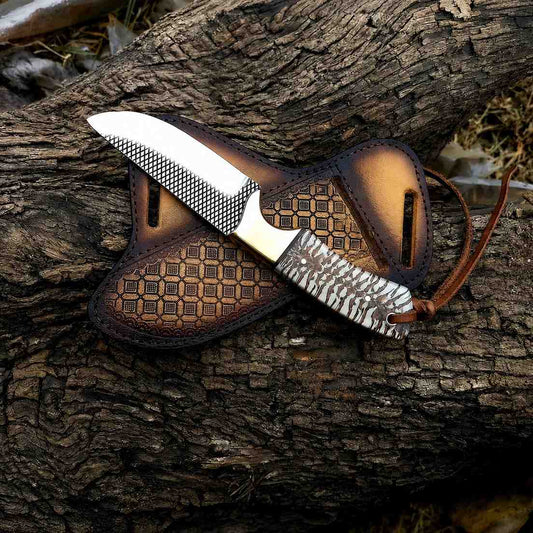
Cowboy Hunting Knife Rasp Steel Pinecone Handle
Regular price $105.00 USDRegular priceUnit price per$210.00 USDSale price $105.00 USDSale -
Rasp Steel Cowboy Knife – 8" Skinner with Pine Cone Handle & Crossdraw Sheath
Regular price $99.99 USDRegular priceUnit price per$210.00 USDSale price $99.99 USDSale -
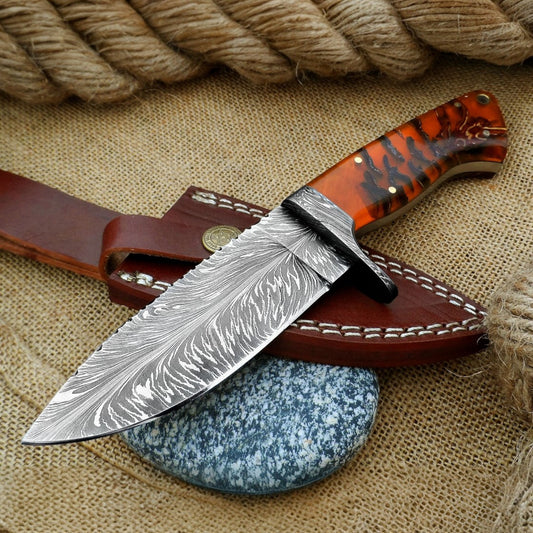
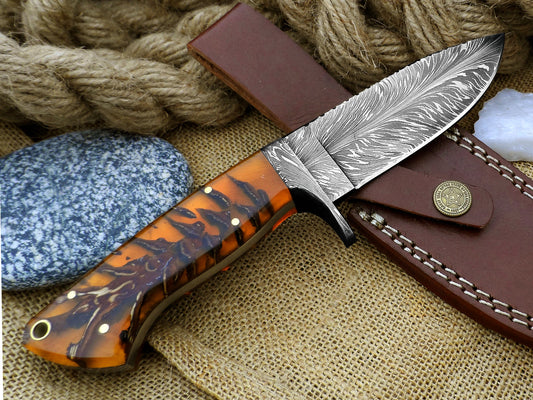
Best Deer Skinning Knife - Feather Damascus Pinecone Handle
Regular price $156.00 USDRegular priceUnit price per$270.00 USDSale price $156.00 USDSale -
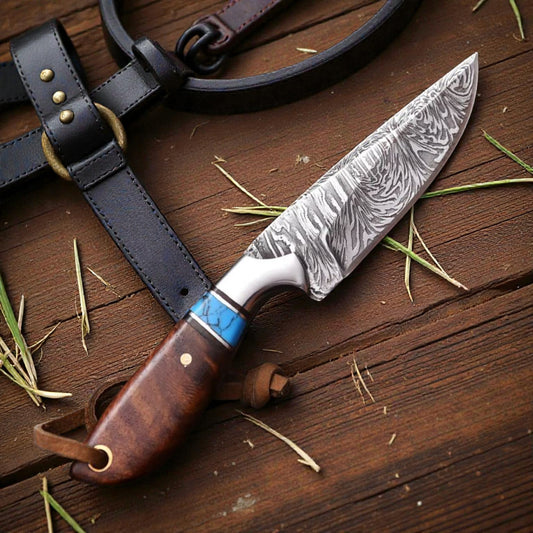
Damascus Cowboy Hunting Knife | Rosewood Handle | Pancake Sheath
Regular price $105.00 USDRegular priceUnit price per$210.00 USDSale price $105.00 USDSale -
Needle Point Hunting Knife D2 Steel Camel Bone Handle
Regular price $89.99 USDRegular priceUnit price per$180.00 USDSale price $89.99 USDSale -
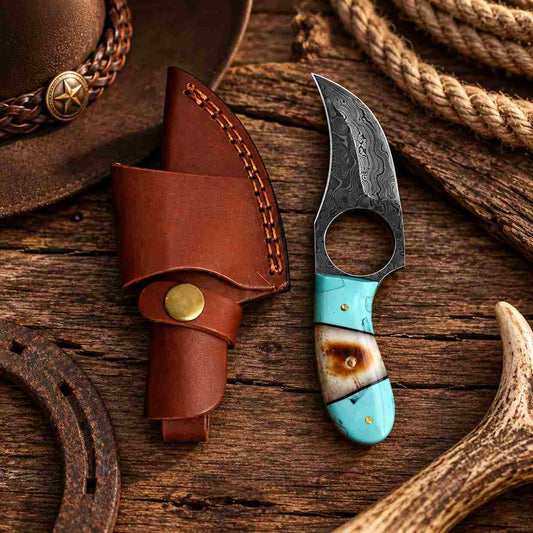
Damascus Skinner Knife with Turquoise Horn Handle, Finger Ring & Leather Sheath
Regular price $110.00 USDRegular priceUnit price per$220.00 USDSale price $110.00 USDSale -
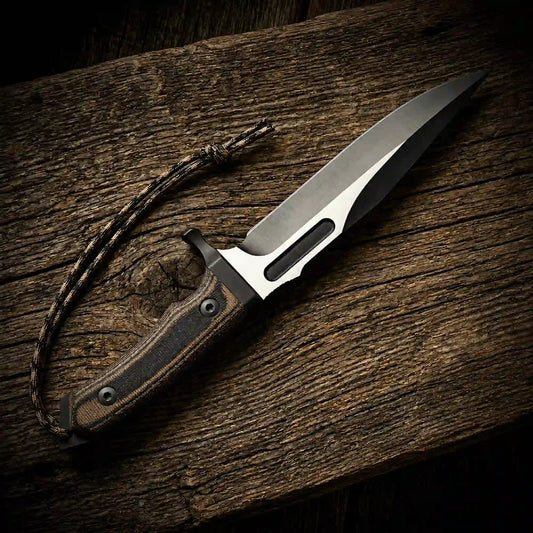
Rambo V Last Blood Replica Bowie Knife – 14" D2 Blade, Micarta Handle
Regular price $145.00 USDRegular priceUnit price per$290.00 USDSale price $145.00 USDSale -
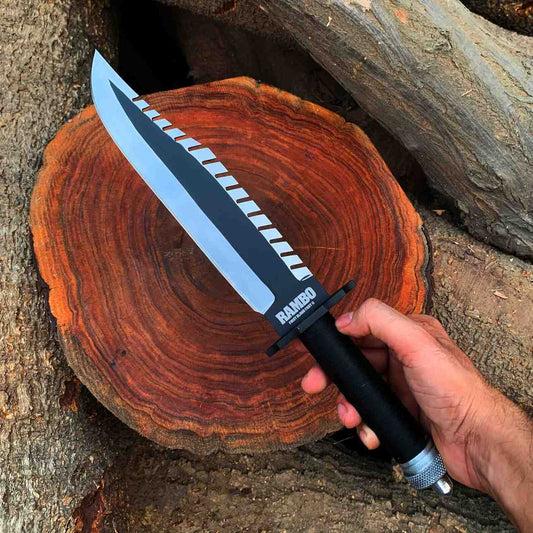
Rambo First Blood Part II Replica Knife – 16" Survival Knife with Leather Sheath
Regular price $140.00 USDRegular priceUnit price per$280.00 USDSale price $140.00 USDSale -
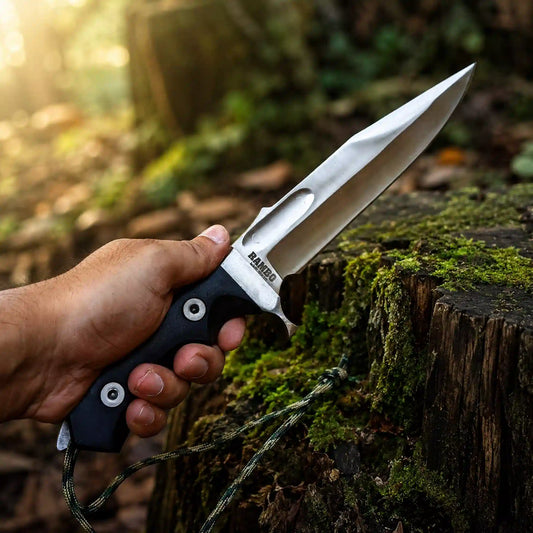
Rambo-Style Survival Bowie Knife – 14" D2 Spear Point with G10 Handle
Regular price $155.00 USDRegular priceUnit price per$310.00 USDSale price $155.00 USDSale -
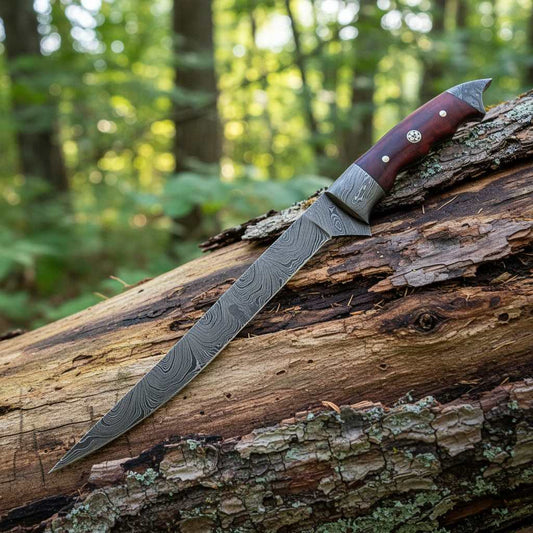
Damascus Fishing Fillet Knife – 7" Blade with Micarta Handle
Regular price $130.00 USDRegular priceUnit price per$260.00 USDSale price $130.00 USDSale -
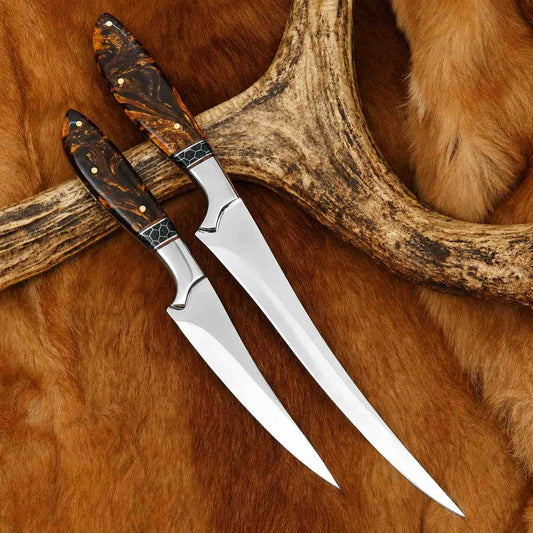
Fillet & Boning Knife Set – 440C Stainless, 2 Piece with Leather Sheaths
Regular price $250.00 USDRegular priceUnit price per$500.00 USDSale price $250.00 USDSale -
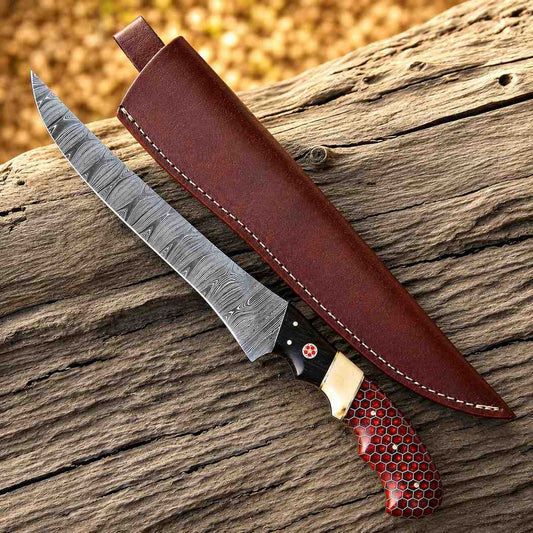
Damascus Fish Fillet Knife – Red Honeycomb & Camel Bone Handle
Regular price $125.00 USDRegular priceUnit price per$250.00 USDSale price $125.00 USDSale -
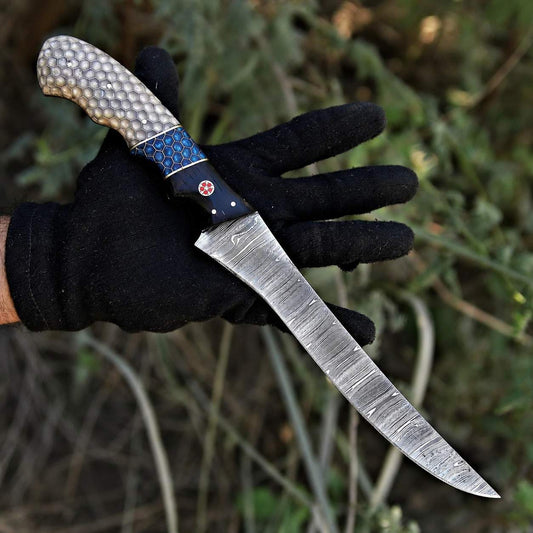
Damascus Fillet Knife – 8" Flexible Blade with Silver Honeycomb Handle
Regular price $120.00 USDRegular priceUnit price per$240.00 USDSale price $120.00 USDSale -
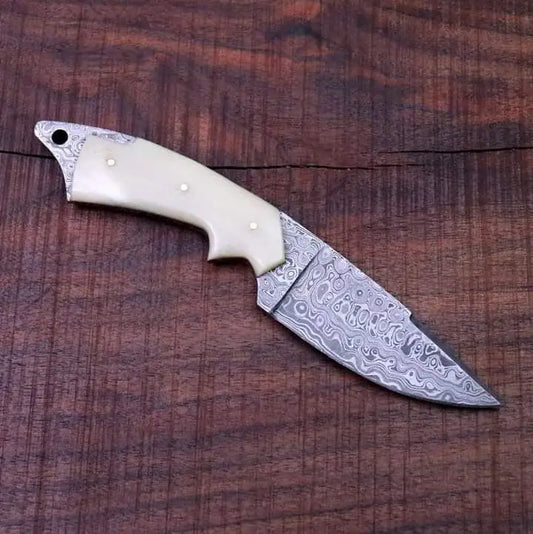
Damascus Skinner Knife with Camel Bone handle
Regular price $97.00 USDRegular priceUnit price per$194.00 USDSale price $97.00 USDSale -
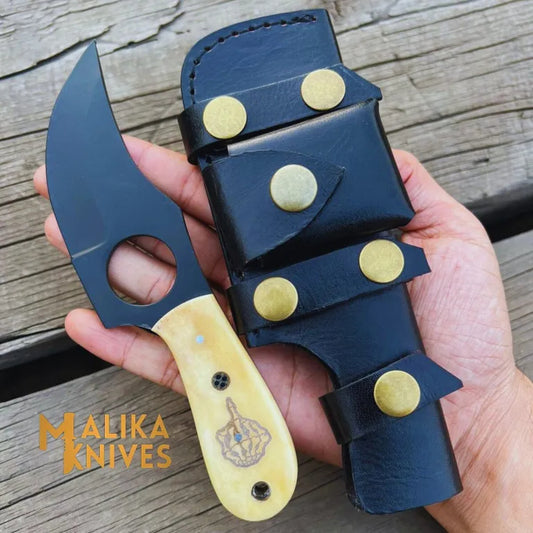
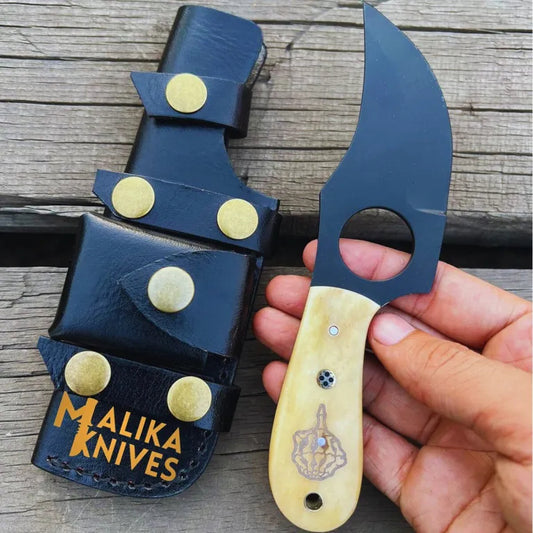
Camel Bone Skinner Knife with leather Sheath
Regular price $129.00 USDRegular priceUnit price per$258.00 USDSale price $129.00 USDSale -
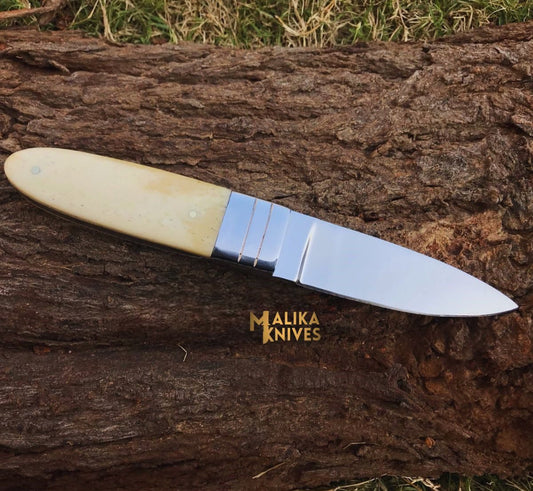
Custom handmade D2 Steel Skinner Knife - Designed Durability-0022
Regular price $95.00 USDRegular priceUnit price per














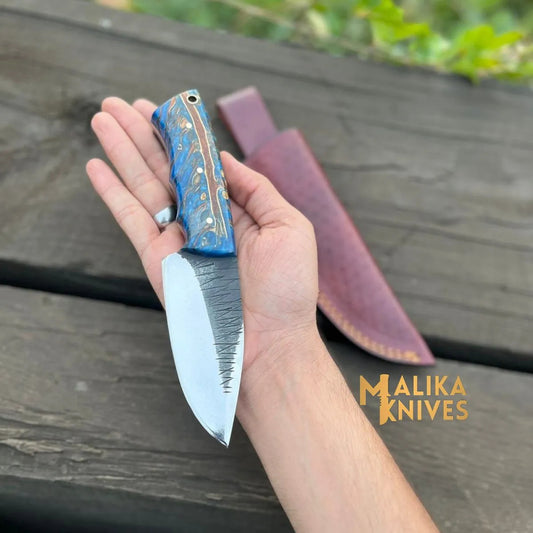
Quick facts:
- Blade lengths from 3 to 7 inches, with blade stock from 3 mm to 5 mm
- Five steels: 1095/15N20 carbon Damascus at 59 to 60 HRC, stainless Damascus, D2 tool steel at 59 to 61 HRC, 440C stainless, and reclaimed farrier's rasp
- Blade styles: drop point, clip point, skinner, gut hook, spear point, needle point, and flexible fillet
- Handles: G10, micarta, camel bone, bull horn, stag horn, pine cone resin, wenge, rosewood, pakka wood, walnut
- Handcrafted leather sheath with every knife, in vertical, scout, drop loop or pancake carr
Who makes these knives?
At Malika Knives, every blade is built by hand by us, Naqash and Younas Minhas, with more than 15 years of combined experience at the bench. Each blade begins as raw steel and is forged, ground, heat treated and finished by hand, so each one delivers the durability, balance and cutting performance hunters expect. Our knives are made in limited runs or built to order, never mass produced, and that approach lets hunters and collectors own a knife that reflects real craftsmanship rather than factory production.

Blade Styles Used in Hunting Knives
Different hunting situations call for different blade designs. The knives in this collection feature several proven styles used by hunters across North America, so you can match the blade to the way you hunt.
Drop Point Hunting Knives
Drop point blades are one of the most trusted hunting knife designs. The shape offers strong tip control and a wide belly that works well when skinning deer or preparing game, which is why it's often the first choice for an all-round hunting knife.
Clip Point Hunting Knives
Clip point blades provide a sharper, more controllable tip. Hunters often reach for this style when precision cutting is needed during field dressing.
Skinner Hunting Knives
A skinner blade features a large curved cutting edge that lets you work efficiently while reducing the risk of puncturing the hide. If skinning is your main task, our dedicated skinning knives collection is worth a look.
Gut Hook Hunting Knives
Some knives include a gut hook, which lets hunters open game quickly during field dressing. A gut hook hunting knife is one of the most requested designs we build Damascus gut hook hunting knife with a wood handle is a good example of the style done right. For more on using one, see our field dressing knife guide for hunters.
Spear Point Hunting Knives
Spear point blades offer balanced strength and symmetry, making them useful for outdoor tasks well beyond hunting. Blade lengths in this collection typically range between 3 and 7 inches, giving control for detailed work while still handling larger jobs, with blade thickness usually from 3 mm to 5 mm depending on the design.

What blade length and thickness should you choose?
Blade lengths in this collection run from 3 to 7 inches, with blade stock from 3 mm to 5 mm depending on the design. Both numbers matter more than most buyers expect.
Length:
- 3 to 4 inches. The precision range. Best for caping, working around the head, and detail cuts on small and medium game. Also the easiest to carry.
- 4 to 5 inches. The all-round range, and where most hunters should start. Long enough to skin a deer efficiently, short enough to keep control.
- 5 to 7 inches. More reach for breaking down larger animals and for camp work. Becomes unwieldy for fine cuts.
Thickness:
- 3 mm slices better and flexes slightly, which suits skinning and fish work.
- 4 to 5 mm resists lateral force and takes harder use, which suits breaking down large game and camp tasks.
The most common buying mistake is choosing on length alone. A 7 inch blade in 5 mm stock is a very different knife from a 7 inch blade in 3 mm, and the thickness decides what it is actually good at.
What steels do we use, and how do they compare?
Steel determines how a hunting knife performs, so we work in proven blade steels that balance edge retention, strength and reliability. If you are weighing the options, our guide to the best steel for hunting knives, D2 vs Damascus breaks the differences down in full. In short, it comes down to how much maintenance you want to do against how much you value a traditional layered look.
The five steels compared:
|
Carbon Damascus |
Stainless Damascus |
D2 tool steel |
440C stainless |
Rasp steel |
|
|
Composition |
1095 and 15N20 |
Stainless core, layered jacket |
Single high-chromium tool steel |
Stainless |
Reclaimed farrier file, high carbon |
|
Hardness |
59 to 60 HRC |
59 to 61 HRC |
59 to 61 HRC |
Stainless working range |
High carbon |
|
Edge retention |
Excellent |
Very good |
Excellent |
Good |
Good |
|
Corrosion resistance |
Low, needs oiling |
Good |
Semi-stainless |
Best here |
Low, will patina |
|
Sharpening |
Easy, comes back fast |
Moderate |
Slowest, wants a diamond plate |
Easy |
Easy |
|
Best for |
Hunters who maintain a blade and want the pattern |
Wet weather and hard-working hunts |
Hardest use, least sharpening |
Fish and boning work |
A knife with a working history |
Handle materials designed for outdoor grip
A working blade has to stay secure in the hand during demanding work, so we shape and fit every handle by hand. We work in a range of materials chosen for durability and comfort such as Bull horn,Pine cone resin,Wenge wood,Rosewood,Pakka wood,Walnut wood,Deer antler (stag horn) and more
Natural materials such as stag horn and camel bone give a hunting knife real character, which you can see on pieces such as our D2 hunting knife with an antler and rosewood handle.
Leather sheaths and carry options
Every knife includes a handcrafted leather sheath designed for secure carry in the field. A properly fitted sheath does more than hold the knife: it protects the edge and keeps the blade safe to carry on every hunt. Available carry styles include:
- Vertical belt carry. Traditional and quickest to draw standing.
- Horizontal scout carry. Rides across the small of the back, out of the way of a pack belt.
- Drop loop carry. Hangs below the belt line so a pack waist strap does not sit on it.
- Pancake carry. Belt slots either side of the pocket, holding the knife flat against the hip.
If you hunt with a pack, scout or drop loop carry matters more than most buyers realise, because a vertical sheath on the belt sits exactly where a loaded waist strap goes. Carry style is listed on each product page.
How do you sharpen and care for the blade?
Sharpen on a whetstone or diamond plate at a consistent angle of roughly 20 degrees per side, working from a coarser grit to a finer one and finishing with light passes on a strop. Harder steels such as D2 sharpen best on diamond or ceramic. Our full walkthrough is in how to sharpen a hunting knife the right way.
Why hunters choose handmade knives
Many hunters today want more than factory production, and a fixed blade built by hand offers durability, character and craftsmanship a machine cannot match. Hunters and collectors choose handmade for stronger construction, better blade balance, unique natural materials, handcrafted quality and limited production runs.
Whether you are after a compact gut hook for field dressing or a heavy full-tang blade for hard camp use, every knife here is made by us, Naqash and Younas Minhas. You can read more about the two of us and how we work on our About page.
Are these knives legal to own and carry?
United States
Fixed-blade hunting knives are legal to own throughout the United States. Carry is regulated at state and often municipal level, and several states set a blade length threshold. Most blades in this collection sit below those thresholds, but the larger 7 inch builds may not. Many states also treat carry while lawfully hunting differently from general public carry, so check your state statute and your hunting regulations.
Canada
Fixed blades are legal to own in Canada, where prohibited classifications turn on the opening mechanism rather than blade length. Carry sheathed and for a lawful purpose.
United Kingdom and EU
Ownership is generally legal, and hunting, fishing and transport to and from those activities are among the recognised reasons for carrying a fixed blade in public. Confirm current import and age-verification rules before ordering.
Rules change and vary widely. Treat this as a starting point and verify current law and hunting regulations where you hunt.
Frequently Asked Questions About Hunting Knives
What blade length is best?
Most hunters prefer blade lengths between 3 and 7 inches, because that range gives the control needed for field dressing while still offering enough cutting power for larger tasks such as preparing game or camp work. For a single all-round knife, 4 to 5 inches is the practical sweet spot.
What steel is best?
D2 steel and Damascus steel both perform well. D2 offers strong wear resistance and easy maintenance, while carbon Damascus combines durability with traditional layered-steel beauty. The best choice depends on whether you prioritise low upkeep or a striking pattern.
How do I sharpen it?
Sharpen on a whetstone or diamond stone at a consistent angle of about 20 degrees per side, working from a coarser grit to a finer one and finishing with a few light passes on a strop. Harder steels such as D2 sharpen best on diamond or ceramic stones.
What is a hunting knife used for?
Field dressing, skinning game, preparing camp food, cutting cordage and general outdoor work. The right blade shape, whether drop point, skinner or gut hook, makes each of these tasks easier and safer.
Are handmade knives better than factory knives?
Handmade knives often offer stronger construction and better craftsmanship because each blade is forged and finished individually rather than mass produced. They also use unique natural materials you will not find on factory knives.
Do these knives include a sheath?
Yes. Every knife in this collection includes a handcrafted leather sheath, fitted to the individual blade for safe carry in the field.
What blade thickness is best?
Around 3 mm for skinning and fish work, where a thinner blade slices better and flexes slightly. Four to 5 mm for breaking down large game and camp use, where rigidity matters. Blade stock in this collection runs 3 mm to 5 mm depending on the design.
Can one knife do everything on a hunt?
A 4 to 5 inch drop point in 4 mm stock comes closest. It handles opening, quartering, skinning and camp work adequately, and it is what we would recommend to anyone buying their first. Caping and boning are the two jobs that genuinely want a second, finer blade.
