
A Damascus hunting knife brings together everything a hunter wants in a blade: a working edge that holds up in the field, and a layered pattern that turns heads at camp. We forge each one by hand, folding high-carbon steel into hundreds of layers before the blade is ever shaped. Every knife in this collection is a true working tool, built for field dressing, skinning and outdoor use, and every one ships with a handmade leather sheath. Deciding between steels? Our guide to the best steel for hunting knives, D2 vs Damascus is a good place to start.
-
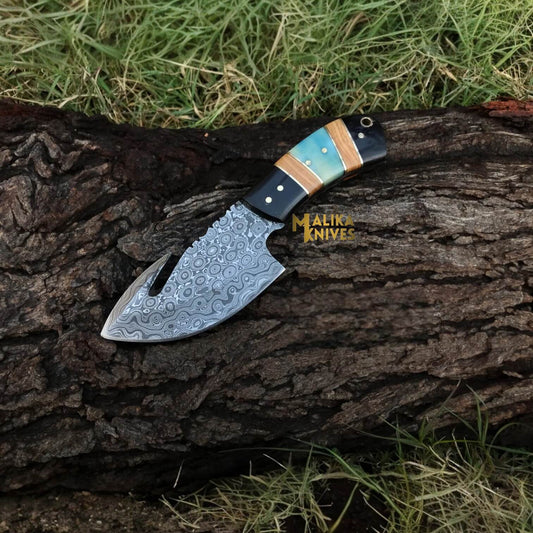
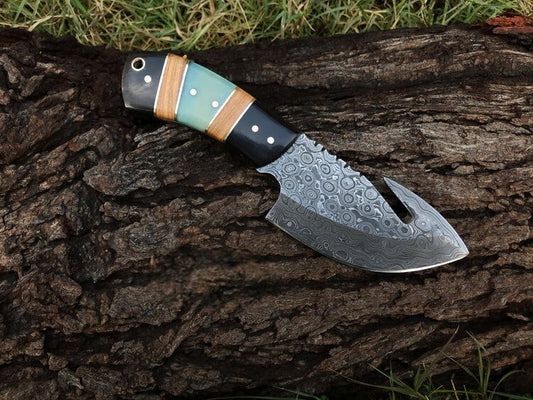
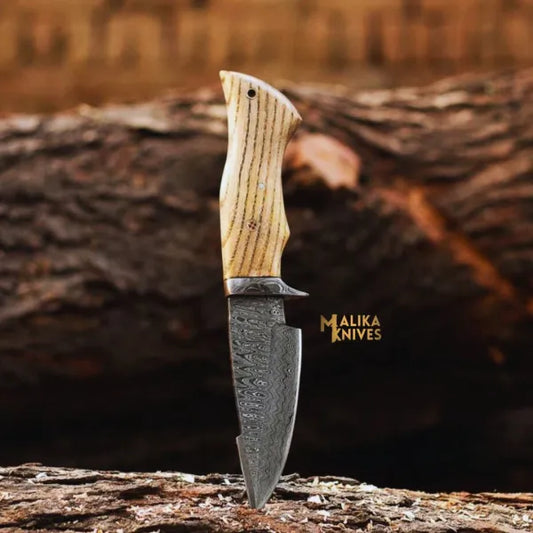
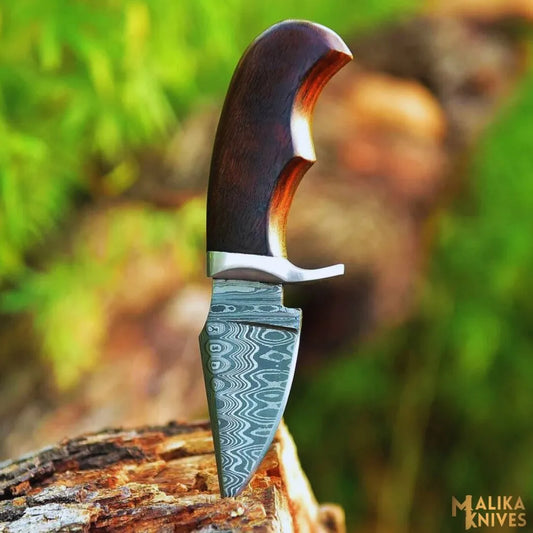
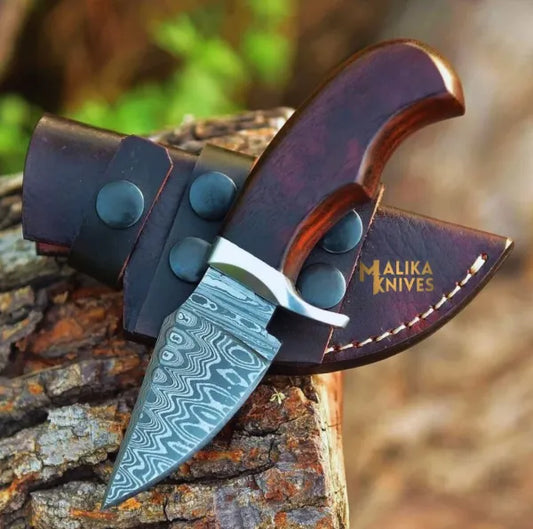
Gut Hook Skinning Knife – Big Game Hunting & Deer Processing Knife
Regular price $89.25 USDRegular priceUnit price per$119.00 USDSale price $89.25 USDSale -
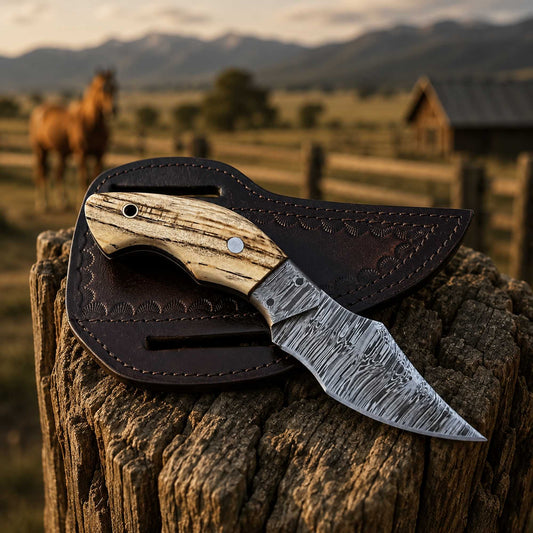
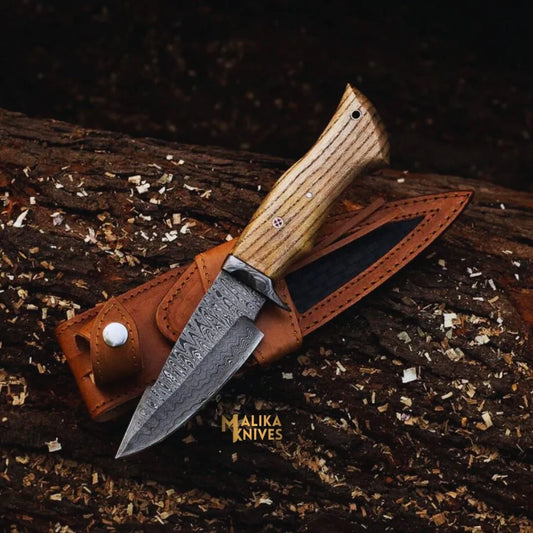
Damascus EDC Cowboy Knife Ashwood Handle
Regular price $99.99 USDRegular priceUnit price per$200.00 USDSale price $99.99 USDSale -
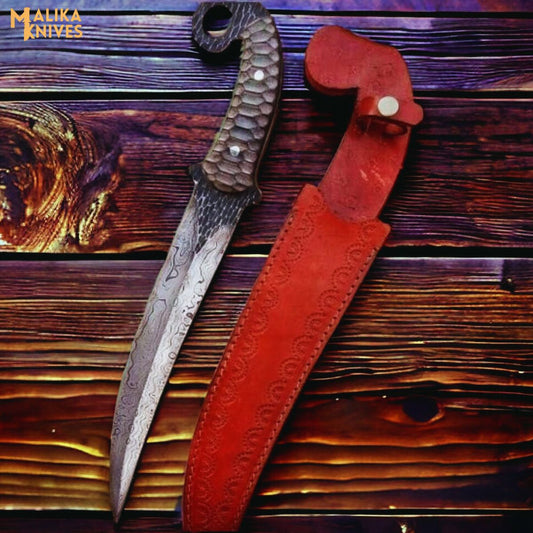
Custom Hunting Dagger Knife – Skull Engraved Camel Bone Handle
Regular price $138.00 USDRegular priceUnit price per$230.00 USDSale price $138.00 USDSale -
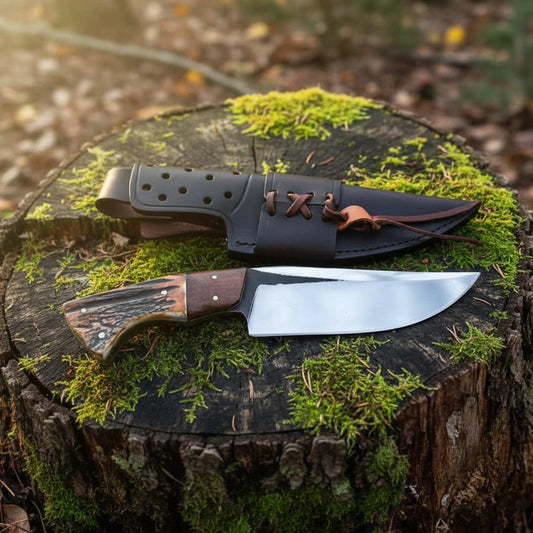
D2 Hunting Knife Antler Handle Rosewood Full Tang
Regular price $155.00 USDRegular priceUnit price per$310.00 USDSale price $155.00 USDSale -
Cowboy Hunting Knife Damascus Steel Marble Handle
Regular price $99.99 USDRegular priceUnit price per$200.00 USDSale price $99.99 USDSale -
Biker Ringtail Knife Damascus Camel Bone EDC
Regular price $150.00 USDRegular priceUnit price per$300.00 USDSale price $150.00 USDSale -
Damascus Hunting Knife Bull Horn Handle Compact
Regular price $95.00 USDRegular priceUnit price per$190.00 USDSale price $95.00 USDSale -
Feather Damascus Hunting Knife Pakka Wood Handle
Regular price $155.00 USDRegular priceUnit price per$310.00 USDSale price $155.00 USDSale -
Handmade Hunting Knives Set | Camel Bone
Regular price From $90.00 USDRegular priceUnit price per -
Hand forged Damascus Ringtail Hunting Knife
Regular price $130.00 USDRegular priceUnit price per$260.00 USDSale price $130.00 USDSale -
Fire Pattern Damascus Hunting Knife G10 Handle
Regular price $165.00 USDRegular priceUnit price per$330.00 USDSale price $165.00 USDSale -
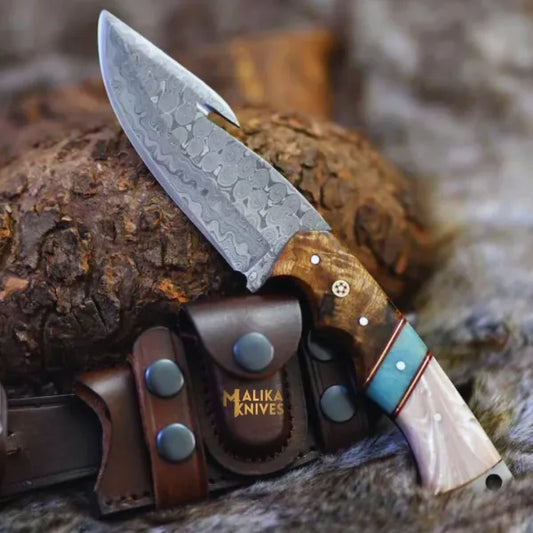
Damascus Gut Hook Hunting Knife Wood Resin Handle
Regular price $89.99 USDRegular priceUnit price per$190.00 USDSale price $89.99 USDSale -
Twist Damascus Hunting Knife with Walnut Handle
Regular price $85.15 USDRegular priceUnit price per$131.00 USDSale price $85.15 USDSale -
Mini Damascus Hunting Knife with Rosewood Handle
Regular price $95.00 USDRegular priceUnit price per$190.00 USDSale price $95.00 USDSale -
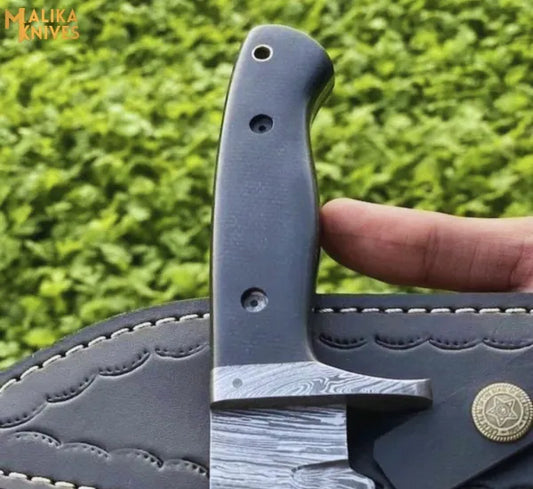
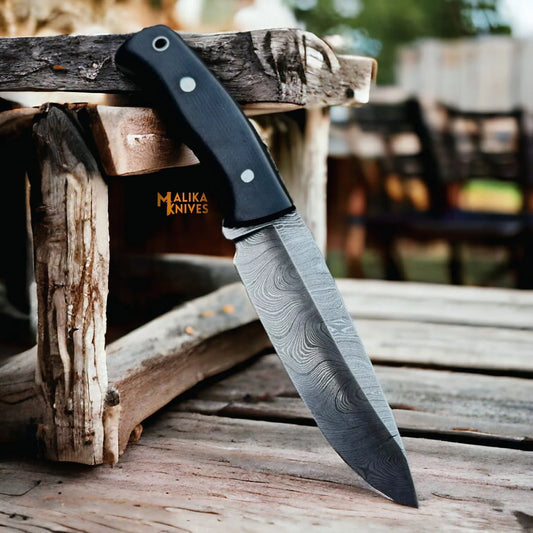
Damascus Bushcraft Hunting Knife Micarta Handle
Regular price $103.00 USDRegular priceUnit price per$206.00 USDSale price $103.00 USDSale -
Ringtail Damascus Hunting Knife Camel Bone Handle
Regular price $95.00 USDRegular priceUnit price per$190.00 USDSale price $95.00 USDSale














Quick facts:
- Carbon Damascus forged from 1095 and 15N20, heat treated to approximately 59 to 60 HRC
- Stainless Damascus also available on selected builds, using a VG10 and 15N20 construction
- Hundreds of layers per billet, pattern-welded in-house rather than bought in as finished blade stock
- Five patterns forged by hand: twist, feather, fire, raindrop and ringtail
- Blade styles: drop point, clip point, skinner, ringtail, gut hook, and flexible fillet
- Handles: stag antler, bull horn, camel bone, ram horn, micarta, G10, walnut, rosewood, pakka wood, resin
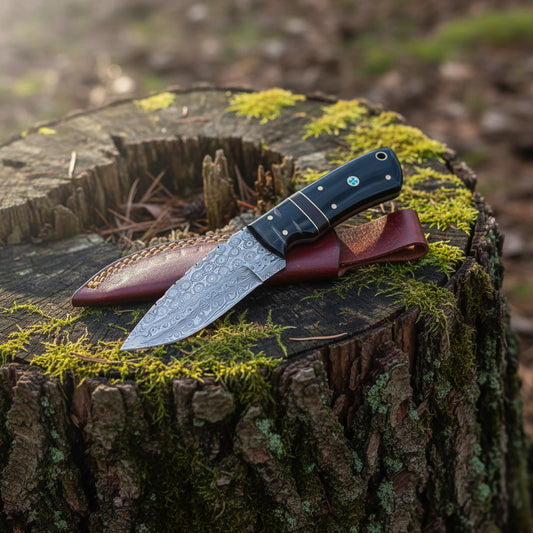
- Handmade leather sheath with every knife, in vertical, scout, drop loop or pancake carry
Who makes these knives?
Every blade here is forged by us, Naqash and Younas Minhas, with more than 15 years of combined experience at the bench. We pattern-weld the Damascus billets in-house, then shape, heat treat and finish each knife by hand. These are made in limited runs or built to order, never mass produced, so each blade carries the character of a knife made one at a time.
Forging our own billets is also why the layer counts, the component steels and the hardness figures on this page are stated rather than left vague.
What Makes Damascus Steel Right for a Hunting Knife
Damascus steel is created by forge welding two steels together in our shop, 1095 and 15N20 and folding them repeatedly to build hundreds of layers. After etching, those layers reveal the flowing pattern Damascus is known for. But the pattern isn't just for looks: the high-carbon content gives these blades excellent edge retention, and they typically reach 59 to 60 HRC after heat treatment, so a Damascus hunting knife cuts cleanly through demanding field work and holds its edge.
How do you tell real forged Damascus from an etched fake?
A large share of what sells online as Damascus is a pattern stamped or laser-etched onto a single piece of steel. Five checks separate the two, and they are worth knowing before you buy from anyone.
- Look at the edge bevel.
- Look at the spine and the exposed tang.
- Check for repetition.
- Ask for the component steels by name.
- Ask for a hardness figure.
All our Damascus is true multi-layer forge-welded steel, with no laser etching and no shortcuts. Each pattern is created in the forge and is unique to that blade.
What patterns do we forge?
Part of what makes these knives special is that no two patterns are exactly alike. Across this collection you will find several of the patterns we forge by hand.
The patterns compared:
|
Pattern |
How it is made |
Look |
Difficulty |
|
Random or wild |
Repeated folding with no manipulation |
Irregular, flowing, no two alike |
The baseline |
|
Twist |
Billet twisted along its length before drawing out |
Rope-like lines running the blade |
Moderate |
|
Raindrop |
Dimples drilled or punched into the billet, then forged flat |
Concentric rings across the flats |
Moderate |
|
Fire |
Layers manipulated into rising, tongue-like forms |
Bold, organic, high movement |
Difficult |
|
Ringtail |
Tight repeating curls worked into the billet |
Distinctive coiled figure |
Difficult |
|
Feather |
Billet split and folded back so layers mirror a central spine |
Symmetrical feather down the blade |
The hardest we forge |
- Twist. Flowing, rope-like lines, as on our twist pattern knife with a walnut handle.
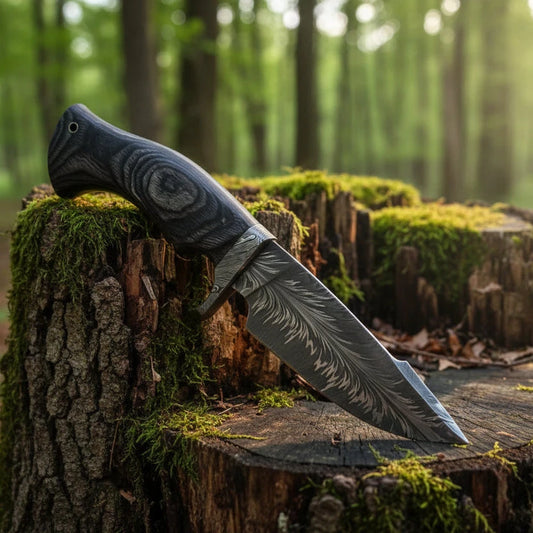
- Feather. A striking central spine that mirrors like a feather, seen on our feather pattern knife with a pakka wood handle.
- Fire and raindrop. Bold, organic designs that give each blade its own character.
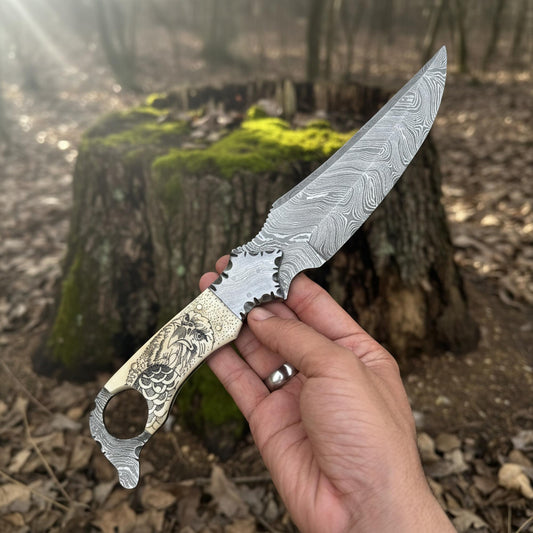
- Ringtail. Tight, repeating curls, as on our ringtail knife with a tinted camel bone handle.
Blade styles for every hunting task
Different hunting jobs call for different blades, and this collection covers the range. Drop point and clip point blades handle all-round field work and precision cuts, while a gut hook makes opening game quick during field dressing. Our Damascus gut hook hunting knife with a wood resin handle is built exactly for that.
Handle materials built for grip
A blade has to stay secure in the hand in wet and cold conditions, so we fit each one with a handle chosen for grip and character. Natural materials such as stag antler, bull horn, camel bone and ram horn give a traditional look, while micarta, G10 and dense woods like walnut, rosewood and pakka wood stand up to hard outdoor use. Each handle is shaped and fitted by hand.
The honest split. Micarta and G10 hold grip best with blood and fat on your hands, which is the hardest condition any handle faces and exactly the condition hunting puts it in. Stag antler, polished bone and horn look considerably better and are noticeably slicker wet. Dense textured woods such as walnut and rosewood sit in between.
So: if the knife is going to process animals, take a synthetic or a textured wood. If it is a gift or a piece you will mostly look at, take the stag or the bone. A finger ring, where fitted, solves the grip problem regardless of material, as on our Damascus skinner with a turquoise horn handle and finger ring.
Which one is right for you?
- One knife for the whole job. A gut hook with a stag horn handle. The hook opens the cavity, the belly does the hide.
- Best deer skinner here. The feather pattern skinner with a pine cone handle. Hardest pattern we forge, on a deep-bellied blade with a stabilised grip.
- Least maintenance. The SS Damascus stag skinner in stainless Damascus. The right pick if you hunt hard and clean up late.
- Best grip when wet. The skinner with a finger ring. Grip failure is the real risk on this work, not edge failure.
- Cheapest way into Damascus. The gut hook skinner for big game, the entry price in the collection.
- A pattern piece for the cabinet. The twist pattern with walnut or the ringtail with tinted camel bone.
- Fish and boning. A fillet knife with a flexible 8 inch blade.
Caught between two? Send us both through contact and we will tell you which one we would keep.
Leather sheaths and carry
Every knife in this collection includes a handcrafted leather sheath, fitted to the individual blade for safe carry in the field. Depending on the knife, carry styles include vertical belt, horizontal scout, drop loop and pancake carry, so you can match the knife to your gear.
If you hunt with a pack, scout or drop loop carry matters more than most buyers expect, because a vertical sheath on the belt sits exactly where a loaded waist strap goes. Carry style is listed on each product page.
How do you care for the blade?
Because carbon Damascus is high-carbon steel, a little care keeps it at its best. Wipe the blade clean and dry after each use, apply a light coat of oil before storage, and avoid leaving it in a damp sheath for long periods. Done regularly, that keeps both the edge and the pattern looking their best for generations.
Our full guides: how to care for a Damascus steel knife and how to sharpen a hunting knife the right way. Stainless Damascus resists rust well, but the same cleaning routine is still worthwhile.
Why buy from Malika Knives
Every knife here is forged, ground, heat treated and finished by hand by us, Naqash and Younas Minhas. We do not mass-produce and we do not outsource, and each blade is made in our own shop from raw steel to finished knife.
You can read more about how we work on our About page, browse the wider handmade hunting knives range, or compare against our D2 steel hunting knives. Reach out any time if you would like help choosing the right blade for your hunt.
Are these knives legal to own and carry?
United States
Fixed blades in this size range are legal to own throughout the United States and sit below the blade length thresholds most states apply. Carry is regulated at state and often municipal level, and many states treat carry while lawfully hunting differently from general public carry. Check both your state statute and your hunting regulations.
Canada
Fixed blades are legal to own in Canada, where prohibited classifications turn on the opening mechanism rather than blade length. Carry sheathed and for a lawful purpose.
United Kingdom and EU
Ownership is generally legal, and hunting, fishing and transport to and from those activities are among the recognised reasons for carrying a fixed blade in public. Confirm current import and age-verification rules before ordering.
Rules change. Treat this as a starting point and verify current law and hunting regulations where you hunt.
Frequently asked questions
What is a Damascus hunting knife?
A hunting blade forged from layered Damascus steel, where two steels are forge-welded together and folded to create hundreds of layers. The result combines a sharp, durable working edge with the distinctive flowing pattern Damascus is known for.
Is this steel good for a hunting knife?
Yes. Our blades are forged from 1095 and 15N20 high-carbon steel and heat treated to around 59 to 60 HRC, giving excellent edge retention and strong cutting performance. The blade performs as well in the field as it looks.
How do I prevent rust?
Wipe the blade clean and dry after every use, apply a light coat of oil before storage, and avoid leaving the knife in a damp leather sheath for long periods. Because carbon Damascus is high-carbon steel, that simple routine keeps it rust-free and protects the pattern for generations.
What is the difference between Damascus and D2 hunting knives?
Damascus offers a traditional layered pattern and excellent edge retention but needs a little more care, while D2 tool steel is semi-stainless and lower maintenance. Damascus is often chosen for its appearance and craftsmanship, D2 for low-upkeep working use.
Are these knives full tang?
Most are full tang, meaning the steel runs the full length of the handle for maximum strength and balance. That matters on a knife meant to take real use in the field.
What blade shape is best for skinning and field dressing?
Drop point and skinner blades are best for skinning, thanks to their curved bellies, while a gut hook makes field dressing quick and clean. Several blade shapes run through this collection, so you can match the knife to your hunt.
How many layers are in each blade?
Blades carry hundreds of layers, built by forge-welding 1095 and 15N20 steel and folding the billet repeatedly before the blade is shaped. The exact count varies by pattern.
Do these knives come with a sheath?
Yes. Every knife in this collection comes with a handcrafted leather sheath, fitted to the individual blade for safe carry in the field.
Do you offer matched sets?
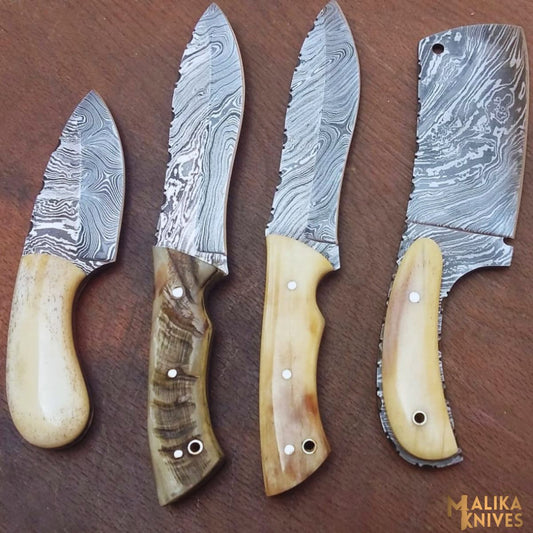
Yes. We offer a handmade set with camel bone handles, bringing matched blades together in one package, which is a popular choice for gifting or for building a coordinated kit.
Is your Damascus real, or an etched pattern?
Real, forge-welded and folded in our own shop. You can verify it yourself: on genuine pattern-welded steel the layers continue through the edge bevel and appear on the spine and exposed tang. An etched or printed pattern stops at the bevel and covers the flats only.
What is the difference between carbon and stainless Damascus?
Carbon Damascus uses 1095 and 15N20, gives the deepest pattern contrast and the easiest sharpening, and needs drying and oiling after every use. Stainless Damascus uses a VG10 core with a 15N20 jacket, resists corrosion far better, and suits anyone who cleans up hours after the hunt.
Is layered steel stronger than a single steel?
Not inherently. Performance comes from the component steels and the heat treatment, not from the layering. Modern pattern welding is done for appearance and for the properties of the steels chosen, and a good single steel such as D2 performs equally well.
