


Damascus Battle Medieval sword with Leather sheath-908
Damascus Battle Medieval sword with Leather sheath-908
Blade Length: 25″
Material:
Blade Material: Damascus steel
Handle Material: Bull horn & Camel Bone
Couldn't load pickup availability
SKU:VK-908
Share
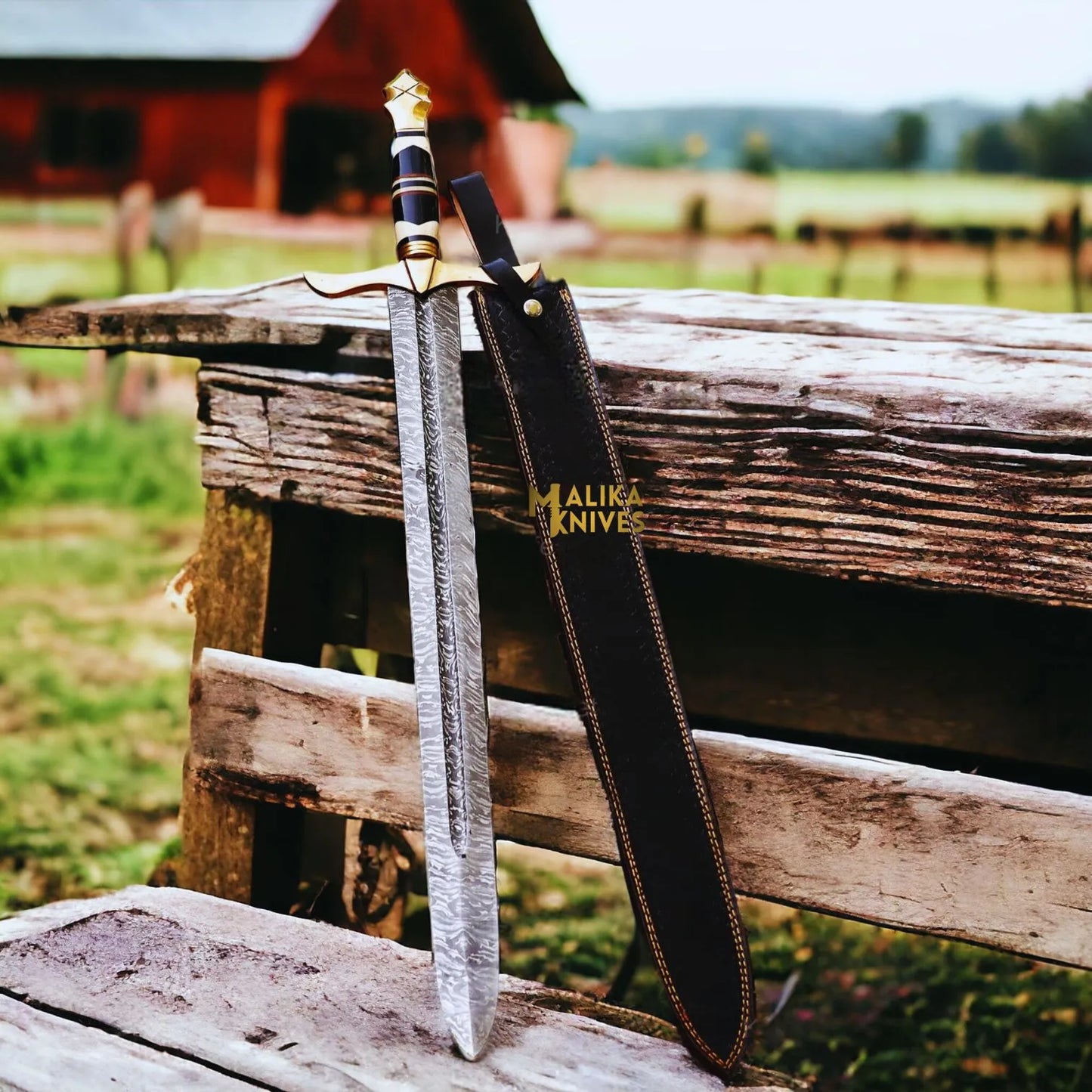


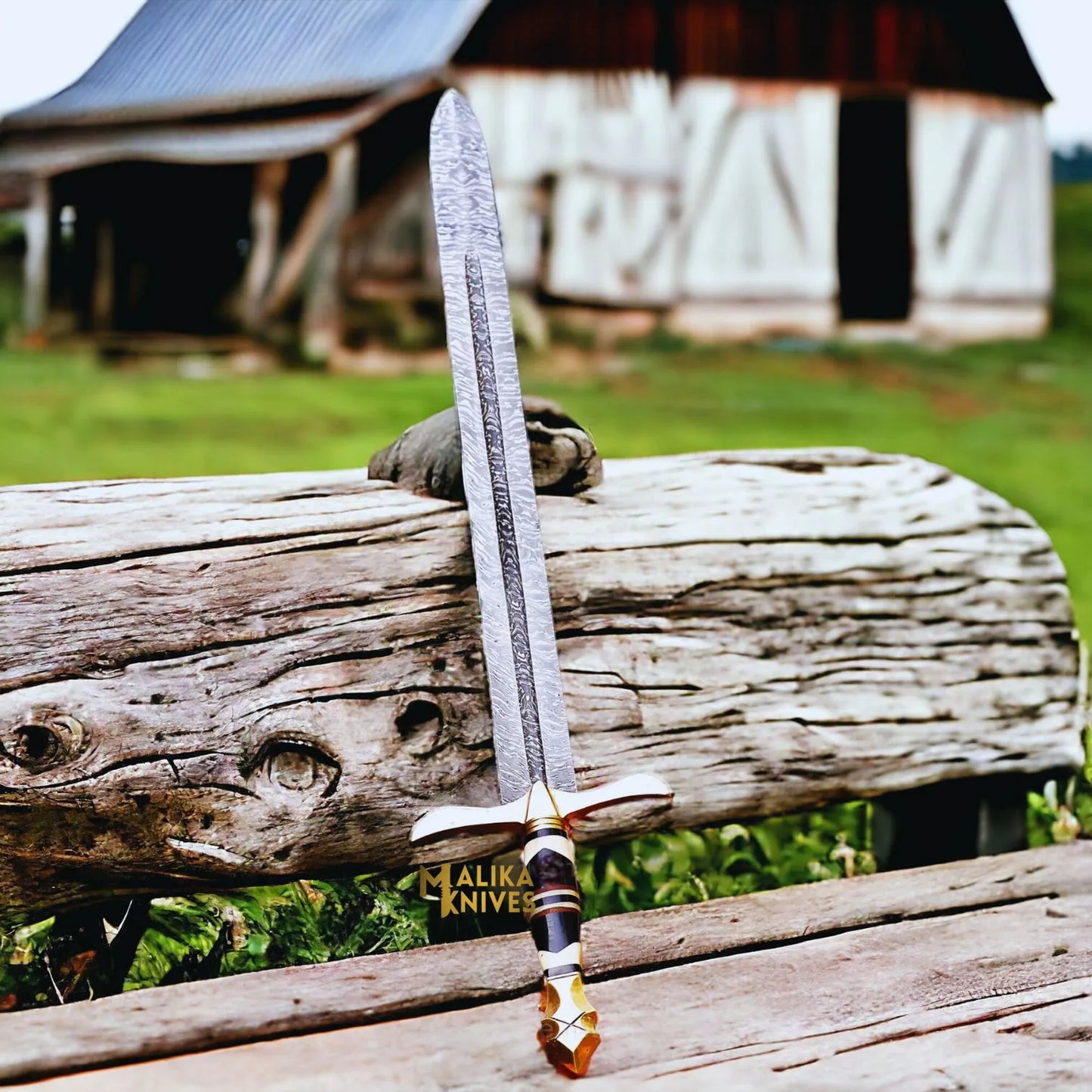
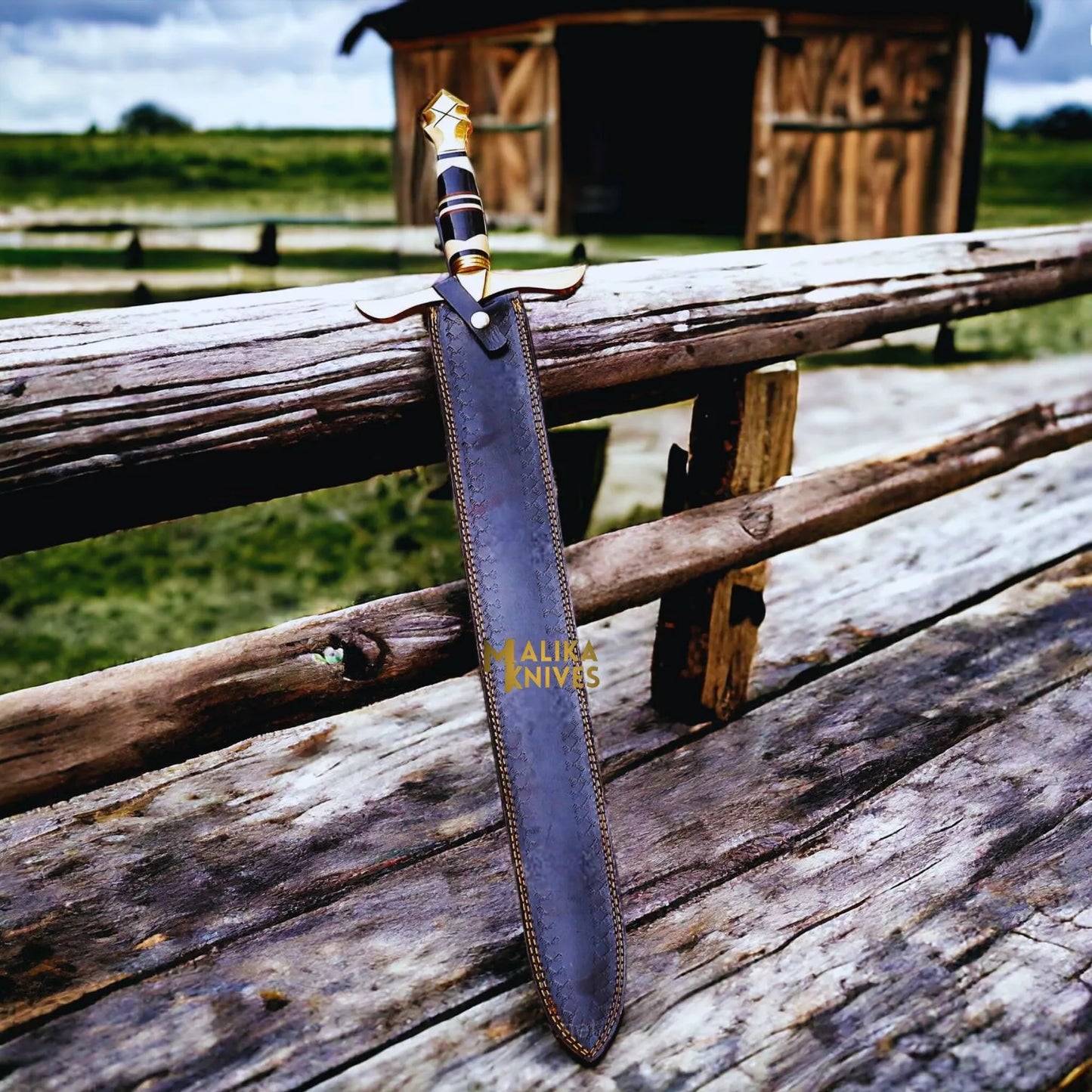
What Makes Our Damascus Battle Medieval Sword Stand Out?
Our Damascus Battle Medieval Sword sets a 25 inch Damascus steel blade in a handle of bull horn and camel bone, capped with a brass pommel and delivered with a cowhide leather sheath.
The profile draws on the knightly swords of medieval Europe: a straight, double edged blade, a cross guard and a weighted pommel that pulls the balance back toward the hand.
The contrast between dark horn and pale bone makes each handle distinctive, and every blade etches to its own pattern. Collectors who prefer a warm wood handle at the same length can compare the custom Damascus Crusades sword.
What Are the Sword Specifications?
| Specification | Product Detail |
|---|---|
| Blade Material | Damascus steel |
| Sword Type | Medieval sword |
| Overall Length | 34" |
| Blade Length | 25" |
| Handle Material | Bull horn and camel bone |
| Pommel | Brass |
| Sheath Included | Cowhide leather sheath |
| Craft | Handcrafted |
What Defines a Medieval Knightly Sword?
From roughly the 11th to the 14th century, the standard sword of a European knight was a one handed, double edged blade with a cruciform hilt.
Blade profiles changed over the centuries, but the core layout stayed constant: a straight guard to protect the hand, a grip sized for one hand and a pommel heavy enough to balance the blade. Our sword keeps that layout at a length suited to display and collection.
Why Pair Bull Horn with Camel Bone?
Bull horn is made of keratin, polishes to a deep glossy finish and feels warm and smooth in the hand.
Camel bone is dense and light in colour, so the two materials set each other off with strong contrast. Both are natural, which means tone, grain and markings differ on every handle. Bull horn handles also appear across our Damascus Bowie knives, where the same dark finish frames the layered steel.
How Is the Damascus Blade Made?
Layers of high carbon steel are forge welded, folded and drawn out until the billet holds hundreds of layers, then ground to the sword’s profile.
After heat treatment, an acid etch darkens one steel more than the other and reveals the pattern down the full length of the blade.
What Do the Brass Pommel and Leather Sheath Add?
The brass pommel adds weight behind the grip for better balance and gives a golden accent against the horn and bone.
The cowhide sheath protects the blade during storage and transport. Leather holds moisture, so the sword should rest outside the sheath for long term storage. Other medieval and Viking designs with different hilts sit in our handmade sword collection.
How Should the Sword Be Maintained?
Keep the blade dry and lightly oiled with mineral oil, since Damascus contains high carbon steel and will rust if moisture sits on it. The routine in our guide on how to care for Damascus steel carries straight over to a sword blade.
Keep the horn and bone away from heaters and direct sun, wipe them with a lightly oiled cloth now and then, and never soak the handle.
Why Choose Our Damascus Battle Medieval Sword?
Our sword combines a 25 inch Damascus blade, a bull horn and camel bone handle, a brass pommel and a cowhide leather sheath. It suits collectors, medieval history enthusiasts and anyone building a period display.
